

* As President Mutharika announces that Government is facilitating the commencement of fertilizer production right in the country
* Also to construct 2-storey market buildings in cities of Blantyre, Lilongwe and Mzuzu in the 2026/27 financial year
By Duncan Mlanjira
In the quest to provide affordable and sustainable solution for fertilizer, the government is facilitating the commencement of the production of this all-important farm input production right in the country.

Advertisement
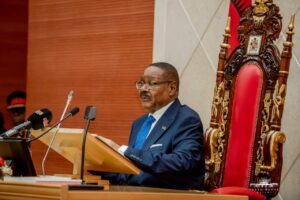
The pledge was made by President Arthur Peter Mutharika in his State of the Nation Address (SONA) made in Parliament yesterday while also assuring Malawian farmers to expect better and improved delivery of affordable fertilizer programme in the 2026/2027 agriculture season.
He added that despite getting into office almost a week before planting rains, the government made affordable fertilizer available to many Malawians and has so far distributed to 65% of the targeted 1.1 million beneficiaries.
“By this time last year, only 45% had received fertilizer,” he said, thus indicating that in the 2026/2027 agriculture season, Malawians should expect a better and improved delivery of affordable fertilizer programme.
Just two weeks ago, Press Cane Limited, a subsidiary of the country’s conglomerate company, Press Corporation, announced that it is-in-final-stages-of-
The company has built a multi-billion Kwacha Bio-digester which once fully commissioned in June 2026, will be fed with the liquid waste it generates from the production of ethanol as a strong measure of managing its waste, at the same time providing a solution of bio-fertilizer to farmers in Malawi.
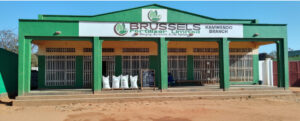
In November last year, Brussels Fertilizer Limited, a fertilizer trading and distribution company based in Blantyre, also announced that it is considering establishing a nitrogen, phosphorus & potassium (NPK) fertilizer plant.
The company commenced operations in 2022 as an importer, distributor and trader in high quality fertilizers on the back of over 30 years’ experience by the investors in the industry.
Meanwhile, President Mutharika indicated that his administration’s development agenda “is to transform Malawi from a consuming and importing nation to a producing and exporting one, with industrialisation as the pillar of growth”.
“In pursuit of this agenda, the Government will continue with the development of Special Economic Zones to attract high-value investments, which include Magwero, Chigumula, Matindi, and Dunduzu Industrial Parks.
“Government will also strengthen cooperatives and micro, small & medium enterprises to boost value addition and increase import substitution [and to] intensify support for local production to further drive down commodity prices, create jobs and grow the economy.”
He also indicated that his administration found many tobacco farmers stranded with 3.5 million kilograms of unsold tobacco on the auction floors and that in his mid-year budget review statement, he directed that the tobacco should be sold.
“I am pleased to report that almost all the tobacco was sold, earning US$8.6 million. Despite billions of kwachas being channeled towards mega farms, the programme was a total mess — I have since directed the responsible Minister to review and redesign the programme so that it works efficiently and serves all Malawians.”
And as part of accelerating local development, Mutharika announced that in the 2026/27 financial year, with financing from International Fund for Agricultural Development, the Government will construct 2-storey market buildings in the cities of Blantyre, Lilongwe and Mzuzu.
This is part of decentralisation that has been prioritised to improve efficiency, accountability, and accelerate development at the grassroot level that comes along with the reformed Constituency Development Fund (CDF), which was increased from MK220 million to MK5 billion per constituency per year.
“We have also shifted management responsibility to controlling officers in local authorities. This is a fundamental transformation in how we finance local development.
“To ensure transparency and accountability, my Government has developed CDF Guidelines and will invest in national CDF digital dashboard to give Malawians real-time access to information on CDF.
“I want to make it very clear that these resources are for the benefit of local Malawians and are performance based. I will, therefore, not tolerate any mismanagement. Those found mismanaging resources will face the long arm of the law.
“According to the Constitution, the National Local Government Finance Committee is mandated to facilitate financial management for local councils. I expect this committee to be active, effective and urgently foster strong partnerships with key accountability stakeholders to ensure that councils account for the resources.”

Advertisement