
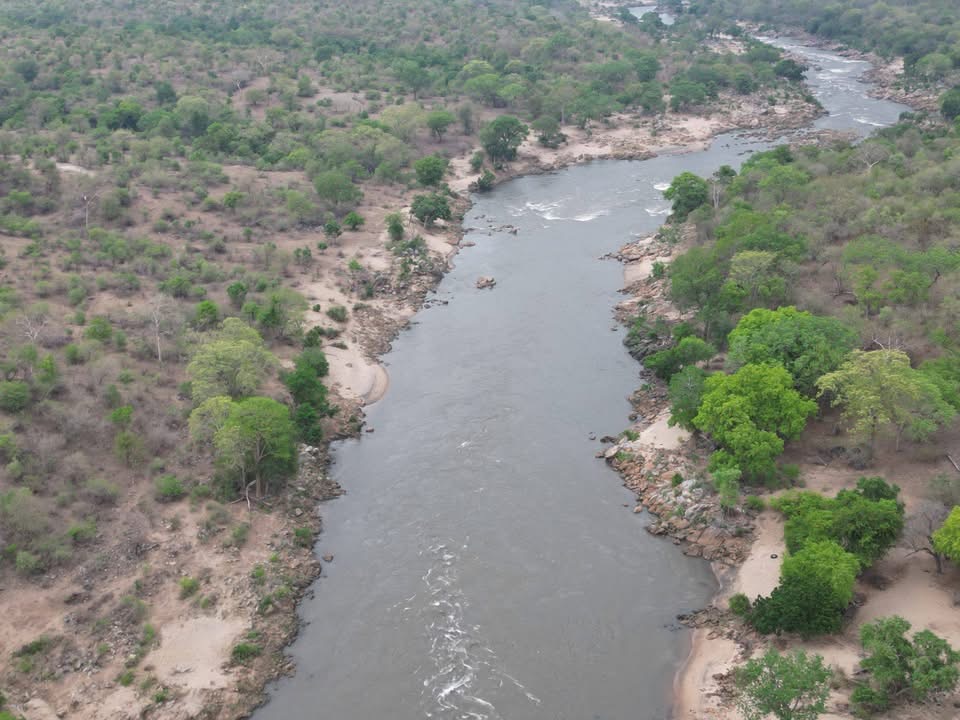
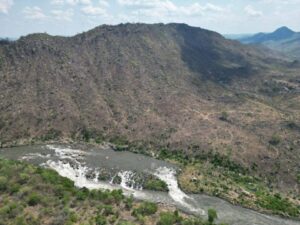
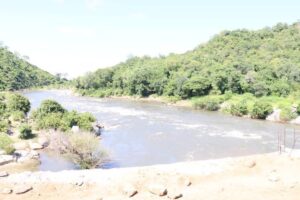
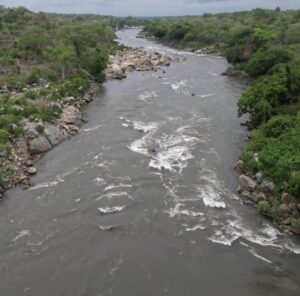
Site of the Mpatamanga Hydropower project along the Shire River
* The projects include Mpatamanga Hydropower in Neno, solar power in Salima and the coal-fired power plant at Kam’mwamba in Balaka
* The country’s current electricity access rate, estimated at 12%, remains among the lowest globally and continues to affect economic growth
By Brenda Nkosi, MANA
Government is implementing three major energy projects to increase electricity generation to over 700 megawatts (MW) in order to meet the target of producing over 1,000MW by 2030 in order to improve power supply in the country.
Chief Secretary to the Government, Dr. Justin Saidi said this during a tour of Mpatamanga Hydropower project in Neno District, which is expected to add 358.5MW to Malawi’s national grid once completed.
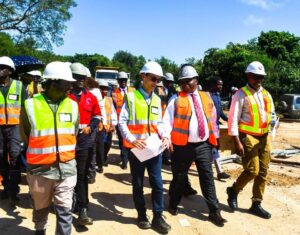
The Chief Secretary on tour of the project
Further Mpatamanga project is Electricity Generation Company (EGENCO) solar power plant in Salima along with plans for coal-fired power plant at Kam’mwamba in Balaka.
“We have a number of projects we are implementing to address power interruption,” said Saidi in Neno yesterday. “Mpatamanga alone will generate about 358megawatts. When combined with Independent Power Producers (IPPs), the Salima Solar Power project and the Kam’mwamba plant, we expect to significantly increase generation capacity.”
Saidi observed that the country’s current electricity access rate, estimated at 12%, remains among the lowest globally and continues to affect economic growth,” saying: “At a time when the country is promoting sectors such as mining, increased power supply is critical. All sectors of the economy stand to benefit from reliable electricity.”
Mpatamanga Hydropower Plant Limited General Manager, Antoine Gerbiud said the US$1.5 billion project is currently in the development phase, with construction expected to take 54 months.
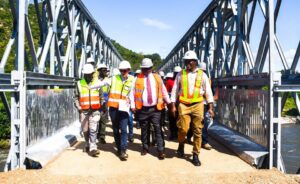
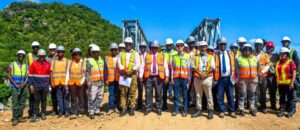
General Manager, Antoine Gerbiud (2nd left) taking Saidi on tour
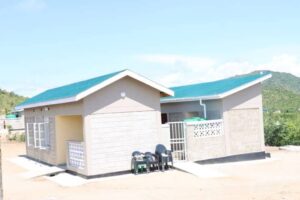
“We have already completed construction of houses for some of the people displaced by the project, as well as a bridge across the Shire River,” he said, while EGENCO Chief Executive Officer, William Liabunya, said once completed, Mpatamanga will be the largest power plant in Malawi.
Government, through the Ministry of Energy, is implementing the Mpatamanga Hydropower Storage Project, a major initiative aimed at significantly increasing the country’s electricity generation capacity.
Environmental and Social Impact Assessment (ESIA) studies for the project were completed in July 2024 and approved by both the World Bank and the Malawi Environmental Protection Authority (MEPA), which issued an Environmental Certificate.
In addition, the National Water Resources Authority and the Malawi Energy Regulatory Authority have granted provisional licenses, allowing the project to proceed.
Meanwhile, the government-is-constructing-houses-as-relocation-compensation-for-45-families-affected-by-Mpatamanga-Hydropower-project/ in Neno’s Chaswanthaka and Mpindo villages.
The whole project is supported by a US$350 million grant from the World Bank’s International Development Association (IDA) to help the Government meet its financial obligations, which will hold a 30% stake in the project.
Construction is projected to begin in January 2027 to will run for about 54 months, with full commissioning of the power plant expected in the third quarter of 2031, according to a report by the government last month.
Once completed, the project will add 358.5MW to the national grid, including 301MW of peaking power from the main dam and 57.5MW of base load power from the regulating dam.

Advertisement
The main dam will function like a storage battery, releasing water to generate electricity during periods of high demand, thereby improving the reliability of power supply.
The increased electricity generation is expected to support energy-intensive sectors such as mining, agriculture, and tourism. It will also benefit households, businesses, hospitals, and schools through more reliable access to electricity.
During construction, the project is expected to employ about 2,500 workers, with priority given to local communities for unskilled labour.—Edited by Duncan Mlanjira, Maravi Express

Advertisement