

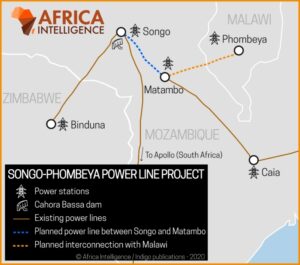
The Mozambique-Malawi interconnection line is from Matambo to Phombeya in Balaka
* They can act as driver toward reversing Malawi’s exporter decline as indicated in World Bank’s Malawi Economic Monitor’s February 2026 special topic in ‘Reversing Malawi’s Export Decline’ report
* Boosting exporter performance requires accelerating investments in critical infrastructure including energy generation & storage, regional power interconnectors and reliable transport corridors to Mozambican, South African and Tanzanian ports
By Duncan Mlanjira
In its February 2026 edition of the Malawi Economic Monitor (MEM); ‘Getting Reforms Right’, — whose special topic is; ‘Reversing Malawi’s Export Decline’ — the World Bank corroborates the significance of Malawi’s Southern Africa power interconnector agreements, emphasising that they can act as driver toward reversing country’s exporter decline.

The MEM highlights that new Democratic Progressive Party (DPP)-administration “has initiated a series of important policy reforms, but sluggish growth, heightened inflationary pressures and insufficient investment continue to undermine living standards”.
President Arthur Peter Mutharika’s administration is also recognised by the MEM as having initiated “important reforms to support macroeconomic stabilisation since the September 2025 elections but economic fundamentals remain weak”.
“Malawi’s economy continues to struggle to keep up with population growth, resulting in eroding living standards. Real gross domestic product (GDP) is estimated to have grown by only 1.9% in 2025, up slightly from 1.7% in 2024 — but with the population expanding by around 2.5%, the GDP per capita fell for the fourth consecutive year.”

Advertisement
On the special topic of ‘Reversing Malawi’s Export Decline’, the MEM points out that there is need to strengthening critical infrastructure to enable economic growth with focus on expanding reliable power supply and improving road-sector efficiency. “Immediate priorities include securing financing arrangements for new power projects, enabling access to regional power markets, and protecting fuel levies for road maintenance.
“Medium-term priorities include accelerating major energy projects, resolving implementation bottlenecks, and promoting private investment in transport infrastructure.”
The MEM highlights that the country “has faced persistent difficulties in diversifying and expanding its exports” and that it experienced a decline in exports over the past decade, with tobacco still making up half of the total merchandise export value.
While tobacco continues to play a critical role in foreign exchange earnings, the World Bank observes that “limited diversification into other export sectors has constrained economic resilience and growth potential”.
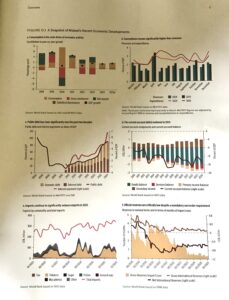
“At the same time, foreign direct investment has largely been on a downward trajectory, and remains significantly below the average for low-income countries. Malawi’s chronic trade deficit has worsened significantly in recent years, with imports now three times as large as exports.
“Although these headwinds are recognised, Malawi is entrenched in a vicious cycle of mutually reinforcing structural challenges, endemic macroeconomic instability and restrictive trade-related policies, that have led to a gradual collapse of the export economy.
“A landlocked location and poor infrastructure are fundamental barriers to doing business in Malawi. In addition, successive governments’ policy decisions have increased trade costs, making Malawian products more expensive and less competitive in global markets.
“As a result, export earnings fall, and businesses have fewer reasons to engage in trade, stalling growth. In addition, limited access to foreign currency, driven by a misaligned exchange rate, has hampered access to critical imports and equipment for expansion.”
Thus the MEM suggests the need for the reduced supply-trade constraints and uncertainties for exporters and in boosting exporter performance, it requires “accelerating investments in critical infrastructure — including digital systems, energy generation and storage, regional power interconnectors, and reliable transport corridors to Mozambique, South Africa and Tanzanian ports — to improve value chain integration and diversification”.
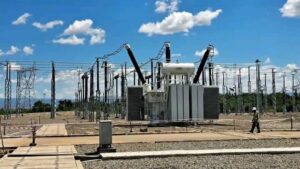
Phombeya power substation
“Streamlining the export-development institutions and aligning promotion functions of the Malawi Investment and Trade Centre (MITC) with development finance institutions financing, would reduce fragmentation, and expand access to export finance — while strengthening firms’ to meet international standards.
“Deepening capital markets, mordenising investment regulations, and enabling SMEs to issue bonds would broaden financing sources, including through blended finance,
“Finally, supporting new and returning exporters with technical assistance and better access to foreign-exchange financing — alongside targeted de-risking instruments — would encourage growth in high-potential, value-added exports sectors.”
Just last week, Electricity Supply Corporation of Malawi (ESCOM) hosted the Southern African Power Pool (SAPP) Executive Committee conference, where the grouping’s vice-chairperson, Luis Ganje, attested to that the Mozambique–Malawi (MOMA) Interconnector, is set to transform the energy sector in Malawi and the region by improving power security, accelerating development, and supporting industrialisation.
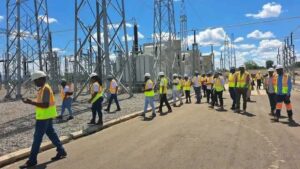
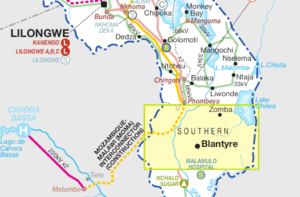
This was after ESCOM Board Director, Welford Sabola indicated that Malawi will soon no longer be a “power island”, since through the MOMA Interconnector, the country will finally be connected to the regional grid, making ESCOM an active participant in the SAPP market.
He described the interconnection as a lifeline, representing ESCOM’s shift from being a purely transactional utility to becoming a strategic partner in regional power trade — adding that ESCOM is ready to learn from the experiences of other SAPP members and also contribute its own experience as the region moves into a new era of cross-border power flow.
ESCOM is currently focused on three key technical priorities that align with the agenda of the Southern African Power Pool, said Sabola, emphasising that the first priority is system reliability, where ESCOM is enhancing its grid to efficiently handle the bi-directional flow of power — as Malawi prepares to operate within the regional power network.
“The second priority is market readiness, which involves strengthening internal trading departments to effectively participate in SAPP power markets.
“The third priority is infrastructure security, where ESCOM is working with neighbouring countries to protect high-voltage infrastructure from the rising threat of vandalism, which remains a shared regional challenge.”
The Chief Secretary took note that SAPP has just attained 30 years of existence having been created in August 1995 at the SADC summit held in Kempton Park, South Africa, saying: “From the time that the SAPP was created, several transmission projects have been successfully completed.”
Speaking on power challenges in the region, Saidi observed that eight-out-of-12-SAPP-member-countries are currently experiencing power supply shortages, noting that Angola, Mozambique, South Africa, and Tanzania are the only countries with excess generation capacity.

Advertisement