

Chief Secretary Justin Saidi
* Ministers responsible for energy in these countries are prioritising strategies to combat vandalism both at national and regional levels through the Southern African Power Pool (SAPP) framework—Chief Secretary Justin Saidi
* When opening the SAPP Executive Committee meeting that has brought together regional power utilities, policymakers and energy experts to strengthen cooperation in the power sector
* SAPP is a cooperation of the national electricity companies in Southern Africa under the auspices of the Southern African Development Community (SADC)
By Duncan Mlanjira
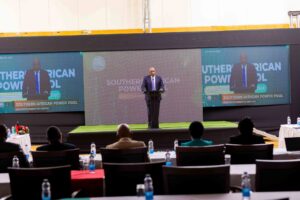
When opening the Southern African Power Pool (SAPP) Executive Committee this morning at Bingu International Convention Centre (BICC) in Lilongwe, Secretary to the Office of the President & Cabinet, Dr. Justin Saidi highlighted that the impact of vandalism on electricity infrastructure is not just affecting Electricity Supply Corporation of Malawi (ESCOM) alone but across Southern African region.

Advertisement
ESCOM is hosting the Executive Committee meeting of SAPP — a cooperation of the national electricity companies in Southern Africa under the auspices of the Southern African Development Community (SADC) — which has brought together regional power utilities, policymakers and energy experts to strengthen cooperation in the power sector.
In his speech, Saidi indicated that as the impact of vandalism on electricity infrastructure is on the rise across the region, Ministers responsible for energy from the region are prioritising strategies to combat vandalism both at national and regional levels through the SAPP framework.
He appraised the delegates that in Malawi, ESCOM is also grappling with the vandalism problem, losing an estimated K3 billion every day due to direct replacement costs and lost revenue.

A Chinese national and his Malawian accomplices caught with the haul of ESCOM copper wires last year

A local found in possession of ESCOM equipment
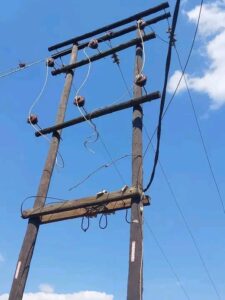
A distribution line vandalised of its transformer
He stressed that protecting transmission infrastructure remains critical to ensuring reliable electricity supply and the stability of the regional power network.
In order to combat the rising cases of vandalism of ESCOM infrastructure, the government, through the Ministry of Energy moved a motion in Parliament and amended the Electricity Act has really In the amended-the-Electricity-Act-to-help-step-up-the-vandalism-fight, through which Section 45 (4) (b) provides a non-fineable penalty of 30 years for vandalism and possession of equipment stolen from ESCOM — including buyers of the equipment.
Section 45 (5) provides an enhanced penalty of MK150,000,000 and 25 years imprisonment if a licensee’s employee or former employee is involved in the illegal connection or meter tamper.
Made in mid-2024, the stiffer punishment doesn’t seem to act as a deterrent since there had been many people who have been caught vandalising and being found in possession of ESCOM equipment, were slapped with maximum penalties in the courts.
Thus Saidi welcomes the SADC region’s, through SAPP’s framework prioritising strategies to combat vandalism both at national and regional levels, who acknowledged the importance of the gathering at BICC gathering that provides a platform for collaboration, knowledge sharing and advancing initiatives aimed at improving power supply and trade across the Southern African region.
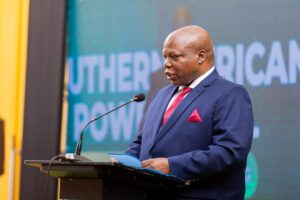
The Chief Secretary took note that SAPP has just attained 30 years of existence having been created in August 1995 at the SADC summit held in Kempton Park, South Africa, saying: “From the time that the SAPP was created, several transmission projects have been successfully completed.”
Speaking on power challenges in the region, Saidi observed that eight out of the 12 SAPP member countries are currently experiencing power supply shortages, noting that Angola, Mozambique, South Africa, and Tanzania are the only countries with excess generation capacity.
He said as leaders in the electricity sub-sector in the SADC region, he expects their deliberations to focus on addressing the region’s power supply challenges and strengthening regional cooperation in electricity generation and trade.
On projects completed under SAAP, Saidi took note of the 400kV Matimba-Phokoje-Insukamini interconnector — “a line that was commissioned in 1995 and it opened for trading of electricity from as far to the north as the DR Congo and as far south as Lesotho and Namibia through Zimbabwe, Botswana and South Africa”.
“This line gave birth to the operationalisation of the Southern African Power Pool in 1995. Currently nine out of the 12 mainland SADC countries are electrically interconnected at transmission level and it is critical to get the remaining three interconnected.
“SADC greatly supports initiatives to have the remaining countries namely Angola, Malawi and Tanzania interconnected to the SAPP grid.”
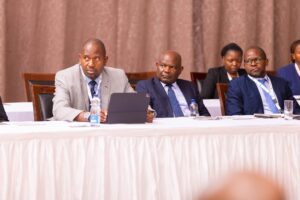
Dr. Saidi also hailed progress on another SAPP project, the Angola–Namibia (ANNA) Interconnector, saying significant progress has been made in securing funding for the construction of the transmission line — while noting that the project will mark a major milestone for both Angola and Namibia, and once completed, SAPP members will be able to access excess power generated in Angola.
Speaking on the Zambia–Tanzania Interconnector, Dr. Saidi said the project is expected to be completed in 2028, saying once commissioned, the interconnector will link the SAPP with the Eastern Africa Power Pool, “creating one of the largest interconnected power systems in the world, spanning from Cape Town to Cairo”.
He thus commended SAPP for the progress being made on regional interconnections, saying the completion of current projects by 2028 will result in all 12 mainland SADC countries being electrically interconnected.
He described this as a significant milestone that will allow the region to fully benefit from regional integration in the power sector — adding that this will also provide a glimpse of what the African Single Electricity Market, expected to become the largest single electricity market in the world, will look like.
In his remarks, ESCOM Board Director, Welford Sabola said the event is not merely a regional obligation, but a milestone, as Malawi is hosting the meeting at a defining moment in the corporation’s history.
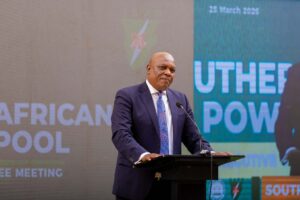
Board Director, Welford Sabola
He noted that Malawi will soon no longer be a “power island”, since through the Mozambique–Malawi (MOMA) Interconnector, Malawi will finally be connected to the regional grid, making ESCOM an active participant in the SAPP market.
He described the interconnection as a lifeline, representing ESCOM’s shift from being a purely transactional utility to becoming a strategic partner in regional power trade — adding that ESCOM is ready to learn from the experiences of other SAPP members and also contribute its own experience as the region moves into a new era of cross-border power flow.
ESCOM is currently focused on three key technical priorities that align with the agenda of the Southern African Power Pool, said Sabola, emphasising that the first priority is system reliability, where ESCOM is enhancing its grid to efficiently handle the bi-directional flow of power — as Malawi prepares to operate within the regional power network.
“The second priority is market readiness, which involves strengthening internal trading departments to effectively participate in SAPP power markets.
“The third priority is infrastructure security, where ESCOM is working with neighbouring countries to protect high-voltage infrastructure from the rising threat of vandalism, which remains a shared regional challenge.
On his part, SAPP ExcoCo vice-chairperson, Luis Ganje, attested to that the Mozambique–Malawi Interconnector, is set to transform the energy sector in Malawi and the region by improving power security, accelerating development, and supporting industrialisation.
Luis Ganje
He thanked the Government of Malawi and ESCOM for hosting the meeting, saying the gesture demonstrates the Government’s commitment to ensuring growth and development in the energy sector.
He noted that SAPP has evolved over the years into a strong and respected regional power market, adding that other African regions and beyond can learn from SAPP’s model of regional power cooperation and electricity trading.
As a SAPP member, ESCOM maintains that Malawi remains committed to regional integration and to working with other member utilities to ensure a reliable, sustainable and interconnected power system that supports economic growth and development in our region.

ESCOM’s Phombeya substation which will connect power from Mozambique
ESCOM highlights that the SAPP ExCo strategic gathering”is taking place at a critical tipping point for the country’s grid as the Mozambique–Malawi (MOMA) Interconnector project is moving into commissioning stage”.
In a statement ahead of the conference, ESCOM’s publicist, Pilirani Phiri highlighted that hosting the SAPP ExCo at this juncture is a strategic milestone for Malawi.
As the country prepares to fully integrate into the regional power market, ESCOM maintains that these high-level deliberations serve as the final blueprint for a more resilient, interconnected and reliable power future for all Malawians.
“With the MOMA Interconnector project entering its final stages, this meeting signals to the region that Malawi is no longer just an observer, but a key player in the Southern African energy landscape,” acting ESCOM CEO is quoted as saying in the statement.

Advertisement