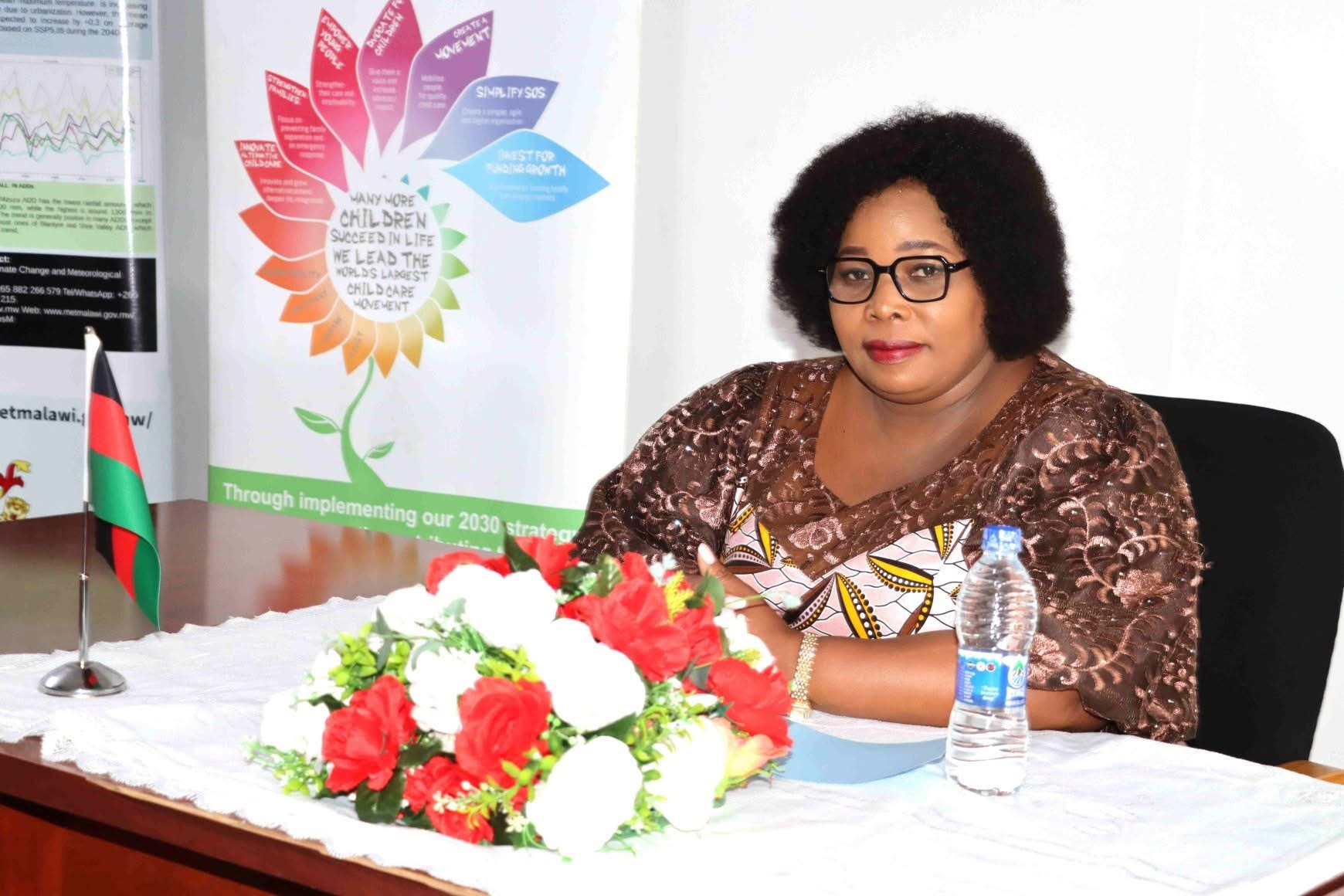
Minister of Gender, Children, Disability & Social Welfare, Mary Navicha
* While 56% reportedly receive permission from parents or guardians to go to the streets to beg, which reflects a serious gap in parental responsibility and household capacity
* As her Ministry successfully reintegrated 325 street-connected children, comprising 141 girls and 184 boys, with their families across all districts in Malawi between January 2025 and January 2026
By Duncan Mlanjira, Maravi Express & Chifundo Mulekano, Malawi News Agency (MANA)
Minister of Gender, Children, Disability & Social Welfare, Mary Navicha has expressed “deep concern that 88% of street-connected children have, at least, one living parent, while 56% reportedly receive permission from parents or guardians to go to the streets to beg.

Advertisement
This, said the Minister at a press briefing yesterday in Blantyre, “reflects a serious gap in parental responsibility and household capacity as she called for collective action to address the increasing number of street-connected children in the country.
She emphasised that poverty and family breakdown are the main contributing factors on children roaming the streets to be, while also highlighting efforts that her Ministry has achieved, which includes successfully reintegrating 325 street-connected children, comprising 141 girls and 184 boys, with their families across all districts in Malawi between January 2025 and January 2026.
“Government is also working with partners to provide post-placement support to reintegrated children,” she said, adding that the Ministry “recognises the dire situation of street-connected children in the country, currently estimated at over 4,000”.
“These children are exposed to violence, abuse, exploitation, neglect, and discrimination, and are often denied access to education, healthcare, and other basic human rights.
“Contributing factors include household poverty, gender-based violence, child abuse and neglect, family dysfunction, lack of parental care and support, poor parenting skills, urban migration, and lack of sustainable livelihoods.”
The press briefing was held as part of commemorating the annual International Day of Families, which falls on May 15 and Navicha maintained that this year’s theme; ‘Families, Inequalities and Child Wellbeing’, “highlights the vital role families play in shaping our society and underscores the impact of inequalities and population growth on family life”.
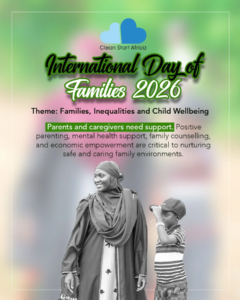
She underpinned that the government recognises families as the foundation of society, adding that they are “the primary institutions where individuals are nurtured, values are instilled, and social cohesion is promoted”.
“However, increasing population growth has brought significant changes to family structures, dynamics, and wellbeing. Population growth in communities has resulted in increased migration to cities and trading centres, leading to overcrowded housing, inadequate access to social services, unemployment, and weakening of extended family support systems.”
She thus unveiled that the Government has implemented several policies and programmes aimed at strengthening family units and addressing challenges affecting families and communities.
“These interventions include family & child counselling; child maintenance services; alternative care placements; mitigation of divorce & gender-based violence; child custody & guardianship support; mental health & psychosocial support; child protection & case management; and positive parenting interventions.
“Government continues to promote family based care as an alternative to institutional care through foster care and adoption to ensure children grow up in safe, loving, and nurturing family environments,” she said, adding that the Ministry has trained 30 Trainers of Trainers to cascade parenting education at community level.
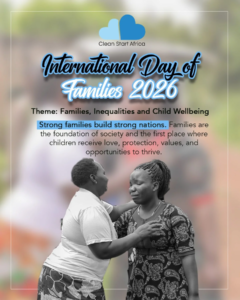
She announced that the International Day of Families will be formally commemorated on May 30 in collaboration with development partners, where more highlights will be shared: “Strong families build strong and resilient communities, and investing in families is investing in the future and wellbeing of our children,” she said.
“No child should be left behind because of poverty, inequality, or family breakdown. Street-connected children need protection, care, reintegration, and opportunities — not punishment or discrimination. Government, therefore, calls upon civil society organisations, development partners, religious leaders, traditional leaders, communities, and families to work together in strengthening families and improving child wellbeing.
“Let us place families at the centre of community development and national transformation in line with MW2063 Vision and the Sustainable Development Goals. Together, we can build stronger, safer, and more resilient families in our communities.”

Advertisement
Present was acting head of programmes for SOS Children’s Villages Malawi, Loyce Hezekiah, who said the International Day of Families offers an important chance to promote child protection through strong and supportive family structures.
“The International Day of Street-Connected Children and the International Day of Families are very important because they highlight the significance of our efforts to protect children through family-centered programs,” Hezekiah said.
The Ministry has received support from development partners that include SOS Children’s Villages Malawi, Save the Children, Catholic Relief Services, Project Hope Namibia, Ana ndi Achinyamata Patsogolo (ANAPA), World Vision Malawi, Alliance of Children Everywhere, the National Children’s Commission, YONECO, and World Relief, as part of the joint celebration of the day on May 30.
The United Nations Convention on the Rights of the Child states that children should live in stable, loving, and nurturing environments, with proper healthcare, nutrition, dignity, and equal opportunities — but many children living on the streets are denied these fundamental rights.
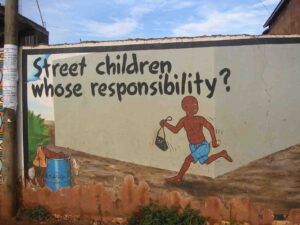
Thus the commemoration will also provide an opportunity for the Ministry to officially launch strategic documents aimed at strengthening families and promoting safe, caring, and nurturing environments for children.
These include National Children’s Care Reform Strategy; National Parenting Manual; Foster Care Training Manual; Handbook for Foster Parents; Foster Care Trainers Guide; and HIV-Sensitive Child Protection Case Management Manuals.
The Minister said: “The launch of these documents demonstrates Government’s commitment to strengthening family and community-based care systems, promoting positive parenting, and improving child protection services in Malawi.
“Every child deserves to grow up in a safe, loving, and supportive family environment. Addressing poverty, inequalities, violence, and limited access to essential services is critical to protecting children, promoting their wellbeing, and preventing children from ending up on the streets.”