

* There is no communication, no preparatory work with CAF not answering any questions regarding the competition
* Since the sensational statements by the South Africa vice-minister and the controversies concerning a possible postponement
* FAM breaks Malawi Scorchers’ training camp without indicating when the team will regroup for the tournament due to start on March 17
By Duncan Mlanjira
With the Women’s African Nations Cup (WAfCON) 2026 due to kick off in two weeks time, March 17, the uncertainty deepens over whether Morocco is ready to host the event since reports early last month indicated that the North African was preparing to submit an official request to the Confederation of African Football (CAF) to postpone the tournament to a later date due to intense pressure on its domestic league fixture list.

Advertisement
As the kick off date approaches, there is no communication from the hosts or CAF, no preparatory work such as workshops for tournament technical personnel, with CAF not answering any questions regarding the competition.
Football Association of Malawi has released the Scorchers back to their bases, who returned from COSAFA last Wednesday straight into training camp for their preparations for the WAfCON.
In its brief announcement on its official Facebook page, FAM just indicated that “the team will regroup regroup in due course to finalise preparations ahead of the tournament, which will be held in Morocco later this month”.

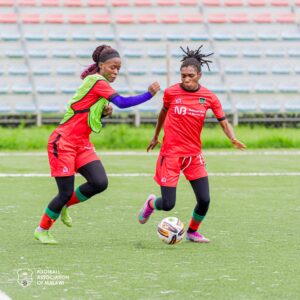
Scorchers were in camp since their return from the COSAFA

A report by sportnewsafrica.com on Saturday indicates that the tournament “has still not been officially confirmed internally by the CAF [and] worse still, Morocco has again explained that it was not able to organise the competition on the scheduled dates in March”.
“On Monday, during a meeting organised by the media department of the CAF with the communication managers of the affiliated federations, no concrete response was given regarding the WAfCON. No workshop has been conducted either, unlike the usual before such a competition.
“In a confederation in turmoil after a last eventful Executive Committee where the president Patrice Motsepe did not address for one second the subject of the WAfCON – except before the media to reassure everyone. This lack of transparency irritates many federations who still do not know if the competition will really be maintained.”
Last month, a report by Foot Africa quoted Morocco’s daily Al Mountakhab as saying the Royal Moroccan Football Federation (FRMF), led by president Fouzi Lekjaa highlighted that the intense pressure on the national fixture list includes repeated postponements of its professional championship, due to several commitments including the African Nations Championship (CHAN), the Arab Cup and the AfCON, which Morocco concluded hosting on January 10.
These, according to the report, have severely disrupted Morocco’s domes schedule as they also have to honour the requirement by world football governing body, FIFA that local championships must conclude before May 15 — thus making the organisation of the WAfCON 2026 “even more complicated”.

South Africa then came to the fore to express its readiness to step in if CAF decides that alternative arrangements are necessary, quoting sports minister, Gayton McKenzie, who emphasised that “no formal decision has been taken to relocate” the WAfCON 2026 away from Morocco.
Initially McKenzie’s deputy Peace Mabe had publicly announced that South Africa would step in and stage the finals, who told SABC Sport: “When Morocco said ‘We are not able to host’, South Africa, we said ‘Yes, we are available’. We are going to take it.”
According to sportnewsafrica.com, after been aware of the problem, “CAF had discreetly surveyed several countries to have a plan B” and that besides South Africa, it had even informally asked Algeria if it was potentially interested, “but it was denied”.
The report also indicates that there is symbol of the tensions between CAF president Patrice Motsepe and FRMF boss, Fouzi Lekjaa, saying “this dialogue of the deaf reached its climax last week when a statement was finally supposed to fall on the official website of the Confederation. Eight days later, nothing had been published yet”.

Motsepe and Fouzi Lekjaa in lighter moment with FIFA president Gianni Infantino (centre)
“Patrice Motsepe repeated several times that it was out of the question to change the calendar because of the qualifiers for the upcoming Women’s World Cup. Problem, Morocco remains firm and repeated its inability to organise the WAfCON in March.
“Faced with this impasse, doubts are gathering more and more while several important voices are being heard internally about the lack of respect and transparency of CAF towards the committed national teams and women’s football in general.”
The Guardian took cognizance last month that historically, CAF has imposed sanctions on host nations that withdraw close to the commencement of a tournament and gave an of 2015, when Morocco was suspended and fined after withdrawing from hosting the men’s AfCON over Ebola concerns.
However, the sanctions were later overturned by the Court of Arbitration for Sport — “however, observers suggest CAF may adopt a softer stance this time, given the close relationship between CAF president Patrice Motsepe and Morocco president, Fouzi Lekjaa, who is CAF vice-president.

Motsepe and Fouzi Lekjaa
“For Morocco, the late withdrawal raises questions about its future role and reliability as a major host in African football, as the continent watches closely how the situation unfolds,” reported The Guardian.
From last Friday, there have been a series of high-profile friendly fixtures that have been arranged to provide competitive rehearsal before the tournament kicks off in which the host nation Morocco dated Burkina Faso in Rabat on Friday followed by three on Saturday — Cameroon v Nigeria, Côte d’Ivoire v Benin and Algeria v Egypt.
Yesterday, it was Benin v Kenya; today Cameroon v Nigeria, Algeria v Egypt, Morocco v Burkina Faso; and tomorrow, Cote d’Ivoire v Kenya.
At the WAfCON, Malawi Scorchers were drawn into Group C alongside fellow COSAFA side and neighbours Zambia, 10-time champions Nigeria and North Africans Egypt.
Group has hosts Morocco alongside North African rivals Algeria, West Africans Senegal and East Africans Kenya, while Group B has South Africa, Côte d’Ivoire, Burkina Faso and Tanzania with Ghana in Group D with fellow West Africans Cameroon and Mali COSAFA side Cape Verde.

Defending champions Nigeria