

The referee blowing the whistle to end 90 minutes just after Morocco missed the penalty
* Once play is allowed to continue and the match is completed, the result obtained on the field must stand
* Under the applicable rules of the Confederation of African Football (CAF), match officials have full authority during the game
* I call on the court of Arbitration for Sports (CAS) and other relevant authorities to move decisively so that this travesty does not stand
By Duncan Mlanjira
African Footballer of the Year (1989 and 1995), who was named African Player of the Century in 1996, has joined many who have condemned Confederation of African Football (CAF) for stripping the Africa Cup of Nations (AfCON) from Senegal, saying “football must be decided on the pitch, not re-decided after the final whistle”.

Advertisement
Writing on his Facebook account, Weah — the first African former professional footballer to become a head of state, and the only African Ballon d’Or and FIFA World Player of the Year winner in history, both awards in 1995 — analyses that “in football, the Laws of the Game are clear: the referee on the pitch is the final authority on decisions made during the match”.
“Once play is allowed to continue and the match is completed, the result obtained on the field must stand. Under the applicable rules of the CAF, match officials have full authority during the game.”
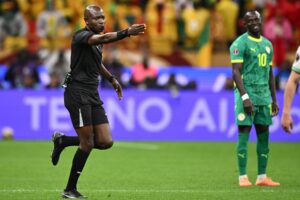
The referee, man in charge
He continues to argue that CAF regulations are in line with the FIFA Laws of the Game, which provide that: ‘The referee has full authority to enforce the Laws of the Game in connection with the match to which he has been appointed, and his decisions on facts connected with play are final’ (Law 5, Laws of the Game (applied by all Confederations including CAF competitions).
“In the present case of the final AfCON match between Senegal and Morocco, the referee allowed the match to continue after the walk-off by Senegal, and the game was completed, including extra time, with a result obtained on the field of play.
“Additionally, post match, the referee report noted a stoppage during the match, not a forfieture and recommended appropiate sanctions for the infractions during the match.
“For this reason, the subsequent decision by CAF committee, taken after the match had already been concluded, should not override the authority exercised by the referee during the game in keeping with the Laws of the Game — Law 5.
“There is, therefore, no sporting justification to nullify a match that was completed in accordance with the referee’s authority and the Laws of the Game — otherwise the beautiful game will head down a slippery slope where committee room officials and not match officials will be making post match rulings to override referees on-field decisions like penalties, offside and red cards.”
Weah maintains that CAF’s decision “has further scarred and blemished African football, undermining confidence in the fairness, consistency, and integrity of football on the continent”, and he thus calls on the court of Arbitration for Sports (CAS), to which Senegal is appealing, and other relevant authorities “to move decisively so that this travesty does not stand”.

George Weah
Considered one of the greatest strikers ever, Weah joins many pundits against CAF decision, with some believing that CAF-president-Patrice-Motsepe-accused-of-letting-Morocco-dictate-law/.

CAF president Patrice Motsepe and Morocco FA boss, Fouzi Lekjaa, who is CAF vice-president
In response to Weah’s post, Samuel Biyoski said: “Articles 81, 82 & 83 cited by CAF all mentioned ‘at the ground’ and not ‘on the pitch’” adding that in law, semantic matters. Senegalese players never left the stadium (‘ground’) because they were still within the stadium premises. Mark my words, CAS will judge Senegal as the rightful winner at the end of the day.”
Akot Dut Wiir observed that it’s a complex issue, saying “Articles 81, 82 & 83 cited by CAF all mentioned ‘at the ground’ and not ‘on the pitch’, the distinction is crucial because stadium premises include the ground and surrounding areas”.
“The implications of this are huge, and I’m confident that CAS will review the case thoroughly, considering the nuances of the law and the spirit of the game.”

Advertisement
Nana Yeboah Asiama observed that if a referee awards wrong infringement to either of the opposing teams, the decision is not reversed, rather the referee is punished because “it means the final decision by the referee cannot be reversed” — whether right or wrongly applied so long it ended, that’s final.
Others were incredulous that Morocco “want to win a trophy via email while Ivan Godson Nickerson observed that “football is 90 minutes plus added time but in Africa it’s 90 minutes plus 2 months”, — with Ugwu Sixtus saying: “In Africa, they have two referees, one on the pitch and another in the court room.”
Sammy Mugo said: “Senegal played against Morocco, against the CAF, against referee, against VAR, against the ball boys, against the towel thieves, and against the FIFA, and they won — this is the greatest history in African football; long live Senegal.”
Given Mawoyo hinted that “CAF should have started their investigations on a disallowed Senegal goal [because] that’s where all this conflict came from. The officials agreed to continue the game and award a spot kick to Morocco, and the match proceed to extra time till Senegal finds the net.
“Whatever CAF decides now is a joke, Senegal remain the winner. Congratulations again to Senegal,” says Mawoyo.
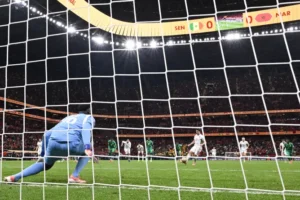
Morocco’s Brahim Diaz takes his penalty, which was saved by Senegal goalkeeper Édouard Mendy. (AFP/Getty Images)
Mafarlane Munyanga opined that the issues centres on the referee himself, who “thought that Morocco would score that penalty to guarantee a straight win for Morocco, as the game was already in its end time”.
“Unfortunately, Morocco, through Diaz missed that penalty, which made the game culminate in extra-time, and Senegal won it!” — which Andrew Musili agreed to, saying: “Morocco were even allowed to take their penalty which they missed. They had their day, and were even given the chance to win, even after the stoppage.”
Odama Sunday Abachor asked what is “the meaning of ‘ground’ in football? You are saying they were still in stadium premises, doing what? Is football played in stadium premises or on the pitch?
“The law clearly says if you leave the pitch without authorisation from the referee then you will be counted as a loser — there’s no two ways about it.
“If Senegal wins at the CAS, it will set a dangerous precedence because many teams will imitate what Senegal did, teams will start walking out from pitch at any slightest provocation.
“Moreover if Senegal wins at CAS, do you think CAF will keep quiet? Is it CAS that will tell CAF how to implement their rules, CAF will ban Senegal from AfCON for at least two tournaments. So it’s better for Senegal to return the trophy.”
Sundesco Clarke summed it up by thanking George Weah, saying his analysis “not only demonstrates professionalism and rational analysis but also upholds the spirit of sportsmanship and fairness that football represents”.
“It is a strong reminder that the game must always be decided on the field, in line with established rules and respect for due process.”

Weah, former president of Liberia