


The 3,000 sugar bales discovered being withheld from consumers at Simama shop in Dedza
* There is need for business regulators to help Illovo to identify and eliminate the involved sugar barons from the market
* However, the problem in Malawi is that even politicians who are expected to solve the problem are involved in the lucrative business—economic experts
By Duncan Mlanjira
From the intel gathered by Maravi Express and confirmed by reliable sources, sugar scarcity is cunningly being perpetrated by a cartel of distributors through hoarding the commodity in order to inflate prices.

Advertisement
Economic experts we talked to suggest that there is need for business regulators to help Illovo Sugar Malawi to identify and eliminate the involved sugar barons from the market — “however, the problem in Malawi is that even politicians who are expected to solve the problem are involved in the lucrative business”.
Just over a week ago, Competition & Fair Trade Commission (CFTC) raised red flags asking the public to be alert and report any suspected business malpractices surrounding sugar and any other products or services after the Commission uncovers-simama-shop-in-dedza-withholding-3000-bales-of-illovo-malawi-sugar/.
Maravi Express undertook an investigative mission on challenges on sugar distribution by surveying availability of the commodity is selected districts of Blantyre, Mulanje, Phalombe, Zomba, Balaka, Mangochi, Ntcheu, Dedza and Lilongwe — as well as border trading centres of Muloza in Mulanje, Chiponde in Mangochi, Tsangano in Ntcheu, Dedza and Mchinji.
The key findings is that when sugar is available in retail shops, the prices soar from the recommended K3,700 per 1kg packet of brown sugar to K5,000 up to K6,000.
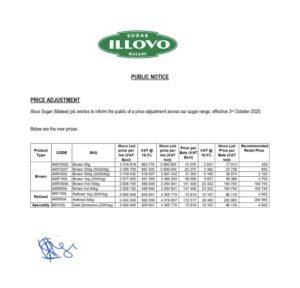
The recommended prices of sugar
Three wholesalers in Muloza confessed that they are left with no option but to put a mark up on the sugar that they stock through their own initiatives of paying for transport costs to buy the commodity from Limbe wholesalers.
PriceWorth Distributor, branded in Illovo colours, was closed when we inquired, one wholesaler said the shop has not been stocked with sugar and thus the wholesalers have no option but to travel to Limbe or Blantyre CBD.
Consumers sometimes suspect that Illovo Sugar Malawi exports more sugar at the expense of local consumption but this accusation has always been clarified by the company based on its financial report, which has always been shared to its shareholders, the media, as well as the National Assembly.
On their fact finding mission in 2023, to comprehensively analyse the market trends of sugar prices in relation to sugar being smuggled into the neighbouring countries, Parliamentarians visited the border town of Muloza where traders-attests-to-parliamentary-committee-on-trade-that-illovos-sugar-prizes-are-lower-in-malawi-than-in-mozambique/.
PriceWorth Distributor told the Parliamentary Committee that Mozambican wholesalers were then buying their sugar and transported it back home using pedal or motorcycle taxi operators (kabazas) through uncharted routes.
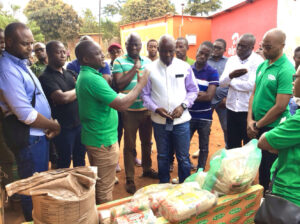
The Parliamentary Committee on its tour of Muloza in 2023
When Maravi Express asked if the sugar scarcity is due to illegal smuggling on our visit to Muloza, a kabaza operator indicated that most of the Malawian kabazas refuse to carry out such a mission because Malawi Revenue Authority (MRA) scaled up its patrol surveillance to deter the illegal operations.
“We can’t risk it anymore because MRA is on high alert using drones on the routes we were using,” said a kabaza operator — while also disclosing that due to high prices of sugar, people are now buying sugar from Mozambique at the cost of between K4,500.
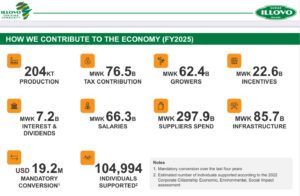
At an engagement with the media on Monday last week, Illovo Sugar Malawi Managing Director, Ronald Ngwira unpacked that their export sales volumes drastically declined in the past five years in order to meet the local demand following cases of smuggling.
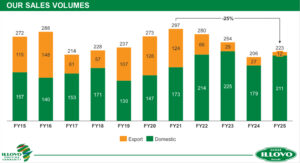
But it now comes to the fore that the withholding of sugar by the cartel of distributors is the major culprit, who also are suspected of smuggling the commodity as might be presumed through the case of Simama shop, located in border district with Mozambique.
At Chiponde in Mangochi, we found retailers selling Mozambique sugar at K4,600 per 1kg packet as opposed to Illovo’s being sold between K5,200. At Tsangano and Dedza, we verified that consumers buy Mozambique sugar when Illovo’s is not available or it’s on a higher side in terms of prices.
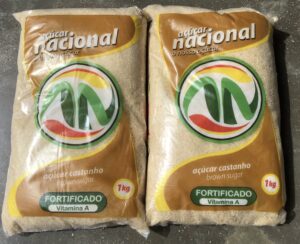
Mozambique sugar that we bought at Majuni trading centre along road to Chiponde Border
The same situation is happening in Mchinji, where table top retailers are selling the Illovo commodity at K5,200. We found no Illovo sugar in stock at Wautali Distributor, whose shop is branded in Illovo colours as well as its distribution lorry parked by the premises.
As per Maravi Express intel, the biggest problem in sugar scarcity is distributors as our sources indicate there must be a syndicate that is deliberately hoarding sugar and selling at recommended prices only to wholesalers who are in the syndicate.
These wholesalers in the syndicate, acting as middlemen, sell to other wholesalers and table top retailers at an inflated price. As a syndicate, the proceeds by these colluding wholesalers are shared with the distributor.
The tabletop retailers, thus sell the sugar at between K5,000 to K6,000 a packet to the consumers.
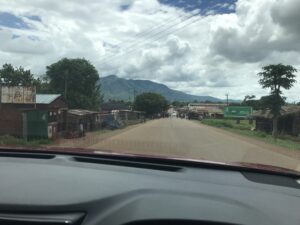
Muloza in Mulanje
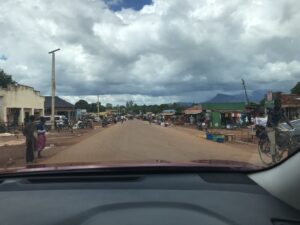
The case of CFTC’s discovery of Simama shop refusing wholesalers and consumers from buying the commodity, led to the Ministry of Industrialisation, Business, Trade & Tourism sealing off the business.
The shop managers initially told CFTC that they received a consignment of the 3,000 bales of sugar on December 8, out of which they sold 1,500 bales to the locals in Dedza and the rest was destined for Thete — a trading centre in Dedza.
But it proved to be a lie after CFTC officers inspected their warehouse in which they discovered that they had 3,000 bales in stock — contrary to what they had declared and when quizzed about this anomaly, they changed statements alleging that the 3,000 bales were not for sale at Dedza but were to be sent to their shop in Thete.
The CFTC officers became suspicious of this change of statements and as to why a rural trading centre of Thete could be allocated double the volume of the product as compared to the Dedza town.
CFTC indicated that they acted upon a tip as they usually do but economic analysts believe that this is not enough in as far a regulator should do — suggesting that CFTC should put in place a system of continual tracking of sugar distributors if they indeed sell at recommended prices.

UK-based economic expert, Thomas Ngoma — who is an executive management consultant with over 35 years’ experience advising clients on strategic business transformation, both in public and private sector regulated environments — applauded Maravi Express for the investigation, saying: “This confirms what we all have suspected all along that the sugar shortage is not a production problem”.
“It is a distribution‑governance problem, driven by collusion, hoarding, and arbitrage incentives created by weak oversight and a single‑supplier system.”
Ngoma belongs to economic WhatsApp forum in which, he says, experts offer reform suggestions but are ignored by the authorities: “They just do not want to listen and admit that they don’t know how to fix the situation because they pretend to know better.
“Corruption has infiltrated every sector and every fibre. Authorities ignore every advice we propose; we keep fighting for our cause for a better Malawi.”

Thomas Ngoma
When contacted, Consumer Association of Malawi (CAMA), John Kapito agreed that the sugar distribution is indeed a cartel that needs to be sanitised, adding that Illovo is attributing the scarcities to hoarding and illegal exports.
CAMA wrote to Illovo Sugar Malawi on December 15 enquiring on sugar availability and pricing on the market, which MD Ngwira responded to on December 17 in which he expressed his appreciation of the role CAMA “plays in safeguarding consumer rights”.
“We are aware of the concerns regarding sugar not being available in certain areas,” wrote Ngwira. “While our production and dispatch operations continue to meet local market, we have reason to believe that some of the current scarcity may be attributed to unauthorised exports and deliberate hoarding by certain actors within the supply chain.
“These actions undermine market stability and distort the availability of sugar to consumers,” said the MD, while also indicating that Illovo is “actively working with authorities and stakeholders, specifically with the Ministry of Industrialisation, Business Trade & Tourism to address the root causes of the current scarcity and ensure that corrective measures are implemented”.
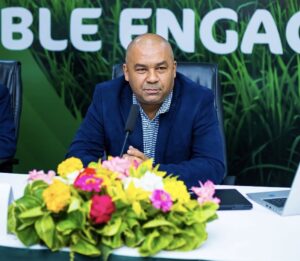
MD Ronald Ngwira
He maintained that Illovo’s production and distribution systems remain robust and responsive and pledged that the company will continue to monitor market dynamics closely.
“In our engagement with the Ministry, we have provided necessary information bearing in mind that the Ministry has the legal mandate to intervene where necessary. For this reason, we have confidence that our collaboration with the Ministry is enough to contain and address the situation.”
Having been appraised of Maravi Express’ key findings, another HardTalk economic expert, Dr. James Kadyampakeni expressed his dismay of what is on the ground, saying the whole saga “exposes something more troubling than logistical challenges or temporary supply gaps”.
“What you have documented points to Malawi’s sugar shortages being largely self-created, deliberate, and sustained to benefit a small, well-connected group, while the public bears the cost.”
“Across all the border points you visited, a clear pattern emerges — sugar exists in the system, but it is deliberately choked at the distribution level. Wholesalers are forced to self-organise, travel long distances, absorb transport costs, and pass those costs down the chain.

Dr. Kadyampakeni
“That alone explains higher prices, but it does not explain why Illovo-branded distributors remain empty while sugar circulates elsewhere at inflated prices. That gap can only be explained by intentional withholding.”
He observed that what is transpiring on the ground “mirrors textbook cartel behaviour in that distributors selectively supply sugar at recommended prices only to insiders. The final burden falls on consumers paying K5,000–K6,000 per packet for a basic commodity.
“This is an artificial shortage, engineered to extract rents, not a failure of production. The availability of cheaper Mozambique sugar in Chiponde, Tsangano, Dedza, and elsewhere further undermines the official narrative.
“If foreign sugar can cross borders and reach Malawian consumers more reliably than domestically-produced sugar distributed through branded outlets, then the problem is clearly not supply, but governance and enforcement.”

Advertisement
On secrecy and failure by the authorities to name actors involved, Kadyampakeni describes it as “indefensible”, saying: “Sugar is an essential good. When shortages and price manipulation persist, confidentiality cannot trump public interest.
“By hiding behind trade names, regulators are effectively shielding individuals and networks that may be orchestrating market abuse. Transparency is not optional in such circumstances — it is a regulatory obligation.”
He pointed out the case of Simama shop case “proves that authorities are aware of hoarding and withholding” and he described this “isolated and without sustained enforcement, signals tolerance, not deterrence. When names are not disclosed, and consequences are unclear, the message to cartels is simple: continue”.
He also agreed to the observation that the CFTC is reactive rather than proactive, emphasising that “it is deeply concerning because regulators are not meant to wait for citizens to do investigative work at personal cost”.
“In essential commodity markets, regulators should be permanently present: auditing stock levels, tracking supply chains, conducting unannounced inspections, and acting before crises reach consumers.
“What is happening instead is selective enforcement and delayed reaction. This allows shortages to be manufactured, prices to spiral, and public anger to grow — while those benefiting remain untouched. That is a failure of mandate.”
On the bigger picture, Kadyampakeni said: “These shortages are not accidental — they are the result of weak enforcement, deliberate inaction, and the protection of vested interests.
“When the government fails to act decisively, it becomes complicit in sustaining a system that enriches a few while impoverishing many.
“Your investigation should not have been necessary. The fact that it was and that it confirms what ordinary Malawians experience daily, underscores a serious breakdown in economic governance.
“Until the government moves from statements to enforcement, from secrecy to disclosure, and from reaction to prevention, Malawi will continue to suffer from crises it creates itself.”
On his part, economist Ngoma, agreed that “distributors hoard sugar because they earn more by selling to colluding wholesalers at inflated margins and that there is no real-time monitoring of stock flows in the country from Chitipa to Nsanje.
He also observed that “penalties to offenders are weak and sporadically applied” and suggested that there should be mandatory digital stock reporting for all accredited Illovo distributors in Malawi (daily stock-in, stock-out, and sales) — accompanied by randomised audits by CFTC, MRA and the Police “to break the predictability of inspections”.
“There should also be automatic penalties for unexplained stock withholding,” he said, again citing the case of the 3,000 bales found in Dedza: “There is need for distributor licensing reform to ensure that licenses become conditional on transparent stock movement. Violations trigger suspension and re-allocation of territory.”


Advertisement