* Nationwide truck overload surveys currently underway will provide baseline data that will inform the new strategy and help authorities identify corridors where overloading is most prevalent
* As the Roads Authority observes that truck overloading is contributing to the premature deterioration of roads across the country
By Arthur Kaludzu MANA
The Directorate of Road Traffic & Safety Services (DRTSS) and the Roads Authority (RA) — through the Southern Africa Trade and Connectivity Project (SATCP), is reviewing the country’s Vehicle Load Control Strategy to develop a new plan for 2026-2030 aimed at addressing the growing challenge of truck overloading.

Advertisement
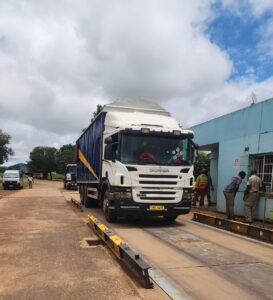
As part of the process, authorities conducted a high-level monitoring visit during truck overload surveys at Mchinji Border today to raise public awareness on the impact of overloading on road infrastructure and the importance of enforcing loading regulations.
DRTSS Director Christopher Madalitso Kuyera, indicates that the nationwide truck overload surveys currently underway will provide baseline data that will inform the new strategy and help authorities identify corridors where overloading is most prevalent.
“About 80% of our domestic freight travels using the road and almost all passenger movement depends on road transport, making the protection of road infrastructure critical to the country’s economy,” Kuyera said.

Kuyera
He emphasised that strengthening enforcement of loading limits will not only protect road infrastructure but also improve road safety across the country, an assertion that was attested to by RA Director of Planning & Development, Willard Kaunde, who said truck overloading remains a serious challenge affecting the lifespan of roads.
“Indeed, it is a serious problem because we are facing a lot of premature failure of our roads due to overloading of heavy vehicles,” said Kaunde during the high-level monitoring visit and media engagement on truck overload surveys at the Mchinji Border
“He explained that road pavements are designed based on projected traffic volumes and loading capacity, which determine the thickness and durability of the road layers,” he said. “If there is an overload, what it means is that the layers that we have designed may not be able to handle the loading, and that leads to faster deterioration of the road.”

Kaunde
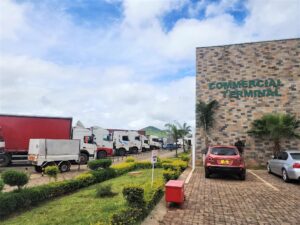
Kaunde also highlighted that the upcoming strategy will guide the country on how to strengthen vehicle load control while improving road asset management to make Malawi’s road network more resilient.
He also noted that constructing a new road currently costs between US$750,000 to US$1 million per kilometre, warning that damage caused by overloading leads to significant rehabilitation and reconstruction costs following premature road failure.
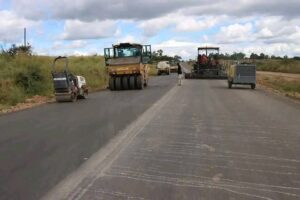
He explained that road designs are based on projected traffic volumes and loading capacity, which determine pavement thickness and durability — and that when trucks exceed the prescribed load limits, the pavement layers become unable to withstand the pressure, leading to faster deterioration of roads.
Kaunde added that the new strategy will outline measures to strengthen vehicle load control while also supporting broader road asset management efforts to build more resilient road networks.—Edited by Duncan Mlanjira, Maravi Express