
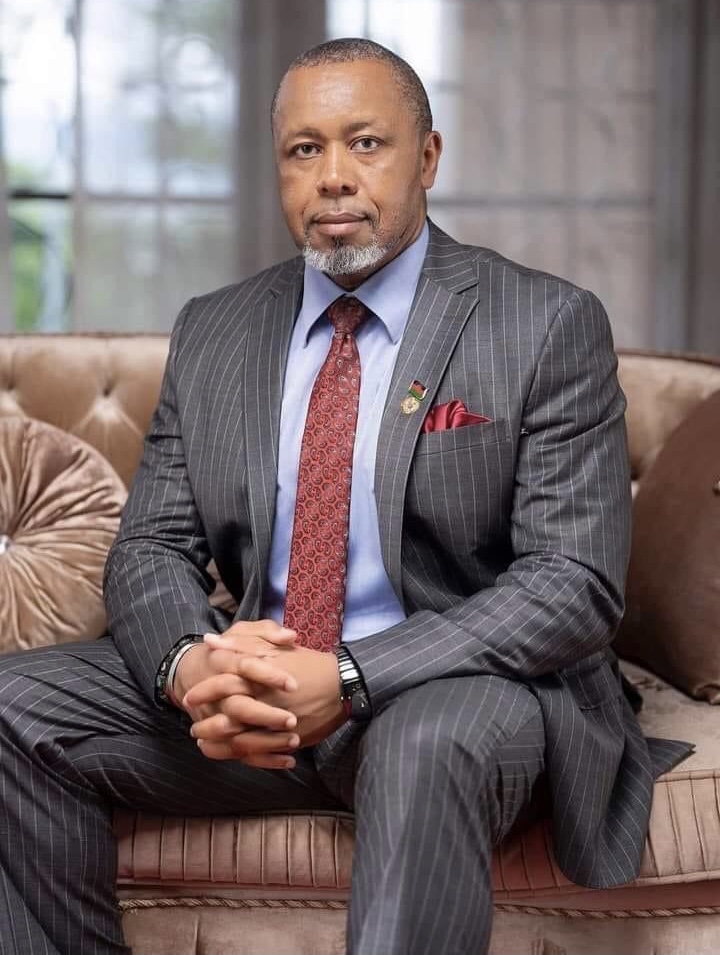
* At a time when many nations struggle to confront difficult past events, this move signals a willingness to place truth, justice, and institutional integrity above convenience—Chifipa Mhango
By Duncan Mlanjira
President Arthur Peter Mutharika’s government to institute a fresh inquiry into the plane crash in Chikangawa in June 2024 that killed Vice-President Saulos Klaus Chilima and eight others, represents a significant and commendable step toward national healing, transparency, and accountability.

Advertisement
This is the reaction from Chifipa Mhango, who is Chief Economist for South Africa-based Don Consultancy Group — who passionately comments of economic and social issues affecting Malawian livelihoods — on the announcement by Minister of Justice & Constitutional Affairs, Charles Mhango made in Parliament yesterday, February 24.
Minister Mhango was presenting a progress report on investigations into the accident, saying earlier inquiries failed to provide conclusive answers on the cause of the tragedy — thus the decision for a fresh inquiry and investigation to be carried out into the accident.
The Minister said his review of reports produced by the Commission of Inquiry and Germany’s Federal Bureau of Aircraft Accident Investigation revealed gaps that weakened the credibility of earlier findings.
And in his reaction, Chief Economist Mhango said “by authorising a fresh and independent inquiry, the President has demonstrated political courage and sensitivity to public concern. At a time when many nations struggle to confront difficult past events, this move signals a willingness to place truth, justice, and institutional integrity above convenience.
“For many Malawians, and those of us that have shared childhood memories with Saulos Chilima as young boys from the ages of 9 years — growing up in Nyambadwe as neighbours, all the way to University of Malawi, Chancellor College — the tragedy left behind not only grief, but also unanswered questions.

Chifipa (2nd left) with late Saulos Chilima (2nd right) at Chancellor College
“While official explanations were provided, public confidence in the initial findings has remained fragile. The renewed inquiry, therefore, offers an opportunity, not only to clarify what happened, but also to restore trust in public institutions.”
Beyond technical explanations
Mhango emphasises that “a credible reinvestigation must go beyond narrow technical conclusions”, adding that “while mechanical failure, weather conditions, and pilot actions are important, they represent only part of the story”.
“Aviation accidents are often the result of multiple interacting factors, including institutional weaknesses, human judgment, regulatory lapses, and operational pressure.
“The new inquiry must, therefore, examine whether the aircraft was properly maintained, whether safety standards were followed, and whether warning signs were overlooked. Maintenance records, inspection reports, and certification processes must be scrutinised thoroughly and independently.”
The role of institutions
Mhango further says public attention must also turn to the aviation institutions responsible for operating and regulating state aircraft, including the Malawi Defence Force, whose military passenger Dornier plane made the ill fated flight from Lilongwe to Mzuzu.

The ill-fated Dornier

“Clear questions must be answered: Who authorised the flight? Was a formal risk assessment conducted? Were regulatory exemptions granted, and if so, on what basis? Did oversight mechanisms function as intended?
“If institutional shortcomings contributed to the tragedy, they must be acknowledged openly. Silence or defensiveness would only deepen public mistrust.”
Weather, communication and emergency response
He also observes that while weather conditions were reportedly to have played a significant role in the crash, “the reinvestigation must establish whether accurate and timely meteorological information was available and whether it was properly acted upon”.
“It must also determine whether alternative routes or landings were realistically considered,” says Mhango. “Communication between the aircraft, air traffic control, and ground operations deserves close attention.
“Breakdowns in communication can turn manageable risks into fatal disasters. Similarly, the effectiveness of search and rescue operations must be reviewed, including response time and coordination among agencies.”
Protecting evidence and ensuring independence
Mhango believes that “the credibility of any investigation rests heavily on how evidence is handled [and that] the crash site, flight data, and technical components must be re-examined with the highest forensic standards”.
“Any gaps in the original evidence chain must be explained transparently. Just as important is the independence of the inquiry, investigators must be insulated from political, military, or administrative influence.
“International aviation experts should be involved where necessary to ensure compliance with global best practice. Findings must be published in full, without selective editing. The public has a right to know not only what went wrong, but also who bears responsibility.

Crash site not so densely forested
Families at the centre
At the heart of this tragedy are grieving families who have waited years for clarity, continues Mhango, emphasising that “they deserve honest communication, access to information, and respectful engagement throughout the process”.
“A reinvestigation that excludes victims’ families risks losing moral legitimacy. Justice is not only about technical accuracy; it is also about human dignity.
“President Mutharika’s decision to reopen the inquiry sends an important message to these families: that their pain has not been forgotten, and that their right to truth is recognized. Justice must be both technically sound and morally grounded.”
Leadership and accountability
Mhango maintains that “the success of this process will ultimately depend on sustained political will [and that] President Mutharika’s initiative has laid a strong foundation, but it must now be supported with adequate resources, institutional cooperation, and unwavering commitment to independence”.
“If mistakes, negligence, or misconduct are identified, corrective action must follow. This includes disciplinary measures, legal proceedings where appropriate, and institutional reform. An inquiry that produces reports without consequences will only reinforce cynicism.”

Advertisement
From tragedy to reform
“The loss of Vice-President Chilima and his colleagues was a national tragedy — but it can also become a catalyst for meaningful reform. Improved safety standards, stronger oversight, better training, and clearer accountability structures can save lives in the future.
“The reinvestigation must, therefore, be forward-looking. Its purpose is not to assign blame for its own sake, but to ensure that similar tragedies never happen again.”
Mhango further stresses that this renewed inquiry “is, at its core, a test of Malawi’s democratic maturity [since] it asks whether the nation is prepared to confront uncomfortable truths, hold powerful institutions accountable, and place human life above political convenience”.
“If conducted with integrity, transparency, and courage, the reinvestigation can help heal public wounds and strengthen confidence in governance. If mishandled, it risks deepening divisions and eroding trust further.
“The country stands at a crossroads. The path chosen will determine whether this tragedy becomes another unresolved chapter or a turning point toward greater accountability and safer skies.”

Chifipa Mhango
In conclusion, Mhango feels that “in reopening this sensitive and painful chapter of Malawi’s history, President Peter Mutharika’s administration has demonstrated strong political leadership and a genuine commitment to national integrity”.
“By choosing transparency over silence and accountability over convenience, his leadership has reaffirmed that public office exists to serve the people, not to shield institutions from scrutiny.
“This decision sends a powerful message: that every Malawian life matters, that justice must never be postponed, and that truth remains the foundation of lasting unity. It reflects an administration willing to confront difficult realities in pursuit of a safer, fairer, and more accountable nation.
“If sustained with independence, professionalism, and openness, this reinvestigation will stand as one of the defining achievements of President Mutharika’s tenure, an enduring symbol of principled leadership and responsible governance.
“Through this bold step, his administration has not only honoured the memory of those who were lost, but has also strengthened Malawi’s democratic institutions for generations to come.
“History will remember this moment not merely as a reopening of an investigation, but as a reaffirmation of leadership rooted in justice and respect for human life.”

Advertisement