

* This is not a MERA issue, this is global war hitting your pocket. The problem is not the price increase, the problem is being unprepared for it
* If global events can change your life overnight, how prepared are you for what is coming next?
By Duncan Mlanjira
In his evaluation of the fuel price increase announced by Malawi Energy Regulatory Authority (MERA) with effect from today, April 1, financial market analyst, Benedicto Bena Nkhoma reminds his fellow citizens that this is not an isolated case of Malawi but a global issue following the war conflict in the Middle East.

Advertisement
Writing on his most-followed ‘Inspirational and Motivational’ Facebook platform, Bena Nkhoma — a respected social media influencer on economic matters — reiterates that the war involving Israel and the US against Middle East allies, is hitting Malawians’ pockets and will continue to do.
He asks: “If global events can change your life overnight, how prepared are you for what is coming next? Let’s think, let’s adjust — let’s move smart,” advises Nkhoma.
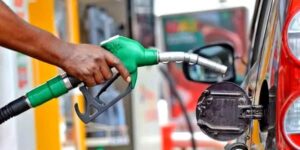
In a statement, MERA Board chairperson, Lucas Kondowe, announced increases in the maximum pump prices for petrol, diesel, kerosene, and Jet A-1 fuel, effective April 1, citing rising global oil prices due to ongoing Middle East tensions.
Petrol at K6,672 per litre, up from K4,965 (34% increase), diesel at K6,687 per litre up from K4,945 (35%), Kerosene from K3,200 to K5,824 per litre, and Jet A-1 fuel at Lilongwe and Chileka airports at K7,998 and K4,523 per litre, respectively.
MERA explains that the adjustments follow the Automatic Pricing Mechanism, which triggers price reviews when the in-bond landed cost (IBLC) exceeds a 5% threshold and the regulator emphasises that the price revisions reflect global market conditions and aim to maintain transparency and predictability in the fuel sector.

Benedicto Bena Nkhoma
In his previous post after the war broke out, Nkhoma alerted the public that “this was going to eventually hit [Malawi] hard”, and he reiterates that the Middle East region controls a huge portion of the world’s oil supply.
He explains further that through this war, oil supply has been disrupted, which has led to global prices going up and Malawi being an importer at higher cost, the prices of fuel here must automatically increase.
“Reality check: Malawi does not produce fuel, we are price takers, not price makers. So when global prices move, we feel it immediately,” he says, while warning that “this is just the beginning” because when fuel prices move everything moves to affect transport cost, food prices, business costs and everybody’s daily life.
But Nkhoma offers a reflection, by asking his fellow citizenry not to panic, but to adjust their livelihood systems of reducing unnecessary movement, control spending, strengthen income streams and protecting their cash.
“The problem is not the price increase, the problem is being unprepared for it,” says Nkhoma, who was supported by Innocent Ngulama by responding: “The fuel hike is not surprising, and was bound to happen. If one has been closely following the global trends and how the global market has been affected, they might not be taken aback.”

Advertisement
On his part, Joseph Kanyamuka said: “Beyond individual households, how prepared is our nation for such global events? For example, are we able to cushion Malawians as Namibia has done by removing fuel levies by 50%? etc etc given our limited fiscal space?
“Look at our agriculture, the lifeline for Malawi: we cant even protect/support a maize farmer who is producing at exorbitant input prices and selling that maize at very low price — as low as K20,000/50kg bag? Will that farmer be able to produce the maize next season?
“Exchange rate misalignment is killing us a lot — we are producing at an imformal exchange rate and selling at formal exchange rate. The gap is too wide — the implications for minimum farmgate pricing in Malawi!”
Andrea Longwe, while agreeing with Nkhoma on the ripple effects of the Middle East conflict on fuel prices, he however said: “…let’s not completely remove responsibility from our own government. Yes, Malawi is a price taker, but how prepared are we as a country to handle such shocks?
“That’s where the real issue is. Why do we always feel the impact more painfully than others? Why is there little cushioning mechanism for citizens? Why is cash circulation already tight even before such hikes?
“Right now, people are not just struggling with fuel prices — they are struggling to even access cash and maintain daily life. Businesses are slowing down. Transport costs are rising, but incomes are not increasing — and liquidity in the system is low.
“So while the war may trigger the problem, our internal systems are making it worse. Good leadership is not just about explaining problems — it’s about preparing citizens before the crisis hits.
“We need better economic planning; stronger reserves; improved cash flow in the economy; real support systems for ordinary Malawians — because at the end of the day, global problems are unavoidable, but local suffering can be reduced with proper governance.”


Eyk Enyama also opined that while global factors like the situation in Iran are real, “let’s not excuse our failures, such as poor decisions, lack of planning, no reserves, and weak policies, which make it worse for Malawi! Ultimately, how the issue is politically managed in Malawi determines its impact — so political influence cannot be ignored!!
However, Nkhoma emphasised that his posts are apolitical, and emphasised that “citizens should also take proactive role in planning for crisis — you just can’t leave it to Government alone. Before pointing fingers at others, we need to ask difficult questions, how prepared was I for exogenous shocks. How did I prepare my immediate people, this is African Ubuntu!”
“Whether you like it or not, things will continue to rise — that’s how the world is. Just put your finances in order to deal with the exogenous shocks.”
Meanwhile, in a statement issued yesterday, MERA’s acting Chief Executive Officer, Dad Chinthambi, reassured the public of a stable and reliable fuel supply despite uncertainty in global petroleum markets — and emphasising that the Authority is closely monitoring geopolitical tensions in the Middle East.

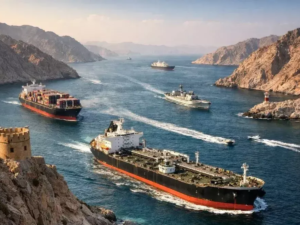
These include disruptions to key oil supply routes such as the Strait of Hormuz, a critical corridor for petroleum products, as well as movements in global fuel prices — thus MERA is working with fuel importers and other key stakeholders to strengthen supply arrangements and ensure continued availability of petroleum products nationwide.
Chinthambi further indicated that MERA will continue tracking developments in international petroleum markets and take timely measures in line with its mandate to safeguard energy stability — while urging the public to remain calm, avoid panic buying, and use available fuel responsibly while it implements measures to maintain supply.

Advertisement