
* In supporting the university’s Falling Walls Lab science innovation pitch day competition for the second year running
* Following the 2025 challenge in which the winner attended the science summit in Berlin and progressed toward turning her idea into a prototype
By Duncan Mlanjira
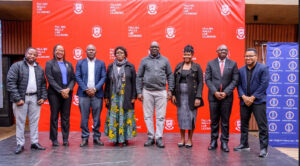
CDH Investment Bank reaffirmed its commitment to advancing innovation and supporting talented students at Lilongwe University of Agriculture and Natural Resources (LUANAR) during its 2026 Falling Walls Lab science innovation pitch day competition held on Friday August 14.

Advertisement
The occasion marked the bank’s ongoing partnership with LUANAR, aimed at helping the university achieve its strategic objectives.
CDH Investment Bank’s involvement follows the memorandum of understanding (MoU) it signed with LUANAR earlier this year, laying the foundation for collaborative efforts to foster innovation and talent development in Malawi.
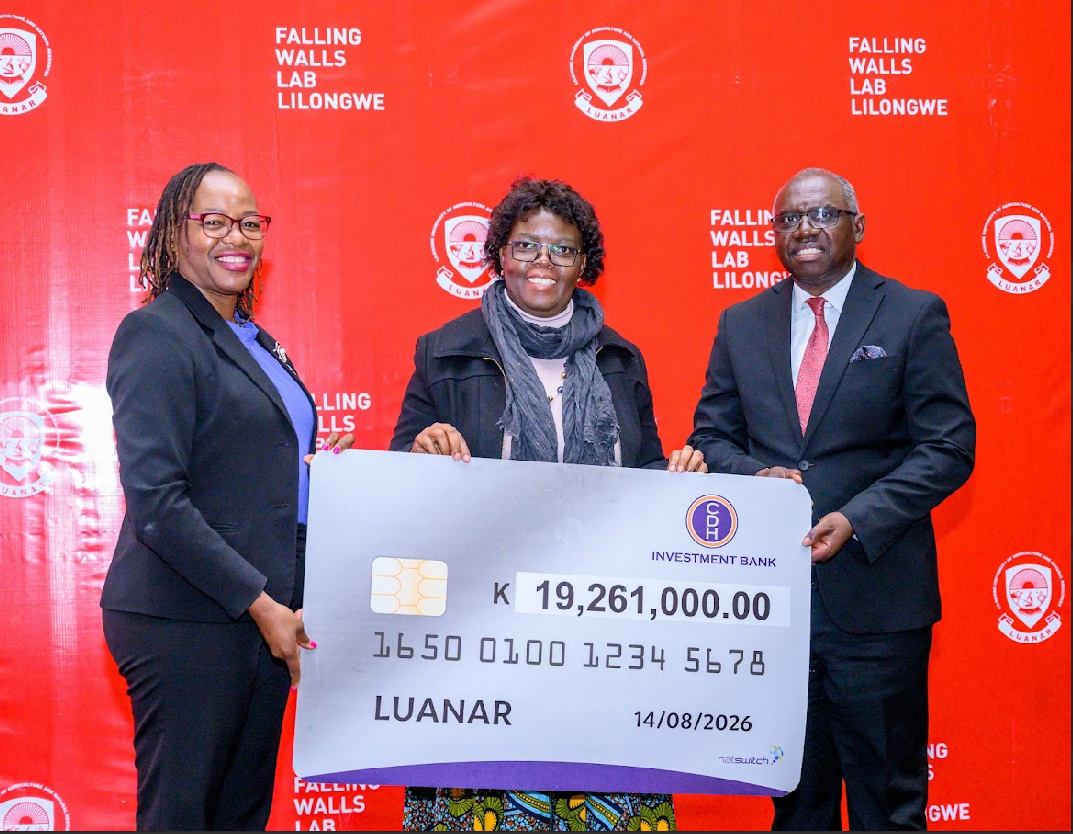
At the Falling Walls Lab Pitch Day, CDHIB’s Account Relationship Manager-Corporate & Public Sector, Jennie Madinga, announced the disbursement of US$5,000 to LUANAR — designated for awarding winners of the Falling Walls Lab competition and supporting the university’s efforts in protecting intellectual property rights for innovative projects.
This marks the second year of CDHIB’s support for Falling Walls Lab, following the 2025 challenge in which the winner attended the science summit in Berlin and progressed toward turning her idea into a prototype.
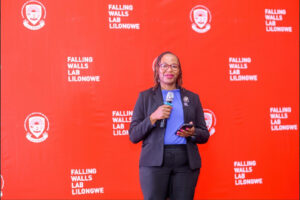
CDHIB’s Account Relationship Manager-Corporate & Public Sector, Jennie Madinga
Madinga further announced that an additional US$6,000 was disbursed to support high potential LUANAR students, “reaffirming its goal of empowering the next generation of leaders and innovators in agriculture and related fields”.
Madinga expressed optimism about the future of the partnership, saying: “We are proud to partner with LUANAR and to contribute to the university’s innovation initiatives, as well as to support scholarships.
“This collaboration reflects our belief in the vital role of innovation in building resilience and driving growth across all sectors.
“Our partnership with LUANAR demonstrates our commitment to developing sustainable opportunities and contributing to the nation’s progress.”
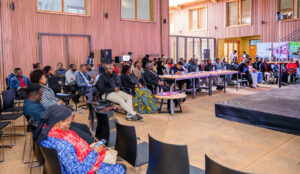
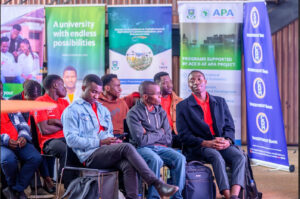
The banks contribution follows the successful tree-planting activity it jointly hosted with LUANAR earlier in the year, underscoring a broader commitment to community and environmental initiatives alongside academic innovation.
LUANAR officials welcomed the collaboration, emphasising that the partnership aligns with the university’s mission to foster innovation, nurture talent, and benefit rural communities.
LUANAR Vice-Chancellor Prof. Emmanuel Kaunda said fostering a culture of innovation and inclusivity across universities was essential if Malawi is to develop.
“We require innovative minds to move above the normal kind of thinking,” he said. “It is important to have this culture all over the universities.”

LUANAR Vice-Chancellor Prof. Emmanuel Kaunda
The Falling Walls Lab is a global competition which brings together an inter-disciplinary pool of students and early-career professionals — each given three minutes to present their ideas.
The Falling Walls Lab partnership has become a cornerstone of the two institutions’ collaboration, with the 2025 winner’s experience in Berlin standing as a testament to what is possible when university research intersects with global platforms for science communication and entrepreneurship.
The new round of funding will support this year’s participants and help ensure that LUANAR’s innovation ecosystem continues to grow and evolve.
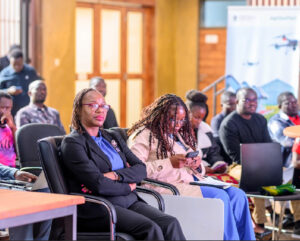
“CDH Investment Bank underscored its long-term view of the relationship, expressing a commitment to sustaining innovation as a driver of national development.
“The bank seeks to deepen collaboration, aiming to expand scholarship offerings, further enhance support for student innovators, and continue joint environmental and community initiatives,” says the bank.
It adds that the two parties are optimistic that the partnership will yield tangible benefits for LUANAR’s students, the university ecosystem, and rural communities across the nation.
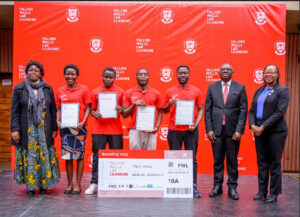
The Fallen Walls Lab winners
The Falling Walls Lab winner was Lameck Jailosi, a LUANAR bio-technology graduate, who pitched; ‘Breaking the Wall of Drought and Synthetic NPK’ — a climate-resilient, self-fertilizing maize plant engineered to fix atmospheric nitrogen and solubilize locked soil nutrients.
The dual system helps maize withstand up to 20 days of drought, cuts chemical fertilizer use by 70%, and can raise yields by up to 60%, giving smallholder farmers a lower-cost, more resilient alternative to conventional fertilizer-dependent farming.
In 2nd Place was Jones Kanjira, a senior programmes officer at Norwegian-Danish Church Aid and a LUANAR graduate with his; ‘Breaking the Wall of Guesswork in Farming’.
Kanjira is developing an AI- and soil-sensing-driven decision-support system that generates field-level fertilizer recommendations for smallholder farmers.
By combining rapid soil sensing, machine learning, and existing soil datasets, the tool replaces static, generic advice with real-time, field-specific guidance, helping farmers raise yields and profitability while supporting more efficient, evidence-based subsidy targeting.
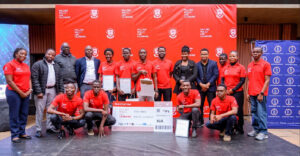
Idrisa Gama — a Bachelor of Engineering (BEng) in Chemical Engineering student at Malawi University of Science & Technology (MUST), came 3rd Place with; ‘Breaking the Wall of Inaccessible Assistive Technology’.
Idrisa is breaking the wall of inaccessible assistive technology with Gwira Prosthetic, an affordable, functional prosthetic hand engineered from locally available resources and regional anthropogenic data. Controlled by a microcontroller, sensors, and motors, the device is designed to be locally manufacturable and easily repairable, giving amputees in low-resource settings a more accessible route back to mobility and livelihood.
An Audience Award went to Zodabwitsa Phiri, a Bachelor of Arts in Business Communication student at Malawi University of Business & Applied Sciences (MUBAS) with his; ‘Breaking the Wall of Diabetic Amputation’.
Zodabwitsa is breaking the wall of diabetic amputation with BioSentinel, a smart biodegradable wound patch that detects infection, uses precision bacteriophages to fight antibiotic-resistant bacteria, and supports tissue regeneration.
By combining infection detection with regenerative medicine in one patch, the innovation aims to help wounds heal faster, reduce amputations, and ease reliance on antibiotics.

Advertisement