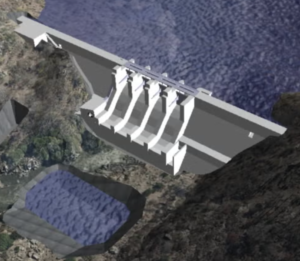
Artistic impression of Mpatamanga Hydropower Project in Neno
* Mpatamanga could transform Malawi’s electricity supply — but a project can be technically brilliant, environmentally ambitious and internationally supported
* And still struggle if the economics underneath it do not work—environmentalist Ian Bartlett
By Duncan Mlanjira
When completed Mpatamanga hydropower project would certainly transform Malawi’s electricity supply, maintains environmentalist, Ian Bartlett, who is particularly interested in the development as he is directly affected by it.
His Mpatamanga Wildlife Ranch sits within the hydropower project’s footprint and he stresses that he wants Mpatamanga Hydro Power Limited “to succeed and to be judged not by political promises or attractive artist impressions, but by a much harder test:
“Can the economics actually work under Malawi’s present foreign-exchange environment?“

Environmentalist Ian Bartlett
On his website, Bartlett writes: “A project can be technically brilliant, environmentally ambitious and internationally supported — and still struggle if the economics underneath it do not work.
“The proposed Mpatamanga Hydropower Storage Project is one of the largest infrastructure investments Malawi has contemplated.
“The World Bank describes it as a 358.5MW project expected to generate around 1,544GWh of electricity annually.
“Its overall cost, including financing costs during construction, has been estimated at more than US$1.5 billion.”
Thus Bartlett brings in the element of successful execution of the project, arguing: “The forex problem cannot be separated from Mpatamanga.
“A project of this scale is not built entirely in Malawi kwacha. Large hydroelectric projects require imported turbines, generators, electrical systems, specialist construction equipment, engineering expertise, international contractors, insurance, financing and numerous other goods and services that ultimately create substantial foreign-currency exposure.
“Mpatamanga is also structured as a public-private partnership dependent on international capital. The World Bank says financing is expected to combine grants, equity, loans and guarantees from development partners and private-sector participants.
“It has described the project as potentially the largest foreign direct investment in Malawi’s history.
“That makes Malawi’s forex regime fundamental to the project’s economics.
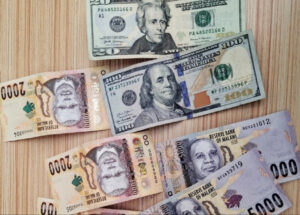
”International investors do not simply ask whether a project can generate electricity — they ask whether revenues can meet obligations, whether currency can be converted, whether money can be transferred, whether imported equipment can be paid for and whether their investment can ultimately produce an acceptable risk-adjusted return.
“If those questions cannot be answered convincingly, the cost of capital rises and bankability becomes harder.”
To give credence to Bartlett’s observation, Electricity Generation Company (EGENCO) sent a critical spare part to South Africa for repairs, which is now back to restore 20MW that was lost off the grid.
EGENCO indicated that to address the challenges of failing infrastructure at its hydropower plants, it needed lots of forex to buy spare parts, which the government has allocated almost US$8.1 million towards all maintenance works.
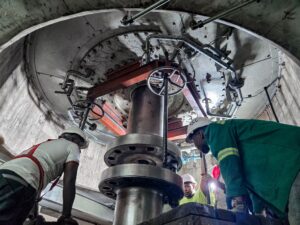
EGENCO working to restore 20MW that went off the national grid
Thus, Bartlett emphasises this his observation is not merely his criticism since the “seriousness of Malawi’s forex problem is documented by the International Monetary Fund (IMF)”.
“The IMF has said that Malawi suffers from chronic foreign-exchange shortages and that the gap between official and parallel exchange rates creates significant economic distortions.
“It has specifically warned that the current system discourages foreign direct investment and official aid flows.
The IMF’s 2025 assessment also reported gross reserves of only around 0.4 months of imports at the end of 2024, illustrating how limited Malawi’s external buffers had become.
“That matters enormously when discussing an infrastructure development costing more than US$1.5 billion.
“This is, therefore, not an argument against hydroelectric power — it is an argument about economic reality.”

Advertisement
Bankability matters more than ambition
“There is another important detail buried within the financing structure,” continues Bartlett. “The World Bank’s project documentation explicitly links later financing stages to bankability criteria and notes that these include Malawi’s macroeconomic and power-sector reforms.
“It says these conditions need to provide the certainty and confidence required by lenders and private investors.
That is crucial.
The World Bank has already approved substantial support. In May 2025 it approved a US$350 million IDA grant, while the financing architecture also envisages guarantees, private equity, development-finance lending and commercial debt.
“This means Mpatamanga is not simply a dam — it is a sophisticated international financial structure. And sophisticated financial structures require confidence.
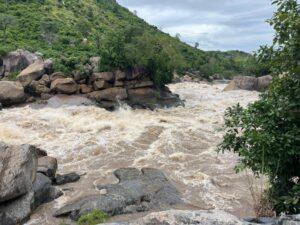
Mpatamanga Gorge on the great Shire River
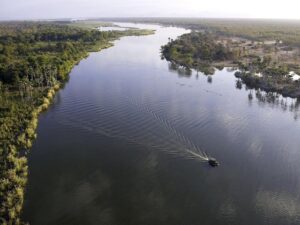
The return on investment question
“This is where Malawi must have a frank conversation. If the economics of the project depend upon assumptions about exchange rates, electricity revenues, foreign-currency availability, financing costs and future economic conditions, those assumptions must withstand scrutiny.
“A hydropower station may operate for generations, so long-term thinking is entirely appropriate. Today’s economic conditions will not necessarily persist throughout the project’s life.
“That is an important counterargument. But investors have to commit capital beforethose future improvements are known.
“Contractors have to be paid during construction; imported equipment has to be purchased; debt has to be serviced; currency risks have to be allocated between the government, lenders, investors, the electricity sector and ultimately consumers or taxpayers.
“That is why foreign-exchange reform is not some peripheral issue that can be dealt with after Mpatamanga is built. It is part of the investment case.
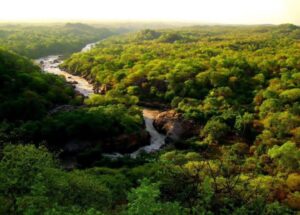
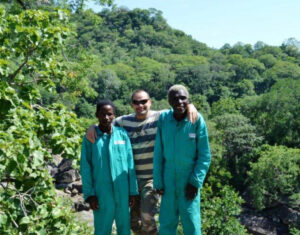
And then there are the people already at Mpatamanga
“There is another side of this project that should not disappear beneath billion-dollar financing announcements.
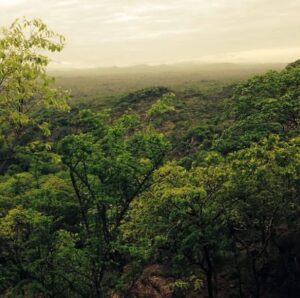
“People and assets are being affected on the ground. I spent 20 years protecting that landscape.
“So when billions of dollars, international investors and development institutions are discussed, the rights and compensation of those already occupying and protecting the affected land cannot become an afterthought.
“Development must work economically, environmentally and socially.”

Advertisement
Mpatamanga needs answers, not slogans
Malawi unquestionably needs more reliable electricity. Mpatamanga could make a substantial contribution: the World Bank expects it to increase generating capacity, improve grid reliability and support electricity access and productive sectors.
“That potential deserves recognition. But potential is not the same as bankability.
“The central questions therefore deserve open discussion: How will foreign-currency obligations be met? How is exchange-rate risk allocated?
What assumptions underpin the project’s financial model?
“What happens if the kwacha and official-market arrangements change substantially? What return do private investors require to compensate for these risks?
“And how will affected landholders be compensated fairly and promptly while this enormous financial structure is assembled?
“These are not anti-development questions — they are precisely the questions that should be asked of a project costing more than US$1.5 billion.

Fix the foundations
“I want to see Malawi prosper. I want reliable electricity, investment, employment and economic growth.
“But international investment ultimately follows economic reality. The IMF itself has called for a unified, market-clearing exchange rate and improved foreign-exchange availability as part of improving Malawi’s investment climate.
“Until the forex problem is addressed credibly, Mpatamanga faces a fundamental contradiction: Malawi is attempting to deliver one of the largest foreign investments in its history while operating in an economy suffering chronic shortages of the very foreign currency on which international investment and major imported infrastructure depend.
“Calling attention to that contradiction is not opposing Mpatamanga. It is asking what must change for Mpatamanga to succeed.
“Before Malawi builds the dam, it must ensure the economic foundations beneath it are strong enough to carry the weight,” concluded Bartlett, fondly known as The Real Crocodile Hunter.