
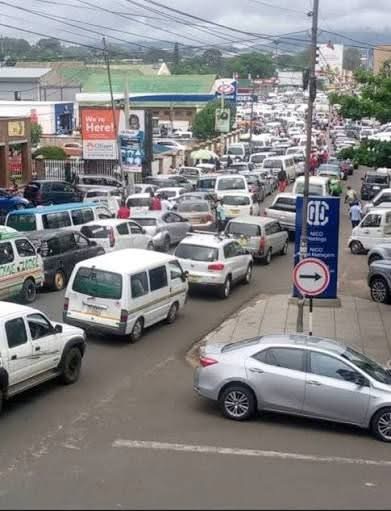
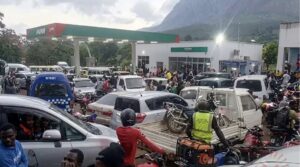
The fuel queues have raged for the past three months
* Which have affected fuel supply chains and increased importation costs for fuel and fertiliser, placing additional pressure on Malawi’s foreign exchange reserves
* As he announces that an application has been made for foreign exchange resources to facilitate fuel procurement and ease persistent queues at filling stations
* We are following up so that the resources start flowing in, then we give them to NOCMA and MERA so that these queues out there can be addressed
Maravi Express
Minister of Finance, Economic Planning & Decentralisation, Joseph Mwanamvekha has highlighted that the raging fuel scarcity has been worsened by global developments, particularly disruptions in the Far East.
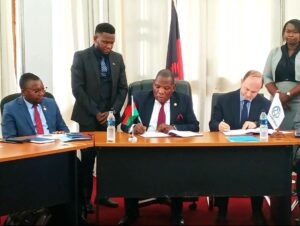
The Minister said this at Capital Hill in Lilongwe this Friday, November 20 when signing financing agreements worth US$221.9 million (approximately K414 billion) with the World Bank and development partners to support social protection and export growth initiatives in Malawi.
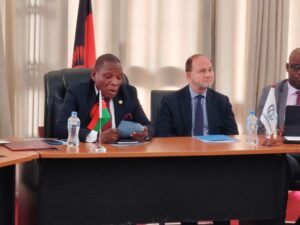
Mwanamveka at the joint press conference with the World Bank
A report by Malawi News Agency (MANA) quotes Mwanamveka saying the global developments have affected fuel supply chains and increased importation costs for fuel and fertiliser — placing additional pressure on Malawi’s foreign exchange reserves.
He thus maintained that government is implementing measures to address fuel scarcity and stabilise the country’s economy — while explaining that government has already made an application for foreign exchange resources to facilitate fuel procurement and ease persistent queues at filling stations.
“We have already made an application,” Mwanamveka is quoted as saying. “It is just that we are following up so that the resources start flowing in, then we give them to NOCMA and MERA so that these queues out there can be addressed.”
On November 13, Energy Ministry’s Secretary, Elvis Thodi — in trying to dissuade Concerned Citizens of Malawi People Power Movement from going ahead of plans for nationwide demonstrations scheduled for Tuesday, October 17 over the fuel crisis — highlighted that the supply challenges are largely attributable to a combination of financial, foreign exchange and logistical constraints.
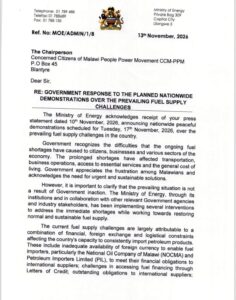
Elvis Thodi
He emphasised that these were affecting the country’s capacity to consistently import petroleum products.
In his letter to the planned demonstrators, Thodi highlighted that these challenges include inadequate availability of foreign currency to enable importers, particularly the National Oil Company of Malawi (NOCMA) and Petroleum Importers Limited (PIL), to meet their financial obligations to international suppliers; challenges in accessing fuel financing through Letters of Credit; outstanding obligations to international suppliers; logistical bottlenecks along regional transportation corridors; and the depletion of the country’s Strategic Fuel Reserves.”
At the press conference in Lilongwe, Minister said government is implementing the National Economic Recovery Plan, which prioritises increased agricultural production, value addition, manufacturing and exports to improve foreign exchange earnings.
The press conference was mainly to announce the signing of the financing agreements which Mwanamvekha said comprises US$165.9 million for social protection and US$56 million for export development.
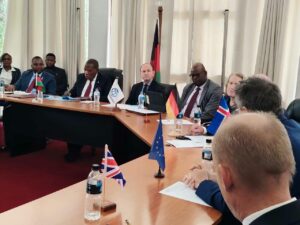
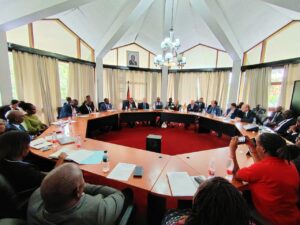
According to Mwanamvekha, the Integrated Social Protection for Resilience and Opportunity (INSPIRE-O) Project will receive US$110 million from the International Development Association (IDA), US$46.7 million from the Social Protection Multi-Donor Trust Fund and US$9.2 million from the Global Shield Financing Facility.
He said the US$56 million Transforming High-Potential Resilient Value Chains (M-THRIVE) Project comprises a US$50 million IDA grant and US$6 million from the Global Shield Financing Facility Multi-Donor Trust Fund.
“This financing comes at a very important time as we strengthen the macroeconomic stability, expand key infrastructure, and improve livelihoods across our communities,” said Mwanamvekha.
He added that INSPIRE-O will strengthen resilience among poor and vulnerable households through adaptive social safety nets, employment creation and improved social protection systems, particularly in responding to climate change and economic shocks.
The M-THRIVE aims to increase business growth and access to finance for exporters and their suppliers, focusing on groundnuts, mangoes, macadamia, beans and soya beans.
The Minister further said the project will establish a Partial Credit Guarantee Fund managed by the Malawi Agricultural and Industrial Investment Corporation (MAIIC), alongside revolving credit facilities in Kwacha and foreign currency to support businesses.

Advertisement
He said government will also work to sustain the social cash transfer programme in Government-funded districts while strengthening beneficiary identification, digital payments and accountability systems.
Mwanamvekha urged all implementing institutions to ensure transparency, prudent financial management and effective monitoring, saying the ultimate success of the US$221.9 million financing would be measured by improvements in people’s livelihoods and resilience.
In his remarks, World Bank Division Director for Malawi, Tanzania, Zambia and Zimbabwe, Dr Firas Raad, reaffirmed the institution’s commitment to supporting Malawi’s National Economic Recovery Plan, which aims to accelerate economic growth to 6.5% by 2030.
Raad said achieving the target requires increased private sector investment, business development and macroeconomic stability, alongside measures to protect poor and vulnerable communities from economic and climate-related shocks.
“We are very keen to support the government as it implements its National Economic Recovery Plan, which is targeting many different reform agendas, macroeconomic stabilisation, promoting private sector development, but also protecting the poor and vulnerable from various external shocks, including climate shocks.
Raad added that he two projects have already been approved and are expected to become operational within the coming weeks, with the World Bank working alongside government officials during implementation.
He said government would be responsible for implementing the projects, while the World Bank would provide supervision to ensure that resources are utilised in accordance with its financial management and accountability requirements.
Representative of Social Protection Multi-Donor Trust Fund development partners, Kate Brady, who is also Ambassador of Ireland to Malawi, reiterated development partners’ commitment to supporting the country’s social protection programmes, export growth and private sector development.
Brady said development partners recognise the challenges facing Malawians and are keen to support transformative initiatives, particularly those aimed at protecting the poorest and most vulnerable households from climate-related and other economic shocks while creating opportunities for sustainable economy.—Reporting for MANA by Sarah Munthali; editing by Duncan Mlanjira; Maravi Express

Advertisement