
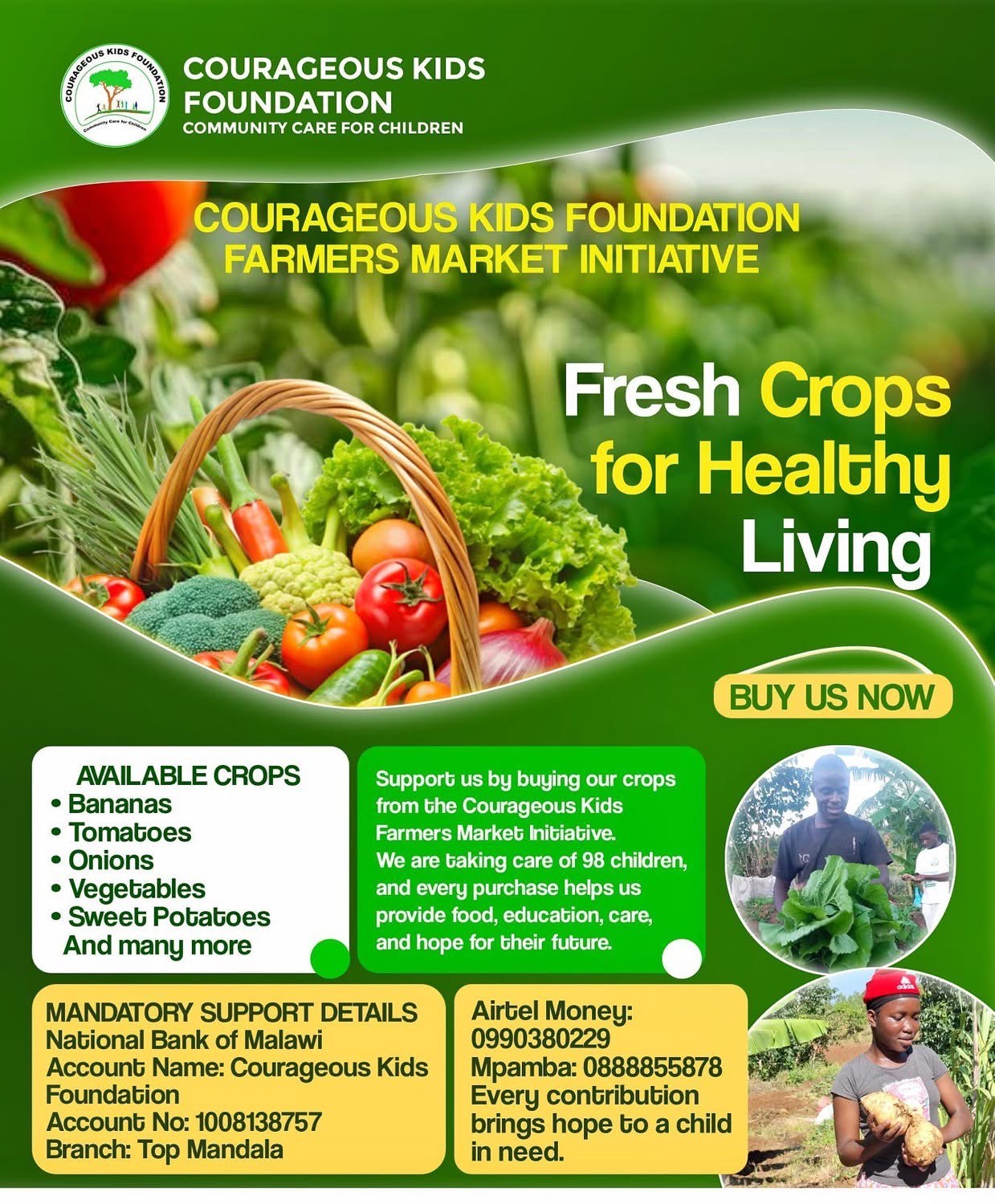
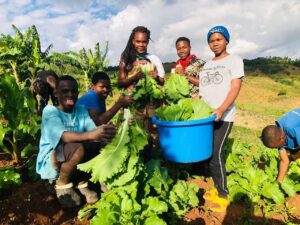
* Available at its premises in Mpemba and offers to deliver by contacting Director Courageous Musasa on 0990 380 229/0888 855 878
* Revenue to be generated is towards the upkeep of 98 children for their food, education, care and hope for their future
By Duncan Mlanjira
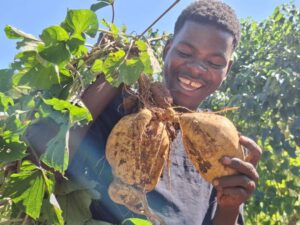
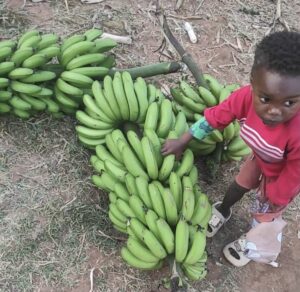
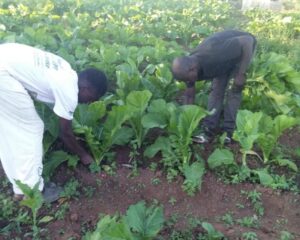
Courageous Kids Foundation has harvested its farm produce and entices the public to support them by buying them off their excess fresh foods that include onions, vegetables, sweet potatoes, bananas and many.

Advertisement
The fresh produce for healthy living is available at its premises in Mpemba and offers to deliver by contacting Director Courageous Musasa on 0990 380 229/0888 855 878.
On her Facebook page, the Director indicates that the revenue to be generated is towards the upkeep of 98 children under her fold for their food, education, care and hope for their future more.
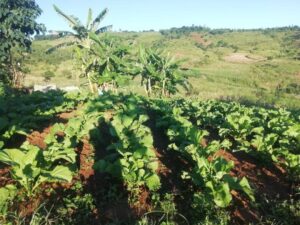
Courageous Kids Foundation is a community care for children who were rescued from roaming the streets and while it calls on well-wishers to support her Foundation, they also undertake farming, whose produce also includes maize.
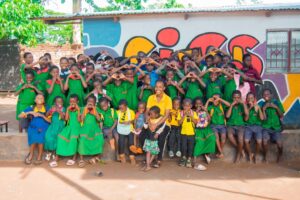
Last month, Musasa, who is fondly addressed as ‘Mama Courageous’ by her adoptive family, reported that the the-kids-community-care-needs-about-K9.7-million-every-month-in-caring-for-the-98-children, an enrollment which includes 11 babies under the age of five, some as young as just 3 months old.
Musasa indicated that the little ones’ delicate care includes proper food, clean clothes, soap, body lotion, porridge, diapers, and baby milk, saying: “Their needs are constant, and meeting them is not easy.”
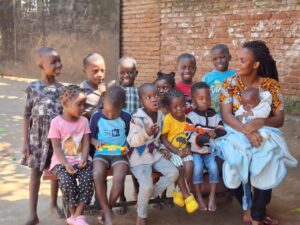
Mama Courageous, who bravely disclose that she is a former street-connected child, who was rescued from her plight by some well-wishers, and decided to repay the gesture by establishing the Foundation.
A post on her Facebook page a few days ago, highlights the ordeal she went through, saying: “Night is one of the scariest times for everyone, but for a girl on the street, it is even more dangerous.
“There is a high risk of sexual abuse and violence, no safe place to sleep, and the fear of being attacked while resting. You cannot sleep deeply — you stay alert just to survive.
“Hunger makes life even more dangerous as some people offer food in exchange for sex. You may be forced into situations just to eat and become an easy target for exploitation.

Advertisement
“Being alone increases the risk even more. Men may take advantage of your vulnerability and no one is there to protect you or speak for you. Escaping danger is harder.
“Many girls become pregnant while living on the street. There is no medical care; childbirth is risky; rejection and struggle increase and carrying a baby while surviving on the streets feels almost impossible.
“Menstruation is another forgotten danger; without access to sanitary products, there is a risk of infection, shame, and discomfort. Some are forced into unsafe situations just to meet their basic needs.
“Around older men or gangs, danger can hide behind ‘help’. Manipulation, control, forced prostitution, and violence, if you refuse, are constant threats.

Advertisement
“Bad weather makes everything worse; rain and cold cause sickness; there is no shelter, no privacy, and vulnerability increases. When sick or injured, girls suffer more. Untreated infections, reproductive health issues, and no one to help make survival even harder.
“Girls carry deep emotional wounds — abuse, rejection, fear, loss of self-worth, and feeling invisible or forgotten. The truth; being a girl on the street is not just surviving — it is fighting every hour to stay alive and protect yourself.
“Every girl deserves safety, care, and hope — together, we can make a difference,” writes Musasa, while emphasising that every Tambala received is cherished and makes a difference to her family, which is radiant with smiles all the time.
On Tuesday, May 19, Minister-ofGender,-Children,-Disability-and-Social-Welfare-Mary-Navicha-expressed-her-deep-concern-that-88-percent-of-street-connected-children-have-at-least-one-living-parent.
She emphasised that “every child deserves to grow up in a safe, loving, and supportive family environment. Addressing poverty, inequalities, violence, and limited access to essential services is critical to protecting children, promoting their wellbeing, and preventing children from ending up on the streets.”
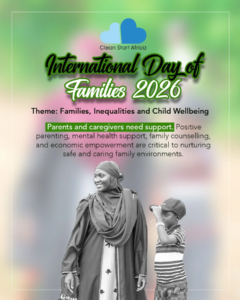
She made the call at a press briefing in Blantyre as part of commemorating the annual International Day of Families, which falls on May 15 and is celebrated under the theme; ‘Families, Inequalities and Child Wellbeing’.
She announced that her Ministry has successfully reintegrating 325 street-connected children, comprising 141 girls and 184 boys, with their families across all districts in Malawi between January 2025 and January 2026 — and that working with partners, they will provide post-placement support the reintegrated children.
She added that the Ministry “recognises the dire situation of street-connected children in the country, currently estimated at over 4,000” [who] are exposed to violence, abuse, exploitation, neglect, and discrimination, and are often denied access to education, healthcare, and other basic human rights.
“Contributing factors include household poverty, gender-based violence, child abuse and neglect, family dysfunction, lack of parental care and support, poor parenting skills, urban migration, and lack of sustainable livelihoods.”

Advertisement