* As the basis for building 21st century skills and preparing learners for future opportunities
* 2021 Multiple Indicator Cluster Survey shows that only 18.9% of children aged 7 to 14 possess foundational literacy skills, while only 12.6% have foundational numeracy skills
* Malawi’s reforms including the National Mathematics Curriculum Reform and the implementation of the Building Education Foundations through Innovation and Technology (BEFIT) Programme
By Duncan Mlanjira
In London, UK, where he attended the Education World Forum (EWF) — a candid dialogue forum on the challenges facing education systems around the world — Minister of Education, Science & Technology, Bright Msaka, maintained that stronger investment in foundational learning is the basis for building 21st century skills and preparing learners for future opportunities.

Advertisement
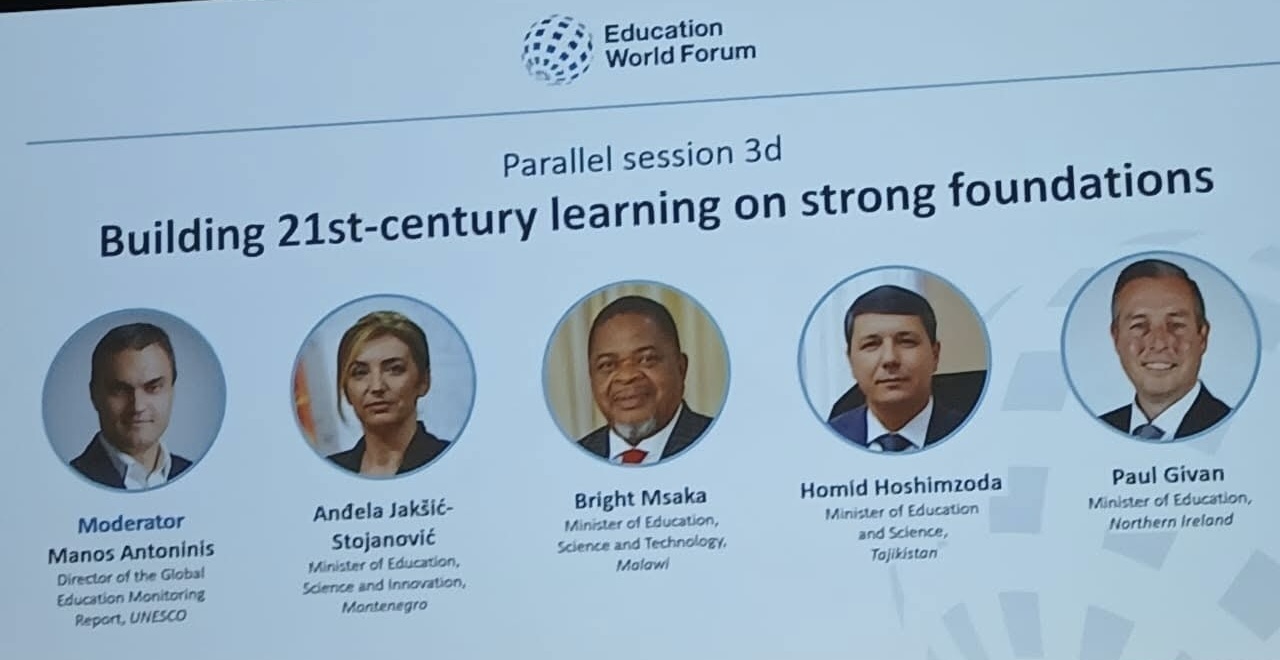
The Minister made the remarks during a parallel session on Building 21st Century Learning on Strong Foundations before fellow ministers, education leaders and development partners from across the world, saying education systems must evolve from rigid qualification-based models to flexible and competency-based lifelong learning systems that respond to changing labour market demands and global challenges.
The Ministry’s official Facebook account reports that Msaka observed that while digital and future-ready skills are increasingly important, strong foundational literacy and numeracy remain critical for learners to fully benefit from advanced learning opportunities.
He took note that Malawi continues to face challenges in foundational learning, citing findings from the 2021 Multiple Indicator Cluster Survey, which showed that only 18.9% of children aged 7 to 14 possess foundational literacy skills, while only 12.6% have foundational numeracy skills.
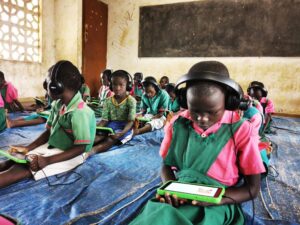
To address the situation, Msaka highlighted Malawi’s education reforms, which include National Mathematics Curriculum Reform and the implementation of the Building Education Foundations through Innovation and Technology (BEFIT) programme.

Building Education Foundations through Innovation and Technology (BEFIT) programme
The Ministry reports that the Minister highlighted that “early results from the reforms are encouraging, with Malawi recording significant improvements in reading and mathematics outcomes in participating schools”.
“He also outlined efforts being undertaken to support struggling learners through targeted remediation programmes, strengthened assessment systems and enhanced teacher professional development.
“On access to education, Msaka reaffirmed Government’s commitment to ensuring equitable learning opportunities through the free primary and secondary education policy and he further used the platform to invite African education ministers and stakeholders to participate in the Africa Foundational Learning Exchange (FLEX) scheduled for July 2026 in Malawi.”
Malawi’s National Mathematics Curriculum Reform, developed by the Ministry of Education, Science and Technology received support from the UK’s Foreign, Commonwealth and Development Office, which is reported to have now reached approximately four million children in Standards 1 to 4 across every primary school in the country.

Advertisement
The British High Commission to Malawi reports in a statement that “independent evaluation shows that one year of exposure to the reformed curriculum is equivalent to 1.5 years of learning under the previous system, placing Malawi’s reform among the most effective foundational learning initiatives in low and middle-income countries”.
“Alongside this, a pilot of Teaching at the Right Level, known as TaRL, is currently running in 80 schools in Mchinji, targeting the children who are furthest behind and supporting them to catch up.
“The pilot will expand to 220 schools across two additional districts from September 2026,” reports the British High Commission, adding that the TaRL is an evidence-based approach to targeted remediation, developed originally by the Indian NGO Pratham and now being piloted in Malawi with FCDO support.
“The pilot currently operates in 80 schools in Mchinji district and will expand to 220 schools across Machinga and Kasungu from September 2026,” says the statement, while emphasising that the reforms are not donor projects but government-led — designed within Malawian institutions, delivered by Malawian teachers, and rooted in Malawi’s long-term vision for its people under MW2063 national vision.
“International partners, including the UK, have walked alongside — but the direction of travel has always been set by Malawi itself,” says the British High Commission.
The 2026 Education World Forum — hosted by the UK’s Department for Education and supported by the Foreign, Commonwealth and Development Office, the Department for Business and Trade and the British Council — brought together education ministers, policymakers, international organisations, private sector leaders and education experts from different countries to discuss global education priorities, innovation and strategies for strengthening education systems in response to emerging social and economic challenges.
It took place at the Queen Elizabeth II Centre, Westminster, London, from May 17-20 and a day before, Msaka delivered a speech at the Cambridge Partnership for Education, held at the Cambridge University Press and Assessment Centre, where he addressed four key themes:
* Access, which focuses on the number of learners in schools;
* Quality, which addresses the standards of what students are learning;
* Inclusivity and lifelong learning, which explores the potential pathways for every learner, ensuring that all students feel welcome and supported; and
* Relevance of Education, which examines whether education is adequately preparing learners for their future prospects, both locally and globally.
The British High Commission to Malawi reports that the main event was officially opened by EWF Director General Phil Baty, who highlighted the critical role education plays in addressing emerging global challenges, including social polarisation, geopolitical tensions, misinformation, and the rapid rise of Artificial Intelligence (AI).
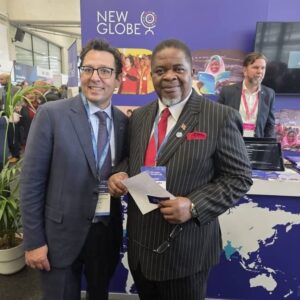
During the first day of engagements, Msaka also interacted with officials from New Globe, an education technology company involved in the development of AI-driven learning solutions.
At the African Ministerial Welcome Breakfast where the delegates shared practical experience on what it takes to improve learning outcomes in the early years of school — Msaka brought a clear message: that Malawi has hard-won evidence to contribute, and is ready to share it.
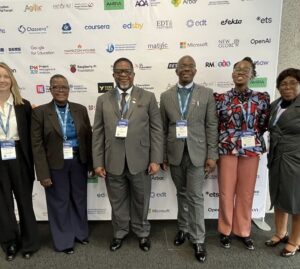
He also joined the Ministerial Taskforce on Ending Violence in, Around and Through Schools, an invitation-only roundtable chaired by UK Minister for International Development and Africa Baroness Chapman, and Minister Sackey.
Malawi joined the Taskforce last year, when the then Minister participated in its inaugural roundtable, and this year’s session built on that foundation where “Ministers reaffirmed their collective commitment to making schools safe places for every child to learn, with the discussion feeding into preparations for the 2nd Global Ministerial Conference to End Violence Against Children, to be held in Manila in November 2026”.
“The opening day’s plenary programme reflected the scale of the challenges facing education systems worldwide, from preparing young people for a rapidly changing labour market, to ensuring quality learning for every child regardless of where they are born or how much their family earns.“