
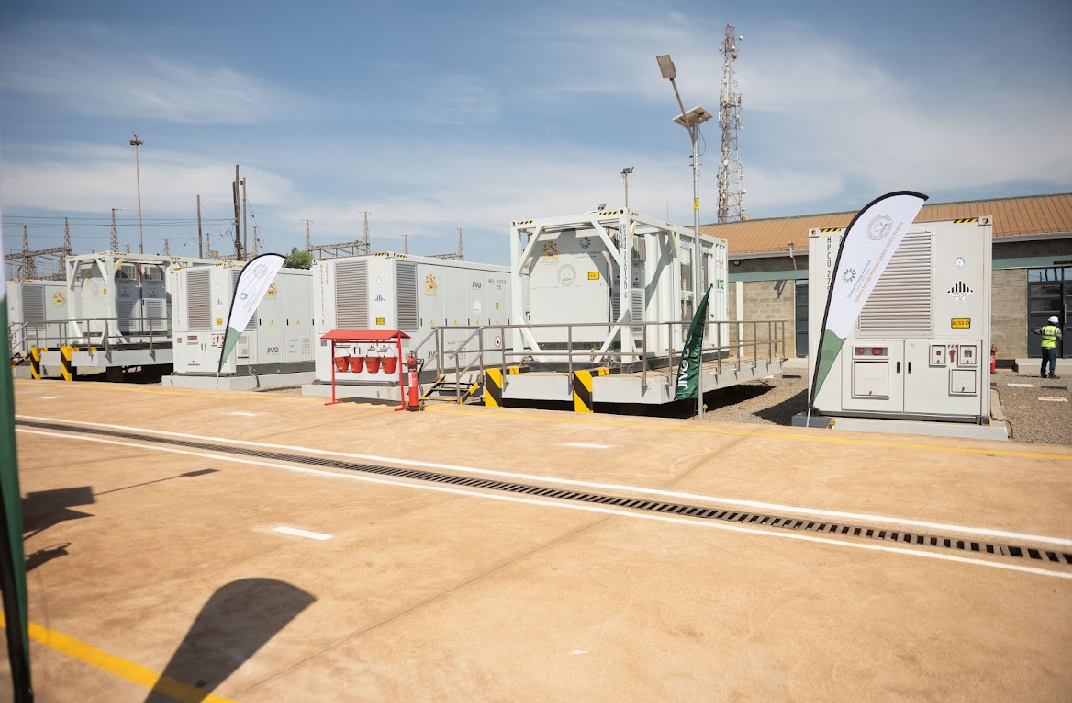
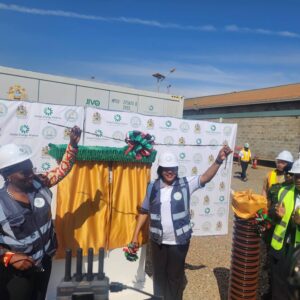
Energy Minister Mathanga commissioning ESCOM’s Battery Energy Storage System (BESS)
* We do not produce or generate enough power for our consumption, yet the demand is huge
* More people need to be supplied with electricity—Energy Minister, Jean Mathanga
Maravi Express
Minister of Energy, Jean Mathanga says government is engaging private sector investors to expand electricity generation, expressing confidence that the combined investments in generation and storage will strengthen grid stability.

Advertisement
Speaking in Lilongwe to the media, Mathanga stated that efforts have been stepped up to invest in electricity generation and energy storage as it seeks to ease persistent power outages, strengthen the national grid and keep pace with the country’s growing demand for electricity.
Mathanga added that increasing electricity consumption has outstripped the country’s generation capacity, making it necessary to accelerate investment in new power projects and supporting infrastructure.
“We do not produce or generate enough power for our consumption, yet the demand is huge,” she said. “More people need to be supplied with electricity. What we are doing as a ministry is to make sure that we upscale our generation capacity.”
She indicated that the 10 megawatt Nanjoka solar power plant in Salima for Electricity Generation Company (EGENCO), to be commissioned on Thursday, August 6, is expected to increase electricity supplied to the national grid.

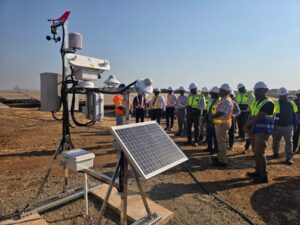
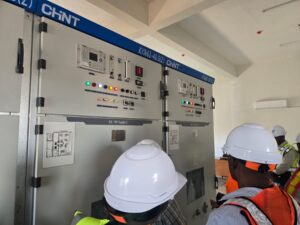
The project was inspected by Chief Secretary to the Government, Justin Saidi, on July 22, 2026, who expressed satisfaction with the progress made so far.
“I am very impressed with the work so far and the progress we have made,” he said. “This is a landmark project for the Government, and I wish to encourage you to ensure that by the end of this month we have the plant supplying power to the national grid.
EGENCO Chief Executive Officer, William Liabunya, assured that they were finalising commissioning tests with engineers from China and are also conducting senior authorisation processes with industry partners in readiness for the commercial operation of the plant.
Financed by EGENCO’s own resources, the 10MW Nanjoka Solar Power Plant marks the first phase of EGENCO’s ambitious 50MW solar power project.
Preparations for Phase 2, which will add an additional 40MW to the grid, are already underway, with the process of engaging a consultant to undertake a feasibility study currently in progress.
Once operational, the plant is expected to contribute significantly to Malawi’s electricity generation capacity and support the government’s efforts to enhance access to reliable and sustainable energy.

Advertisement
In her engagement with the media in Lilongwe, Minister Mathanga also highlighted the Electricity Supply Corporation of Malawi (ESCOM’s) 20-megawatt Battery Energy Storage System (BESS), that was commissioned last week, as pushing another 20 megawatts into the system.
The facility will store surplus electricity generated during periods of low demand, including excess solar power, and release it when demand rises.
“We will now be able to store power that would otherwise go unused and supply it to consumers when demand increases,” she said.
At the commissioning, Mathanga described the BESS as a cornerstone investment that will transform Malawi’s approach to energy management and grid stability.

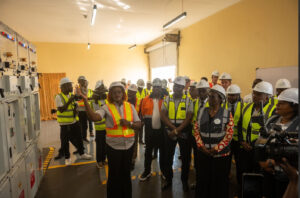
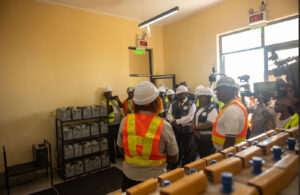

She emphasised that the 20MW/40MWh facility will provide critical support to the national grid by improving reliability, managing energy demand and reducing dependence on backup generation.
She also stresses that the facility will provide more reliable power for essential services, including hospitals, schools and businesses — while strengthening Malawi’s renewable energy integration.
“Solar power may have sparked our energy revolution, but battery storage system will sustain it,” said the Minister while calling upon ESCOM to take a leading role in driving Malawi’s energy transformation agenda and ensuring that strategic investments deliver improved electricity reliability for consumers.
She stated that ESCOM remains central to achieving Malawi’s industrialisation ambitions and must ensure that the benefits of investments such as BESS translate into improved service delivery.
“My message to ESCOM is that you must stand at the helm of this transformation. As the enabler of our industrial dreams, ESCOM’s role is to ensure that the wheels of our factories never stop turning and the lights in our hospitals never dim,” she said.


The Minister commended ESCOM for recent improvements in electricity supply but challenged it to continue working towards achieving zero load-shedding.
“We have suffered enough, we have promised enough, it is time to deliver. Let’s achieve zero-loadshedding,” she said. “For decades, we have been at the mercy of the clock and the weather, but today we begin an era of energy independence on our own terms.
“Today, we are not just commissioning a facility of steel and lithium; we are commissioning the engine of our development.”
She commended Global Energy Alliance for People and Planet (GEAPP) for supporting the US$20.245 million investment and called upon more development partners to support transformative energy projects through strategic partnerships.
Along with GEAPP are Jivo, Lahmeyer International, Malawi Energy Regulatory Authority (MERA) and other stakeholders whose collaboration has contributed to the successful delivery of Malawi’s first utility-scale BESS.
GEAPP vice-president, Carol Koech applauded the government for the remarkable progress it is making in expanding access to electricity across the country.
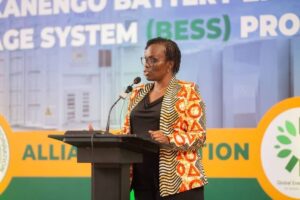
GEAPP vice-president, Carol Koech
Koech said GEAPP shares Malawi’s vision of transforming lives through increased energy access — emphasising that expanding reliable electricity is key to reducing poverty, creating economic opportunities and improving livelihoods.
“This partnership is a testimony of the power of collaboration and shared commitment towards transforming Malawi’s energy sector,” she said.
She emphasised that the collaboration between the government and ESCOM demonstrates what can be achieved when partners work together to advance clean energy solutions, expand electricity access and improve the lives of communities.
Beyond the infrastructure, Koech said GEAPP is also supporting the establishment of the Southern Africa Battery Energy Storage Systems Centre of Excellence (SABESS CoE), hosted by Mzuzu University in partnership with the Malawi University of Business & Applied Sciences (MUBAS).
The SABESS CoE will strengthen local and regional expertise through training, research and knowledge sharing on battery energy storage technologies for utilities, policymakers, researchers and private sector stakeholders.
Taking his turn Chief Secretary to the Government, Saidi attested to that “energy is the fundamental bedrock of all public administration and economic growth”.
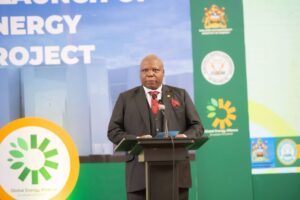
Saidi
“Without reliable power, our hospitals cannot function at full capacity, our schools cannot fully leverage modern learning tools, our industrial sectors stall and the efficient delivery of public services is compromised.”
He added that the BESS project demonstrates what can be achieved when government institutions work together with purpose and commitment, describing it as an example of effective public sector delivery.
“Infrastructure investments like the BESS project being commissioned today demonstrate what can be achieved when the government machinery operates with efficiency, coordination and purpose,” he said
ESCOM Board director, Welford Sabola Sabola assured Malawians that the BESS is only the beginning as the power supply company will continue implementing more aggressive grid modernisation initiatives to reduce technical losses, increase network capacity and improve power supply reliability.
He noted that while BESS is a significant step towards reducing load-shedding, it forms part of a broader strategy to strengthen Malawi’s electricity system.
He also encouraged the public to work with ESCOM in safeguarding electricity infrastructure, saying vandalism of its equipment derails ESCOM from delivering reliably electricity to the nation.—Reporting by Khumbo Msambala Salanje, Malawi News Agency (MANA), EGENCO & ESCOM PR offices; editing by Duncan Mlanjira, Maravi Express

Advertisement