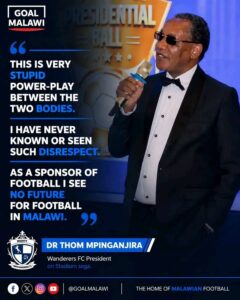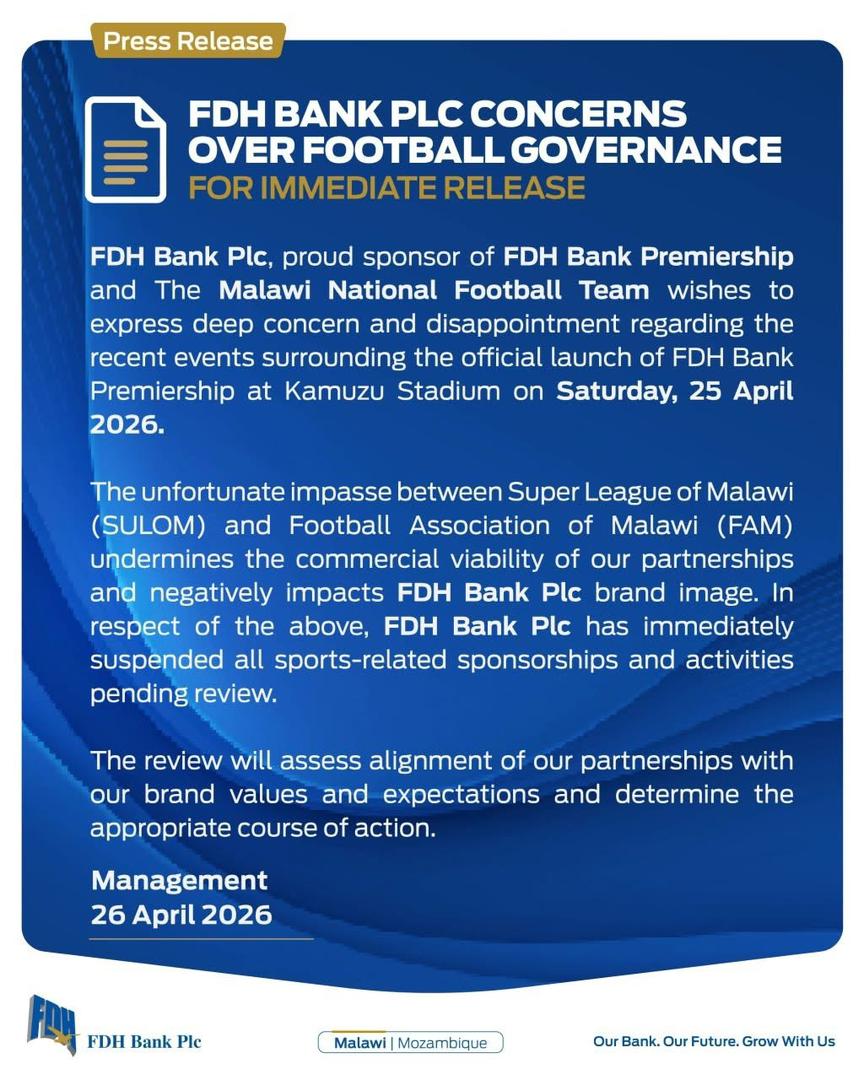
* As FDH Bank suspends all its sports sponsorships — FDH Bank Netball Premiership, Malawi national football team sponsorship, Malawi Schools Sports Association, primary schools Mayor’s Trophy — a total of K7,582,000,000
By Duncan Mlanjira
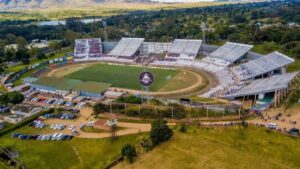
The impasse between the Super League of Malawi (SULOM) and the Football Association of Malawi (FAM), through which the mother football governing body did not flinch from allowing Kamuzu Stadium to exclusively host the FDH Bank Premiership launch match yesterday, has ignited fierce debate among football analysts and administrators.

Advertisement
The debate, that broke out after the cancellation of the launch match between Mighty Wanderers and Karonga United, has amplified following the decision by FDH Bank to suspend all its sports sponsorships — the Premiership itself at K5 billion; as official sponsor of the Malawi national football team (K1 billion); FDH Bank Netball Premiership (K1.2 billion); Malawi Schools Sports Association (K360 million); primary schools’ Mayor’s Trophy (K22 million) — a total of K7,582,000,000.
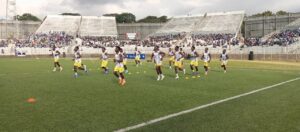
Despite the com/fam intervention-by-Ministry-of-Sports, which authorised FAM to allow the match be played exclusively for the launch and not to be construed as general approval of the venue for elite matches, the mother football governing body stood its ground even after Sports Minister Alfred Gangata added weight to the request whilst teams were waiting in the dressing rooms after completing warm-ups on the pitch.
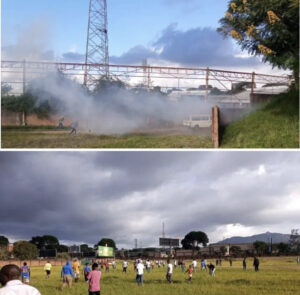
Apparently, FAM ordered the match’s officiating personnel not to pitch up at the venue and the match was consequently abandoned, which followed by chaos by fans which led the police to fire tear gas to disperse them.
On a WhatsApp group of football analysts, administrators and media personnel, Felix Ngamanya Sapao observed that the issuance of a club license by FAM’s First Instance Body (FIB) — “provisional or otherwise — is a regulated, multi-step process. It relies on a system of checks and balances rather than a unilateral decision from FAM president Fleetwood Haiya.
“The FIB is the independent ‘gatekeeper’ of the licensing system. Their primary responsibilities include:
* Assessment — Reviewing documentation submitted by clubs across five key criteria (sporting, infrastructure, administrative/personnel, legal, and financial);
* Recommendation — Deciding whether a club meets the minimum requirements;
* Decision power — It is the FIB that officially advises the issuance or denial of a license based strictly on the regulations.
FAM management and secretariat
“Once the FIB has made its recommendation, the FAM secretariat (the management arm) facilitates the administration. This structure ensures:
* Operational integrity — The process remains objective and shielded from political influence;
* Execution — The general secretary and the club licensing manager oversee the delivery and monitoring of these licenses;
The role of the president
“While the FAM president provides the strategic vision for the association, they do not possess the constitutional power to bypass the FIB’s findings or issue licenses directly. Their role is to oversee the entire organisation’s health, while the technical structures of management handle the regulatory specifics.”
Ngamanya’s key takeaway is that “the FIB is the technical judge, and the FAM management is the administrative engine. The license is a certificate of compliance, not a personal endorsement”.

Another school of thought responded to Ngamanya’s analysis, saying: “We can all say so many things but deep down we know the truth. Nobody is saying that the fam president is the one that issues licences — we are saying the issues raised by the FIB regarding Kamuzu Stadium had been addressed and after being requested to re-inspect the stadium 48 hours before the match, the FIB refused.”
He was wondered that the FIB, “knowing the importance of the league opener and the efforts that had been made to address the issues raised, would have refused to re-inspect the stadium without getting guidance from above”.
“If that was the case, then the FAM president would have been the first person to condemn the FIB for refusing to re-inspect the stadium. He is the first person responsible for ensuring that football is protected and that all stakeholders are happy.
“Why did FAM raise the concerns about the stadium in the first place if they didn’t want them to be addressed?” he raised the question, while hinting that FAM elections are close and “we will be getting these strange decisions [every now and the] because people’s thinking will be guided by elections, not logic”.
He further gave an example of the incident a week ago, when famFAM-was-forced-to-apologise-to-Lilongwe-City-Mayor-for-being-disrespected-by-event-security-at-NBS-Bank-Charity-Shield-2026-trophy-presentation/ in his own domain when he was physically shoved off the podium.
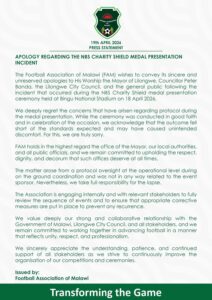
“Some claim [the Mayor] did not follow protocol. My question is, if it had been the President of Malawi or even the Minister of Sports, would they have asked him to leave or FAM would have celebrated his uninvited presence? The answer is obvious — that means the Mayor was shoved off not because he broke protocol, but because he is not regarded important enough at FAM.
“This week its this. FAM is fighting too many battles and I hope they soon realise that they are fighting against themselves, eroding their credibility with every worthless battle instead of showing leadership and maturity. Whoever is advising Haiya is killing him, they don’t wish him well.”
Another analyst also asked some questions as food for thought: “If FAM was not recognising that there was a game yesterday at Kamuzu Stadium, why did the president come to the stadium?; why did FAM receive the money collected for the match yet they don’t recognise the game; who owns Kamuzu stadium — isn’t it the government?; why did he deny the government’s call to use the stadium just to launch the cup?
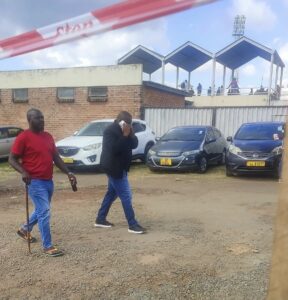
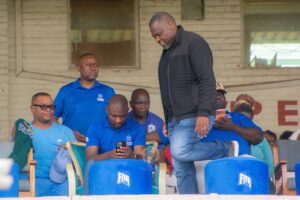
Haiya arriving at Kamuzu Stadium
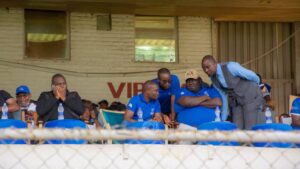
Haiya (left) busy on the phone as Minister engages in discussion with SULOM president, Blantyre City Mayor and FDH official

“Do we all think that government didn’t know what they were doing by allowing the launch to proceed?; does the FAM president have power than the Ministry or government?; who will pay back the money spent on the launch?”
Another joined in to hint that “rules are made by people and rules can be adjusted depending on the situation. What happened yesterday was a misunderstanding that could be solved amicably, komano kukulilana mtima and wanting kudziwika kuti ine ndine, these are the results now.”
Another analyst also faulted FAM got snubbing SULOM’s request to have the stadium re-inspected and government’s specific plea to FAM to protect the sponsorship while also acknowledging the authority of FAM on the issue.
“FAM was requested to re-inspect the stadium 48 hours prior to the match as stakeholders had humbly made serious attempts to address FAM’s concerns. FAM rejected the request outright — that’s not following rules or accomodative leadership, that’s needless arrogance.
“While FAM might be on solid ground, its difficult to say the same for Haiya, who himself defied FAM when he was SULOM president and fixed a Bullets-Wanderers match at the same Kamuzu Stadium after it had failed licensing. It was open defiance of the same authoriy and rules he is putting into play now. That is what makes this look very much like power play.”
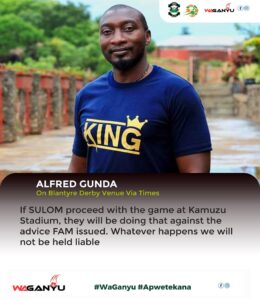
Before FDH Bank announced the suspension of sports sponsorship, another school of thought observed that “the abandonment of the Premiership opener is more than just a cancelled game, it is a clear reflection of deeper structural issues in Malawian football.
“The clash between FAM, SULOM and government officials revealed a breakdown in governance. Instead of presenting a united front, stakeholders acted independently, leaving fans and clubs caught in the middle of confusion and disappointment.
“At the heart of the matter lies the stadium itself. Kamuzu Stadium has repeatedly failed to meet licensing standards, underscoring Malawi’s infrastructure deficit. Elite football requires safe, modern facilities, yet the country’s flagship venue continues to struggle with compliance.
“This raises urgent questions about investment priorities and whether long-term planning for sports infrastructure is being taken seriously.
“The incident also placed FDH Bank, the league’s main sponsor, in a difficult position. Sponsorship thrives on visibility, credibility, and smooth operations. A chaotic launch undermines confidence and risks damaging the brand association.
“If sponsors begin to doubt the professionalism of football management, future funding could be jeopardised, threatening the sustainability of the league itself.
“Fans, clubs, authorities, and sponsors all suffered consequences; supporters lost money and endured unsafe conditions; clubs had their schedules disrupted; authorities saw their credibility damaged; and sponsors faced reputational risks. Each group’s frustration points to the urgent need for reform.
“The lessons are clear: governance alignment is essential to avoid public embarrassment, infrastructure investment must be prioritised to ensure safe venues, fan protection should be central to match-day planning, and sponsor confidence must be safeguarded through professionalism.
“This incident was not just a one-off disruption — it was a warning signal. Unless governance, infrastructure, and stakeholder management improve, Malawian football risks losing credibility, both locally and internationally.
“In decision making you consider implementation; yesterday’s the easiest thing to do was to allow the game to proceed.”