

* The submission made at the 2026/27 national pre-budget consultation meetings is polished in tone but hollow in substance
* It reads more like a ceremonial opening statement than a serious engagement with the depth of Malawi’s economic crisis
* While it repeatedly invokes “consultation,” “listening,” and “inclusive dialogue”, it avoids confronting the hard policy choices and failures that have brought the economy to its current state
By Duncan Mlanjira
Canada-based economic analyst, Dr. James Kadyampakeni observes that Minister of Finance, Economic Planning & Decentralisation, Joseph Mwanamvekha’s national economic outlook that he presented at the 2026/27 national pre-budget consultation meetings “is polished in tone but hollow in substance”.

Advertisement
Kadyampakeni, who along many other economic experts has openly and directly offered advice on how the authorities can consider to turn around the ailing economy during the Malawi Congress Party (MCP) — along with the Democratic Progressive Party (DPP) — says first, Mwanamveka’s narrative at the pre-budget consultatio minimises urgency.
“An economy with inflation above 30%, chronic foreign exchange shortages, fuel & medicine scarcity, collapsing real incomes and a private sector starved of credit, is not experiencing “modest growth” with a “cautiously positive outlook.”
“That language sanitises distress. Projecting GDP growth of 3.8% or 4.9% without explaining how structural bottlenecks energy, forex, debt, policy credibility will be resolved, amounts to wishful forecasting, not policy realism.
“Second, the statement acknowledges fiscal pressure but refuses to assign responsibility. When over 90% of domestic revenue is consumed by wages, interest, and pensions, that is not just a constraint; it is evidence of prolonged fiscal mismanagement.”

Dr. Kadyampakeni
Kadyampakeni further observes “interest payments dominating the budget are a direct result of excessive domestic borrowing at punitive rates, yet this is mentioned only obliquely, without admitting that current policy choices are actively worsening the problem”.
“Third, the treatment of inflation is elusive. Inflation is attributed mainly to “shortages” and “shocks,” while the role of monetary policy, exchange rate management, and government borrowing is left unexamined.
“Claiming that inflation will moderate as productive sectors improve, ignores the reality that those same sectors are being suffocated by high interest rates, lack of forex, and policy uncertainty. This is circular reasoning, not analysis.”
He further notes that the reform agenda presented in the Minister’s speech is vague, adding that references to the National Economic Recovery Plan (NERP) and mid-year budget measures “lack specifics”.
“What exactly has changed in expenditure discipline? How is the government reducing its footprint in domestic credit markets? What concrete steps are being taken to restore confidence, crowd in private investment, and stop banks from earning risk-free profits by lending to the state instead of the economy? — none of this is addressed.”
On debt management, Kadyampakeni observes that it “is framed cautiously to the point of meaninglessness”, saying: “‘Reprofiling domestic debt’ without timelines, instruments, or burden-sharing principles offers little reassurance. Markets, businesses, and citizens need clarity, not carefully worded place-holders.
“Finally, the repeated emphasis on stakeholder input rings hollow when past consultations have rarely translated into decisive policy shifts. Listening without acting has costs, and Malawi is already paying them through lost jobs, business closures, and rising poverty.”
In his summary, Kadyampakeni says Mwanamveka’s economic narrative at the meetings “diagnoses symptoms but avoids causes, offers projections without credibility, and prioritises tone over truth”.
“What Malawi needs now is not another consultative speech, but frank acknowledgement of policy failures, decisive correction of government borrowing behaviour, realistic monetary-fiscal coordination, and a clear break from the practices that are pushing the economy toward the edge.
“Without that urgency and honesty, no amount of consultation will prevent the economy from going over the cliff,” said Kadyampakeni.
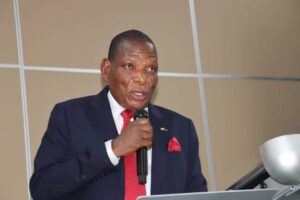
In his opening speech at the 2026/27 national pre-budget consultation meetings, Mwanamveka presented that the Malawi economy continues to face significant macroeconomic pressures — including persistent foreign exchange shortages, high inflation, climate-related shocks, infrastructure & energy constraints, “which have weighed down on the overall economic performance”.
“As a result, economic growth remains modest, with real GDP growth slightly revised downward to 2.7% in November 2025 from an earlier projection of 2.8%. Nonetheless, the medium-term outlook remains cautiously positive, with GDP growth projected to strengthen to 3.8% in 2026 and 4.9% in 2027, supported by targeted investments and policy reforms under the National Economic Recovery Plan (NERP).
“To date, inflationary pressures have remained elevated largely driven by shortages of food, foreign exchange and fuel,” said the Minister, adding that annual inflation averaged 32.3% in 2024 and is projected to decline to 28.5% in 2025 and further to 20.7% in 2026.
“However, in the short to medium term, the anticipated improvements in key productive sectors will moderate the inflation further.
Pressure Points
The national budget continues to face significant pressure emanating from statutory expenditures, notably wages and salaries, interest payments, and pension obligations including gratuities. Collectively, these obligations account for more than 90% of domestic revenue in the current fiscal year, thereby leaving minimal fiscal space for discretionary spending.

In addition to these mandatory expenditures, the Government bears unavoidable social responsibilities that cannot be deferred. These include the provision of essential medicines, the delivery of accessible and quality education, the supply of affordable farm inputs to support food security, and the allocation of resources for critical national development initiatives.
Furthermore, the fiscus is constrained by the need to clear arrears accumulated over the past five years, which continue to exert pressure on the National Budget. This situation is compounded by limited resource availability, as previously highlighted.
Current reforms
Besides all these challenges, Government is currently implementing a set of reforms anchored in the NERP aimed at addressing immediate macroeconomic and social challenges while laying a strong foundation for sustainable and inclusive growth.

In support of this, Government has already announced and begun implementing a range of revenue-enhancing and expenditure control measures during the 2025-26 Mid-Year Budget Review.
Debt Management and Restructuring
Considering the high debt levels, Government is committed to restoring public debt sustainability and creating fiscal space for critical development spending. Accordingly, Government intends to reprofile its domestic debt obligations as part of a broader debt management strategy.
Ongoing analysis is focused on identifying options that will provide the necessary fiscal relief while safeguarding financial sector stability and supporting economic growth.
The approach is carefully designed to reflect Malawi’s specific economic and institutional context and will be implemented in collaboration with relevant market participants.

2026-27 Budget Formulation
Mwanamveka indicated that the 2026-27 National Budget will be anchored on the MW2063 national vision’s 10-Year Implementation Plan (MIP-1), and the NERP with continued prioritisation of economic stabilisation and investment in key productive sectors of agriculture, tourism, mining and manufacturing.
He described as the consultation meetings with the business stakeholders as a testament to Government’s shared belief and vision to transform the economy, saying Finance Ministry, the Malawi Revenue Authority (MRA), the Reserve Bank of Malawi was “to do more of listening than talking”.
“We are here not to point fingers at each other but rather to share views and ideas that will assist in transforming our economy, he told the gathering that included Malawi Confederation of Chambers of Commerce and Industry (MCCCI), Chartered Accountants in Malawi (ICAM), University of Malawi (UNIMA), Bankers Association of Malawi (representing the academia); National Planning commission, the civil society organisations (CSOs), the faith-based organisations and several others representing themselves.

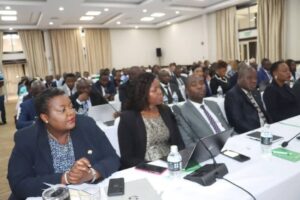

He emphasised that the success of the forthcoming budget will depend on the stakeholders’ “constructive, evidence-based input that is cognizant of prevailing fiscal constraints, reinforcing Government’s commitment to open dialogue and inclusive national development planning”.
He left them with some questions to answer and submit if they and other members of the public feel so:
* How should Government reduce expenditure and public debt?
* What other revenue avenues can Government explore to maximise Malawi’s revenue potential?
* What should the country do to generate more foreign exchange to improve FX reserves and Balance of Payments (BOP)?
* How can the country improve its productive capacity to increase exports and reduce imports?
* What should be done to reduce the interest rate spread in order to encourage savings and allow intermediation to productive sectors?


Advertisement