
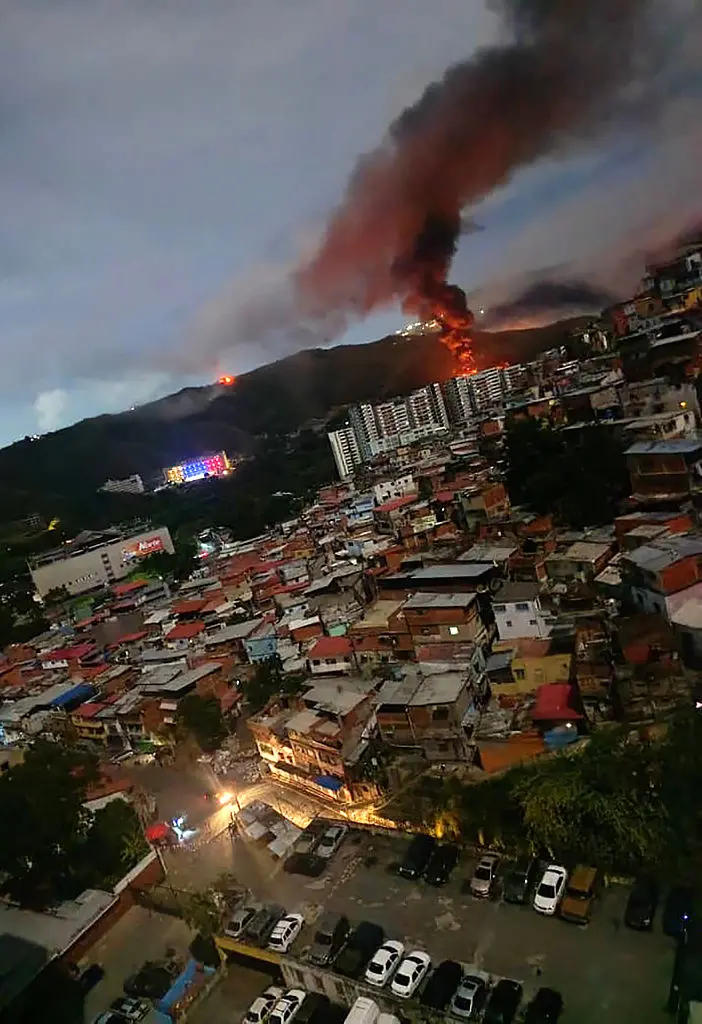
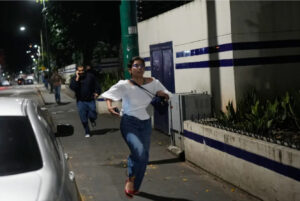
Pedestrians run after explosions and low-flying aircraft were heard in Caracas, Venezuela
* A lot of good planning and lot of great, great troops and great people. It was a brilliant operation, actually—Trump
* Venezuela requested an urgent meeting of the United Nations Security Council in response to the attack
* No cowardly attack will prevail against the strength of this people, who will emerge victorious—Foreign Minister Yván Gil Pinto said
By Stefani Pozzebon, Simone McCarthy, Osmary Hernandez & Mary Triny Mena, CNN
President Donald Trump announced early Saturday morning that the US carried out a “large scale strike against Venezuela” and that President Nicolas Maduro and his wife have been captured and removed from the country.

Advertisement
“The United States of America has successfully carried out a large scale strike against Venezuela and its leader, President Nicolás Maduro, who has been, along with his wife, captured and flown out of the country,” he wrote on Truth Social.
Venezuela requested an urgent meeting of the United Nations Security Council in response to the attack, Foreign Minister Yván Gil Pinto said: “No cowardly attack will prevail against the strength of this people, who will emerge victorious,” he said on Telegram, sharing the letter sent to the UN.
Venezuelan Vice-President Delcy Rodríguez said in an audio call with state-run VTV that the government doesn’t know the whereabouts of Maduro and First Lady Cilia Flores, demanding “immediate proof of life” from the Trump administration.
A CNN team witnessed several explosions and heard the sounds of aircraft early Saturday in the Venezuelan capital Caracas, and reported that some areas of the city were without electricity. Several areas of the city were without power and CNN journalists there could hear the sound of aircraft after the explosions.
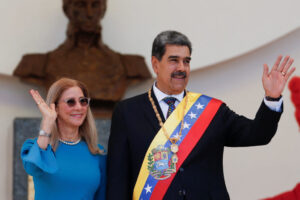
President Nicolas Maduro and his wife Cilia Flores gesture on the day of his inauguration for a third six-year term.—Picture by Reuters
In a statement before Trump’s announcement, Venezuela’s government condemned what it said was a “very serious grave military aggression,” and accused the US of carrying out an attack on Caracas and the states of Miranda, Aragua and La Guaira.
Venezuelan Defense Minister Vladimir Padrino López insisted the country would resist the presence of foreign troops in the country: “This invasion represents the greatest outrage the country has suffered,” he said.
He also called for a “massive deployment” of military forces in the country, information from the defense ministry showed.
In a brief phone interview with The New York Times on Saturday morning, Trump hailed what he called a “brilliant operation”: “A lot of good planning and lot of great, great troops and great people,” Trump told the Times. “It was a brilliant operation, actually.”
According to the Times, Trump declined to answer questions about whether he had sought congressional authorization for the strike, saying he would address the issue at a news conference later on Saturday.

Calm in Caracas after the strikes
CNN’s Mary Mena said from Caracas that the capital was calm hours after the strikes: “We listened to many airplanes and helicopters passing by, but right now the city remains quiet, for the past two hours,” she said.
“We haven’t heard people for example coming to the streets, and the state channel keeps repeating this message from the ministry of defense saying they want people to remain calm and they will deploy military forces across the country.”
The first blast witnessed by the CNN team was recorded at approximately 01h50 local time (12h50 ET): “One was so strong, my window was shaking after it,” CNNE correspondent Osmary Hernandez said.
Several areas of the city were without power, and CNN journalists in the capital heard the sound of aircraft after the explosions.
In recent weeks, Trump had repeatedly warned that the US was preparing to take new action against alleged drug trafficking networks in Venezuela and that strikes on land will start “soon.”

Advertisement
Trump’s pressure campaign on Maduro has included strikes destroying more than 30 boats in the Caribbean Sea and eastern Pacific Ocean in what the US has described as a counter-narcotics campaign. Trump last month ordered a blockade of sanctioned oil tankers coming to and leaving Venezuela.
The CIA carried out a drone strike in December on a port facility on the coast of Venezuela, CNN reported last month, citing sources, marking the first known US attack on a target inside that country.
US$50 million bounty
Utah Republican Sen. Mike Lee said Secretary of State Marco Rubio told him that Maduro was arrested to stand trial in the US: “He informed me that Nicolás Maduro has been arrested by U.S. personnel to stand trial on criminal charges in the United States, and that the kinetic action we saw tonight was deployed to protect and defend those executing the arrest warrant,” Utah Sen. Mike Lee posted on X early Saturday.
The Trump administration has for years said that Maduro was a criminal and has looked to prosecute him through the US legal system. In 2020, during Trump’s first term, Maduro was charged in the Southern District of New York for “narco-terrorism,” conspiracy to import cocaine, and related charges.
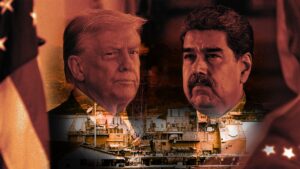
The Trump administration offered a US$15 million bounty for Maduro’s arrest. That bounty was increased to US$25 million in the waning days of the Biden administration, in early January 2025, and was increased again, to US$50 million, in August 2025 after Trump took office for a second term and designated Cartel de los Soles as a foreign terrorist organization.
The administration has claimed that Maduro is the leader of that group, which it describes as a criminal organization.
Meanwhile, BBC News reports that after a national security council meeting, Colombian President Gustavo Petro announced the deployment of public forces along the Venezuelan border.
From Bogotá, preparations are under way for a possible massive influx of Venezuelan refugees following the US attacks. Petro has repeatedly called for peace and dialogue since the first explosions were reported in Caracas.
Colombia and Venezuela share more than 2,000km of land border — and throughout history, economic and security crises in both nations have driven millions to seek refuge on either side.
It is an unprecedented moment for Venezuela that will have direct consequences in more countries, Colombia is on the front line.


Advertisement