
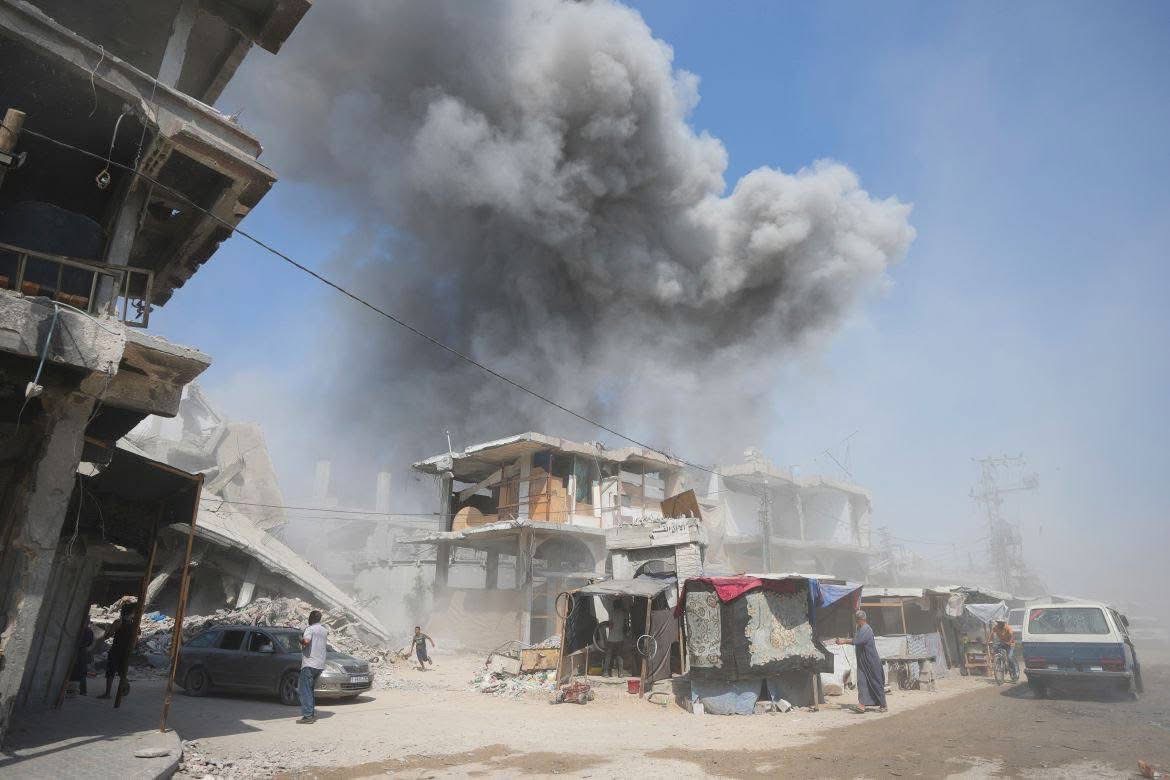
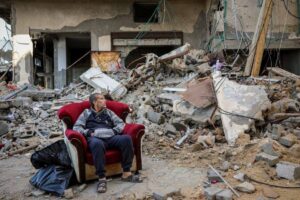
* Recently returned from Gaza where he worked in hospitals amidst humanitarian crisis, massacre and maiming of innocent children
* He is among a group of medical surgeons who are deployed in Gaza to save lives of those who suffered horrendous injuries after their homes and city buildings were bombed by Israeli Defence Force’s air strikes
By Duncan Mlanjira
On his visit to Malawi, distinguished UK-based consultant neurosurgeon, Dr. Ismail Ughratdar — who recently returned from Gaza where he worked in hospitals treating horrendously wounded Palestinians — engaged with the media on Tuesday at a breakfast meeting where he shared harrowing experiences he is having of the Israel-Gaza war.

Advertisement
Dr. Ughratdar — who is in the country supported by Malawi-Palestine Solidarity Movement and AshrafAid International — is a humanitarian volunteer surgeon among a group of medical surgeons who are deployed in Gaza to save lives of those who suffered horrendous injuries after their homes and city buildings were bombed by Israeli Defence Force’s air strikes.
Dr. Ughratdar, who beyond his clinical excellence is deeply committed to humanitarian service, frequently undertakes overseas medical missions, volunteering his skills in regions affected by crisis and conflict.
He thus unpacked the horrific experiences he encountered from the Israel-Gaza crisis of human massacre and most particularly, the maiming of innocent children who were rescued from the devastation rubble — only to die as he and his volunteer medics carried out multiple surgeries on one person amidst rumbling hospital buildings as attacks continued.
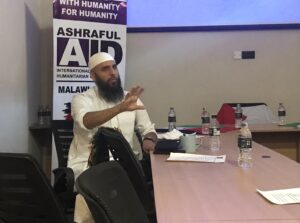
Dr. Ismail Ughratdar
Dr. Ughratdar explained in depth of the huge challenges being faced by the local medical teams the foreign visiting medics are supporting — that included the bombing of the very hospital he was treating patientsUK neurosurgeon and humanitarian Dr. Ismail Ughratdar shares first hand harrowing experience of Gaza-Israel war in Monday and a nearby building he and the others resided in.
He revealed that the air strikes come without warnings and don’t target Palestinian soldiers but civilians as he bore witness to the unfolding humanitarian catastrophe — which is not being accurately reported on since the narrative of this war is being handled by the western media, who are close allies of Israel.
He added that the media inside Gaza, which take shelter around hospitals believing that the Israelis would not bomb health facilities for the injured, is also being targeted by military attacks such that just on Monday, five journalists were killed.
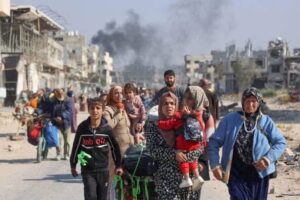
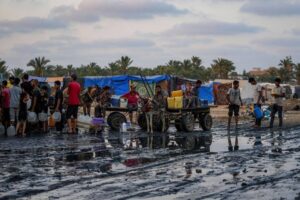
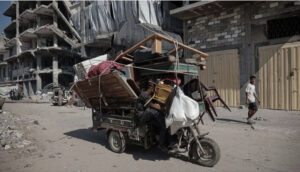
The BBC News attested to this in its report yesterday that indicated that the UN said “there needs to be justice” following Israel’s double strike on a Gaza hospital which killed at least 20 people, as an initial Israeli military probe said the strike had targeted a “camera positioned by Hamas”.
Condemnation of the attack, whose victims included five journalists and four health workers, has been mounting, with UK Prime Minister Keir Starmer describing it as “completely indefensible”.
Later on Tuesday the Israel Defense Forces (IDF) released its initial inquiry, which identified several “gaps” for further investigation. It came as Israelis launched a day of nationwide protests calling on their government to accept a deal to release the hostages.

BBC News reports that Monday’s attack on Nasser hospital in Khan Younis saw an initial strike kill at least one person, a Reuters cameraman who was operating a live TV feed from a staircase on the side of the hospital building.
A second strike in the same location about 10 minutes later hit journalists and rescuers who were attending the scene. At least 20 people were killed including four health workers and five journalists who worked for international media outlets, including the Associated Press, Reuters, Al Jazeera and Middle East Eye.
“This is a shock and this unacceptable,” UN human rights office spokesperson Thameen al-Kheetan is quoted as saying by BBC News yesterday. “This raises many, many questions about the targeting of journalists and all of these incidents must absolutely be investigated and those responsible must be held accountable.”
The BBC reports that in its statement, the IDF said it identified a camera positioned by Hamas in the area of the hospital “used to observe the activity of IDF troops”, without providing evidence.
“The troops operated to remove the threat by striking and dismantling the camera,” the statement said. It alleged that six of those killed were “terrorists”. A military spokesperson later said that journalists working for Reuters and the Associated Press had not been a target.
The IDF report appears to be a shift in tone from Prime Minister Netanyahu’s statement on Monday evening, which characterised the incident as a “tragic mishap”.
However the IDF did not explain why a second attack was launched minutes after the first. It instead said further investigation was needed into the authorisation process, including the ammunition used and the military’s “decision-making process in the field”.
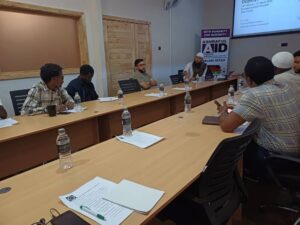
That is the deadly situation Dr. Ughratdar was facing on a daily basis as city buildings were being razed to the ground, people being trapped to death in rubble, those a bit off the bombed site being maimed by flying shrapnels.
He showed the horrendous images of the massacre and of children’s obscene injuries, the rate of children being rendered orphaned and the dire conditions the volunteer doctors face.
His reflections from Gaza offered a rare and powerful first-hand account — not only of the medical challenges faced by frontline doctors, but also of the resilience and courage of patients and communities enduring unimaginable hardship.
A graduate of the University of St Andrews and the University of Manchester and trained in Nottingham before completing a fellowship at King’s College Hospital in London, Dr. Ughratdar was appointed as a UK-board certified consultant neurosurgeon.
His visit to Malawi from Monday to Friday, August 25-28, provided a platform to share his experiences, strengthen solidarity and inspire collective humanitarian action with Malawian symphathisers of the atrocities being perpetrated by the Israelis.
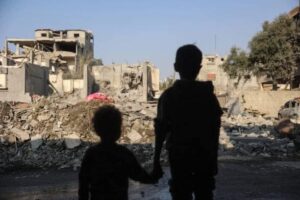
He implored on the media to join forces with Malawi-Palestine Solidarity Movement to amplify the truth of the massacre and genocide being perpetrated by Israel troops and their leadership, emphasising the need to dig deeper to unravel the truth of the crisis in Gaza.
Malawi-Palestine Solidarity Movement encourages the media that their responsibility is not just being reporters but are guardians of the truth; saying: “Malawi listens to you — you shape public opinion and influence leaders’ decisions.
“Journalism must never be fear-driven or one-sided, it is a duty to inform fairly, courageously, and truthfully. Silence in the face of oppression is complicity,” says a statement that was read at the briefing.
The Movement highlights that as the media expose the true calamities in Gaza it should influence the country’s leadership to join the countries that are advocating for the United Nations to declare the situation in Gaza as genocide and as apartheid in order for the world to intervene.
The suffering inside Gaza hospitals, as presented graphically by Dr. Ughratdar were indeed harrowing — of children, women, and families under siege; starvation, malnutrition; and the collapse of healthcare systems.
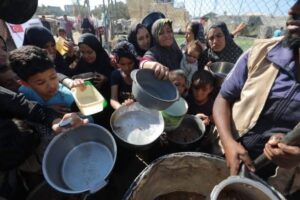
The survivors struggle to go to work, they struggle to find food in shops, humanitarian organisations such as the UN and the Gift of the Givers are blocked from delivering food assistance while children get killed or maimed as they risk to visit food centres.
Over 250 lives of Gift of the Givers’ volunteers have been killed in line of duty, over 200 journalists killed or maimed with five attacked on Monday when Dr. Ughratdar was in Malawi.
He also exposed that recently a UN humanitarian camp was also targeted that claimed the life of a British national but the western media, including the BBC only carried this incident several days later and as a brief.
Meanwhile, Al Jazeera has reported today quoting Gaza’s Health Ministry, saying it has recorded 10 deaths due to famine and malnutrition over the past 24 hours, including two children — bringing the total number of hunger-related deaths to 313, of whom 119 were children.
The report further says Israel is using overwhelming force in its push to occupy Gaza City with tanks and warplanes levelling entire blocks. At least 23 Palestinians were killed in Israeli attacks across Gaza since dawn, including four aid seekers — medical sources told Al Jazeera.
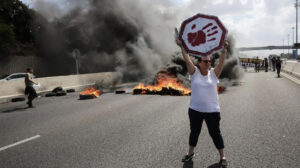
Protests in Israel
Israel has killed at least 62,819 people and wounded 158,629 in its war on Gaza. A total of 1,139 people were killed in Israel during the Hamas-led attacks on October 7, 2023, and more than 200 were taken captive.
The BBC further attests that Israel has repeatedly targeted hospitals in Gaza throughout the war, despite the protections they receive in international law, saying that the medical facilities are being used by Hamas.
In Israel, protesters blocked highways with burning tyres and held demonstrations in Tel Aviv and other cities to demand their government agree a ceasefire deal to return the remaining hostages held by Hamas, and end the war.
US envoy Steve Witkoff is quoted as saying said President Donald Trump was expected to chair a meeting on a post-war plan for Gaza at the White House today: “We think that we’re going to settle this one way or another, certainly before the end of this year,” he told Fox News.

Advertisement
A UN-backed body has confirmed a famine is taking place in Gaza City and its surrounding areas. The Integrated Food Security Phase Classification (IPC) says more than half a million people across Gaza are facing “catastrophic” conditions characterised by “starvation, destitution and death”.
The report was labelled an “outright lie” by Israel, which has denied there is starvation in the territory.
Most of Gaza’s population has also been displaced multiple times; more than 90% of homes are estimated to be damaged or destroyed; and the healthcare, water, sanitation and hygiene systems have collapsed.
Malawi-Palestine Solidarity Movement maintains that Africa cannot remain silent in the face of modern-day apartheid — emphasising that Israel is functioning as a war machine by testing weapons on civilians.—Reporting for BBC News by André Rhoden-Paul.


Advertisement