


Revered Chief Economist Chifipa Mhango
* The decision by the IMF is a clear vote of no confidence on the current government administration’s ability to effectively manage an economy
* It is a total termination of support and represents a filing of divorce papers. It is the first time since our democracy in 1994 that such strong words have been used that point towards an electoral process as the remedy to Malawi situation.
* It is very clear that what the IMF is telling Malawians, in simple terms, is ‘if you want us to support you, then not under the current administration, so we await your decision in September 2025 on which Government you vote for or else you are on your own
By Duncan Mlanjira
South Africa-based Malawian Chief Economist, Chifipa Mhango analyses that the statement by the International Monetary Fund (IMF) to suspend, with immediate effect, the US$175 million (about MK306 billion) extended credit facility (ECF) for Malawi “carries a political undertone, and is a clear vote of no confidence on the current government administration’s ability to effectively manage an economy”.

Advertisement
In his statement, Chifipa — who is Director of Economic Research & Strategy for South Africa’s Don Consultancy Group (DCG) — says the decision by the IMF “is a total termination of support and represents a filing of divorce papers”.
The EFC, that was meant to restore macroeconomic stability and boost investor confidence in the country which the IMF approved in November 2023, was supposed to run for four years up to November 2027.
The statement in part: “The programme faced a number of exogenous shocks which made it difficult for the supply side to assist both increased revenue and enhanced production.
“This resolution allows the political environment necessary for the progression of the ECF programme to normalise as is expected after the elections in September, 2025 — thus enabling government to leverage it’s fresh electoral mandate in negotiating a more sustainable extended credit facility package for Malawi’s macroeconomic stability going forward.”
According to some inside sources at IMF, the program has been terminated due to failure by President Lazarus Chakwera and his Government to adhere to what was agreed upon with the IMF team, which includes implementation of austerity measures.
Since its approval in November 2023, Malawi only drew a single tranche of US$26.3 million and since then, the country has been failing the test to qualify for the disbursement of another tranche.

In his statement, Chifipa said: “It is the first time since our democracy in 1994 that such strong words have been used that point towards an electoral process as the remedy to Malawi situation.
“It is very clear that what the IMF is telling Malawians, in simple terms, is ‘if you want us to support you, then not under the current administration, so we await your decision in September 2025 on which Government you vote for or else you are on your own’.”
He further said under Chakwera’s administration, “elements of fiscal mismanagement have dominated, with reckless expenditure mounting to trillions of Malawi Kwacha, a widening budget deficit, high inflation rate of over 30%, with skyrocketing food prices”.
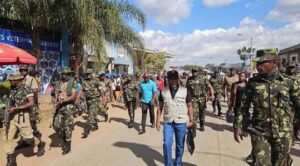
Expensive adventures of the Vice-President Michael Usi
“Despite several warnings, this current administration has not taken any advice through action-oriented approach but just merely words on paper. Malawians have heard of austerity measures that only get announced during holiday season of December each year and only to cease in January, with excessive tavels both locally and internationally.
“It is important to note that those supporting the country through lending or donor finding watch the behaviors of an administration, and monthly data are available that can easily expose fiscal mismanagement.”
As DCG Director of Economic Research & Strategy, Chifipa has been presenting many worrisome trends on Chakwera’s government’s expenditure patterns for a long time and he says: As Don Consultancy Group, we have raised an alarm on the matter, with direct engagement with Minister of Finance. It is disappointing that as a country, we have to reach to this point with the IMF.

Advertisement
“Any key economic data which has been sourced from the Reserve Bank of Malawi, as per our discussion articles on Malawi economy, clearly pointed on no hope for recovery — mainly attributed to the fiscal mismanagement.
“No matter how good your other policies are, if the fiscal element presents a bad posture, no policy can be effective. On this matter, the current administration of Dr. Lazarus Chakwera has scored many own goals on the fiscal side of the Malawi econony.”
He attested that the concerns raised by the IMF in its statement “are genuine and backed by data and facts on the ground”.
“Malawi’s macro-economic landscape — from fiscal, monetary and trade & industry policy implementation — are totally not aligned to support any economic recovery, to which as Don Consultancy Group have been very open about it under this current Chakwera administration.
“The statement by IMF on Malawi is not only an economic statement but strongly carries a political tone, and a clear vote of no confidence in the current Malawi Government administration,” he concludes.

State of roads in many parts of Blantyre City due to lack of funds to maintain channeled to expensive lifestyles of government officials
In its statement, the Ministry of Finance & Economic Affairs says the ECF suspension was “mutually resolved to allow the program to lapse until further notice” following discussions the two entities recently held in Washington DC.
It says ECF was aimed at restoring macroeconomic stability but the program faced a number of exogenous shocks which made it difficult for the supply side to assist both increased revenue and enhanced production — thus both agreeing “to allow the program to lapse”.
The Finance Ministry further says that it “remains confident” that after the September 16 General Elections, “the partnership with the IMF will continue the progress made thus far in restoring international donor confidence in Malawi’s commitment to the macroeconomic reforms necessary for staying on the path of recovery and debt sustainability, which Government has pursued despite the unsustainable debt stock inherited in 2020”.

Desperate people resorting to rampant cutting down of trees to produce charcoal which is in high demand and is asubstitution for economic recovery for rural poor
And that this was coupled with exogenous shocks such as CoVID-19, Cyclone Ana in 2021, price inflations precipitated by the war in Eastern Europe in 2022, cholera outbreak and Cyclone Freddy in 2023, and El Niño drought conditions in 2024.
The Ministry further says the IMF is expected to send a delegation to Malawi at the end of this month of May “to conduct a monitoring and consultation for Malawi’s economic main stays in preparation for a tailor-made Malawi programme in the future — after recognising the extent of the exogenous shocks that affected the country”.
“As such, the Ministry of Finance & Economic Affairs assures the public that during the period in which the ECF program will be in the state of suspension, the economic reforms protocols established to exercise fiscal discipline in compliance with the Public Finance Management Act (2022) will continue in force,” concludes the statement.


Advertisement