
By Duncan Mlanjira
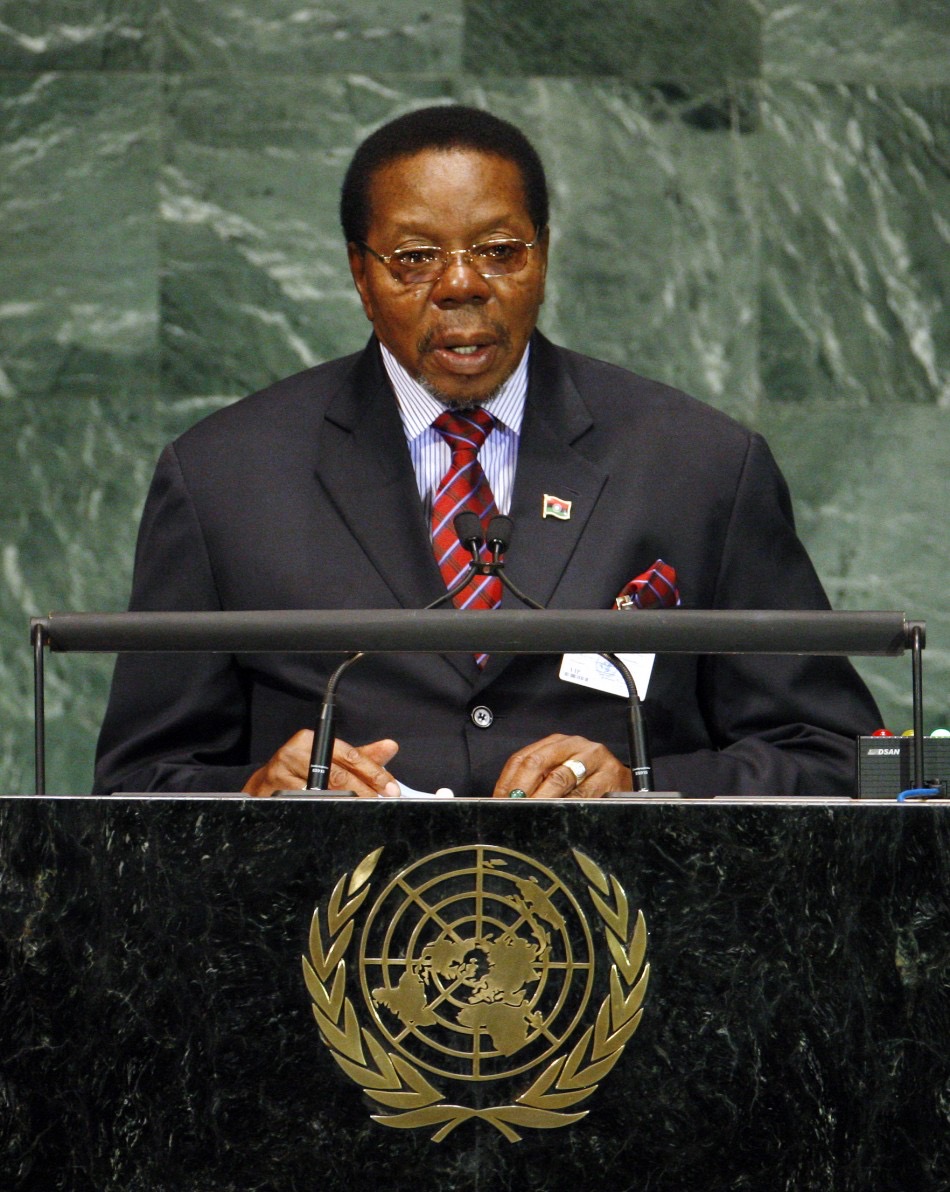
On the 10th anniversary of his death, Vice-President Saulos Klaus Chilima pays a tribute to former President Bingu wa Mutharika, saying the third Head of State taught the nation to believe in themselves and the value in the self consciousness that Malawi is a great nation — “not withstanding the myriad of our tribulations”.

Advertisement
“The eventide descended on our nation on that fateful day, ten years yonder; and our hearts have remained compounded and sad at such a sudden and untimely departure.
“For the great contributions you made your nation all we can do is to remember you with deepest of respect and pray that God continues to keep your soul in eternal peace, in his Kingdom.”
The tribute message was addressed to Bingu’s widow Callista Mutharika, former president Peter Mutharika, the entire Mutharika family and all Malawians.

At his funeral
According to Wikipedia, Bingu was born Brightson Webster Ryson Thom on February 24, 1934 who served as President from May 2004 until his death in April 2012.
He was the founder of the Democratic Progressive Party, which he founded in February 2005 and went on to obtain a majority in Parliament.
After his death in office from a cardiac arrest on April 5, 2012, at age 78 , the party was and is still led by his brother Peter, who was elected President in 2014.

Bingu’s brother Peter
During his two terms in office, Bingu was noted for being the chairperson of the African Union in 2010–2011, as well as for several domestic controversies.
Upon completing his primary education at Ulongwe Mission and Chingoli, Mulanje, Ntambanyama, Malamulo, in Thyolo and Henri Henderson Institute in Blantyre, Bingu Mutharika obtained a Grade A Cambridge Overseas School Leaving Certificate at Dedza Secondary School in 1956.
After that, he joined the Nyasaland civil service and in 1964, he was one of the 32 Malawians selected former President late Dr. Hastings Kamuzu Banda on an Indira Gandhi scholarship where he earned his bachelor’s degree in Economics from the Shri Ram College of Commerce in Delhi.

Advertisement
Subsequently, he attended the Delhi School of Economics graduating with a M.A. degree in Economics. He later obtained a PhD degree in Development Economics from Pacific Western University.
He also completed short courses on Business Management, Financial Analysis, Trade Promotion, Political Leadership, regional Economic Co-operation and Human Relations.
In the early 1990s, he was one of the first to be employed at the Preferential Trade Area of East and Central Africa (PTA) and became its secretary-general in 1991.
Mutharika served in the Malawi civil service as an administrative officer and also in Zambia. He was offered the Deputy Governorship of the Reserve Bank of Malawi and appointed Minister of Economic Planning and Development in 2002.
He also worked at the World Bank as a Loans Officer and at the United Nations Economic Commission of Africa, as Director of Trade and Development Finance and as Secretary General of the Common Market for Eastern and Southern Africa (COMESA) covering 22 member states.
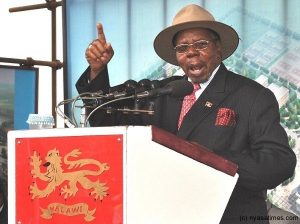
Mutharika was nominated by President Muluzi as his successor and went on to win the presidential election on May 20, 2004, ahead of John Tembo and Gwanda Chakuamba.
He died two years after winning the 2009 elections and was succeeded by his Vice-President Joyce Banda, who was defeated during the 2014 presidential election.
During Bingu’s first term in office (2004–2008), the country achieved a high rate of agricultural production and food security that was through a programme of agricultural subsidy that benefited approximately 1.7 million small holder farmers.
In the 2005/2006 crop season, Malawi achieved a food surplus of more than 500,000 metric tons and during the 2008/2009 planting season, food surpluses topped 1.3 million metric tons. This agricultural policy was widely regarded as successful but expensive, and was curtailed in 2011.

Advertisement
Under his tenure, the constitutionally enshrined human rights and separation of powers were enhanced, including legal reform and his first term was seen as a broad political success.
He has also been credited with committing to and presiding over economic reform, fiscal restraint and anti-corruption measures.
His Malawi Growth and Development Strategy for 2006–2011 prioritised the enhancement of agriculture and food security, education, transport, energy generation, rural development, irrigation and water development, youth development and anti-corruption initiatives.
In 2009, Malawi’s Ministry of Finance estimated that during the previous four years the share of Malawians living below the poverty line fell from 52 percent to 40 percent.
This has been attributed to the country’s agricultural policies, which have been seen as pioneering in the context of African economic development.

Advertisement
In addition to championing food security in Malawi, Mutharika promoted a similar approach for Africa and as chairperson of the African Union he laid down a plan for Africa to achieve sustainability and food security.
He proposed a new partnership with other African nations, which he called the ‘African Food Basket’, outlining a strategy incorporating subsidies to small farmers, especially women, improvements in irrigation, and improving agriculture and food security over 5 years.
This was through innovative interventions that comprised subsidies, increased budgetary allocations, private sector investment and affordable information and communications technology.
Approximately half of the country’s subsistence farmers received vouchers which provided discounts on maize seed and fertiliser. To sustain the program, the Malawi Government allocated 11% of its budget for 2010/2011 to agriculture, continuing a rare record of commitment on this scale in Africa.

Former President Joyce Banda
Some leadership controversies included sidelining and isolating his vice-president, Joyce Banda and he went to expel her from the party in 2010 because she refused to accept the nomination of his brother Peter as the next president.
As a result of the Cochran-Dyte 2011 cable controversy that accused Mutharika of being increasingly ‘arrogant’ and ‘autocratic’, he expelled the British High Commissioner.
In international relationships, his close relationships with Zimbabwe President late Robert Mugabe and Omar al-Bashir of Sudan were controversial.
In 2011, days of nationwide protests occurred, sparked by worsening fuel shortages, rising prices and high unemployment. Malawi’s health ministry confirmed 18 deaths in the northern cities of Karonga and Mzuzu as a result of police using live ammunition to quell protests.

His best friend Robert Mugabe
But Bingu was unapologetic and said that he would “smoke out” all his enemies and this was accompanied by a crack-down on Malawian journalists, human rights activists, and lawyers, including Ralph Kasambara.
Other events that marred his presidency were the activities surrounding the 2011 academic freedom stand-off between himself and the University of Malawi as well as the death of student activist Robert Chasowa.
He first married Zimbabwean Ethel Zvauya Mutharika, with whom he had four children, who died on May 28, 2007 and three years later he married Callista Chimombo, a former Minister of Tourism.
Controversy followed him to his death on April 5, 2012 as he was reportedly flown to a South African hospital due to power outages in Lilongwe but he had already died.
His death was first as April 6 and was changed to April 5 a year later. At first former Information and Civic Education Minister Patricia Kaliati issued a statement that claimed that “the conduct of Joyce Banda in forming her own opposition party precluded her from being eligible to succeed the presidency” while the country’s security forces also wanted the constitutional order to prevail.

Advertisement
Wikipedia quotes former US ambassador to Tanzania Charles Smith as saying Bingu was “unwavering in his commitment to improve the plight of Malawi’s poor” and that he was “one of Africa’s most courageous and conscientious leaders”.
Bingu’s titles, honours and awards
* The United Nations Special Millennium Development Goal Award (2010) for success towards eliminating hunger by enhancing food security ahead of the 2015 MDG deadline (Goal 1 – ending poverty and hunger)
* COMESA Distinguished Award (2010) for exceptional leadership and distinguished service to COMESA and the integration of Africa as Secretary General of COMESA from 1991 to 1997. The Authority specifically commended Mutharika for his contribution to the realisation of the Abuja Treaty objectives towards African integration.
* Southern Africa Trust Drivers of Change Award (2009) for changing Malawi from a country in perpetual food deficit to one that is entirely food-sufficient. “The boom in this sector has had a direct impact on millions of poor people. Under his leadership, poverty has declined from 58 to 42 percent in five years. Through his direct involvement in turning Malawi’s future around, he is building new confidence and hope amongst the citizens of Africa in their governments.”
* 2009 Medal of Glory Awards – “President Mutharika was chosen for the award because of his bold reforms that have resulted in the Malawi green revolution, and Malawi’s increase in its economic growth rate from less than 1 percent in 2003, before he took office to more than 9.7 percent in 2008, at the end of his first term office”
* The Most Excellent Grand Commander (MEGC) – Top most award of Malawi order of National Achievement conferred by the Malawi Civilian Honours and Decorations, 6 July 2009
* Inaugural Food Agriculture and Natural resources Policy Analysis Network (FANRPAN) Food Security Policy Leadership Award (2008), “for his agricultural policy interventions which have transformed Malawi form a food deficit nation to a net maize exporter”
* FAO‘s Agricola Medal (2008) in honour of “his substantial contribution towards transforming the country’s economy form a state of food deficit nation to a net exporter of maize”
* Louise Blouin Foundation Award for Exceptional Creative Achievement (2008) for making a positive impact on a global scale
* Danish Government Award of recognition for outstanding performances in promoting gender equality and women empowerment (2008).
* The Order of Brilliant Jade with Gran Cordon was given to Mutharika by President of the Republic of China Chen Shui-bian in January 2005.
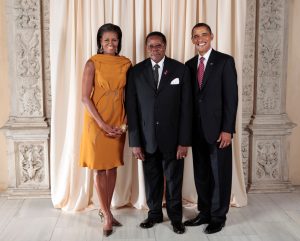
Meeting US President Barack Obama
Mutharika received several honorary degrees including Professor of Economics by East China Normal University, in April 2010; Doctor of Letters (D.Lilkmktt) Degree Honoris Causa by the University of Delhi in October 2010; Doctor of Law (PhD Degree (Honoris Causa), Mzuzu University, in 2008 and Doctor of Philosophy (PhD) Degree (Honoris Causa), University of Strathclyde, Scotland in 2005.
He was the founder and chairman of the Bineth Trust – a nonprofit organisation promoting education; Founder of the Silvergrey International; and founder and Chairman of the Bingu Silvergrey Foundation of the elderly and retired persons.
He is also the founder of Malawi University of Science and Technology (MUST), the Lilongwe University of Agriculture and Natural Resources; University of Cotton Research at Bangula; the University of Marine biology; the University of Mombera and the University of Nkhotakota.

Magnificent MUST campus at Goliati