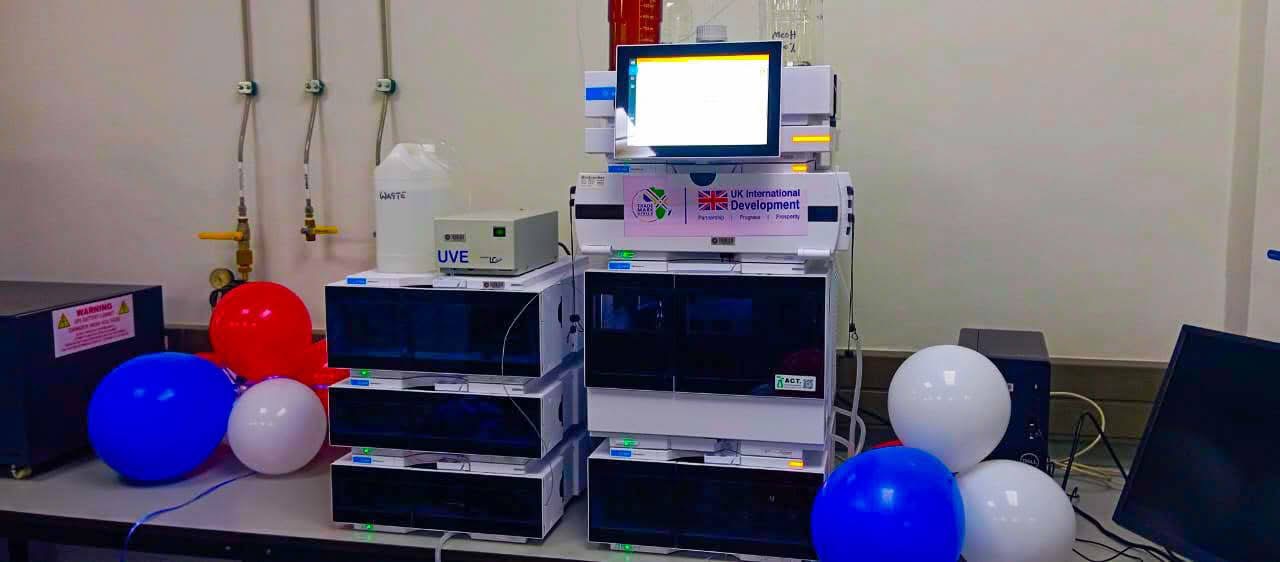
* The newly installed equipment is a major breakthrough for Malawi, for exports, and for individual entrepreneurs
* MBS can now conduct internationally recognised tests locally, removing the need for exporters to send samples abroad for certification
By Memory Kutengule Chatonda, Malawi News Agency (MANA)
President of Malawi Confederation of Chambers of Commerce & Industry (MCCCI), Ronald Ngwira, has urged local businesses to fully utilise the newly-accredited state-of-the-art testing facilities at the Malawi Bureau of Standards (MBS) to secure the certification required for competitive international markets.

Advertisement
The equipment was funded by the United Kingdom government through the Foreign, Commonwealth & Development Office (FCDO), in partnership with TradeMark Africa valued at over US$1 million.
Speaking in Blantyre yesterday, May 13, during the official handover of the laboratory equipment, Ngwira expressed gratitude to the UK government for its support, saying: “The newly installed equipment is a major breakthrough for Malawi, for exports, and for individual entrepreneurs.
“MBS can now conduct internationally recognised tests locally, removing the need for exporters to send samples abroad for certification,” said said the newly-elected MCCCI president, who thus encouraged the business community to step forward and utilise the facilities to ensure their commodities meet global standards.
“Whether it is mangoes or any other commodity, let us get them tested locally,” he said. “The UK government and MBS have done their part — it is now up to Malawian businesses to utilise the facility.”

Ronald Ngwira
Ngwira assured the private sector that MCCCI would continue to engage international partners to ensure that foreign buyers recognise the standards and test results issued by MBS.
Sebo Malawi Quality Assurance Manager, Mercy Kause, noted that the accredited equipment addresses long-standing bottlenecks that previously forced companies to seek certification outside the country.
“Previously, we faced long turnaround times and challenges with international recognition,” she said. “In some instances, foreign buyers rejected certificates of analysis issued by MBS because the laboratory lacked international accreditation.”
Kause noted that while external laboratories provided an alternative, they were prohibitively expensive and required payment in foreign currency, adding that beyond the financial burden, external testing involved complex logistics and less direct engagement compared to having efficient local services.
Kause further said the new equipment and accreditation gives the private sector renewed confidence in building a competitive Malawi: “Accreditation is not just a certificate on a wall. For the industry, it means our results are comparable, satisfactory, and acceptable in international markets.
“This investment is already translating into measurable improvements in service delivery, efficiency, and accountability,” she said.
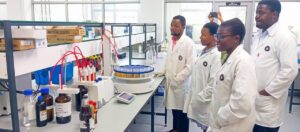
Kause explaining the advantages of the system
Deputy British High Commissioner to Malawi, Ben Nicholson, said Malawi needs export-driven growth to assure international buyers that its produce meets globally recognised quality benchmarks.
“Whether it involves high-value crops like macadamia and mangoes, or growing sectors such as mining, obtaining the necessary test results here in Malawi must meet international standards.
“This is essential to reduce turnaround times and costs for businesses,” said Nicholson, who underscored the importance of combining investment in testing capacity with digital border solutions to directly support Malawi’s industrialisation and export goals.
“This will make it easier and cheaper for local producers to access regional and international markets,” he said, while Secretary for Trade & Industry, Wiskes Nkombezi, described the new equipment as a catalyst for industrialisation, a key pillar under the MW2063 national vision.
He said the equipment will ensure locally manufactured goods meet both domestic safety requirements and international market standards.
“For us to say we are industrialising, the goods we produce must be properly assured in terms of quality. These standards must be internationally recognised,” Nkombezi said.
On his part, MBS Director General, Symon Mandala, said the new technology puts the Bureau in a position to conduct internationally recognised tests locally, eliminating the need for exporters to send samples abroad for certification.
“The results will be comparable to those of any other standards body globally, giving international consumers confidence in Malawian products,” Mandala said.
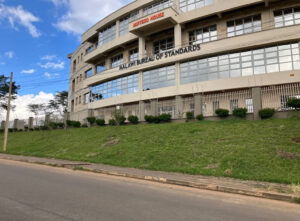
Headquartered along Ali Hassan Mwinyi Road in Blantyre, the Malawi Bureau of Standards is the national statutory body established to promote metrology, standardization & quality assurance of commodities; and of the manufacture, production, processing or treatment thereof.
Originally set up under an Act of Parliament in 1972, the agency protects consumer health while strengthening the local economy, and further provides for matters incidental to, or connected with, the foregoing and metrology across Malawi.
Its core functions & responsibilities includes:
* Standardisation: preparing and publishing national standards for products and production lines;
* Quality monitoring: running the Imports Quality Monitoring Scheme (IQMS) to block substandard or hazardous foreign goods;
* Local certification: assessing and issuing official quality marks and permits to local manufacturers; and
* Metrology services: verifying and calibrating commercial weighing and measuring equipment.—Edited by Duncan Mlanjira, Maravi Express