
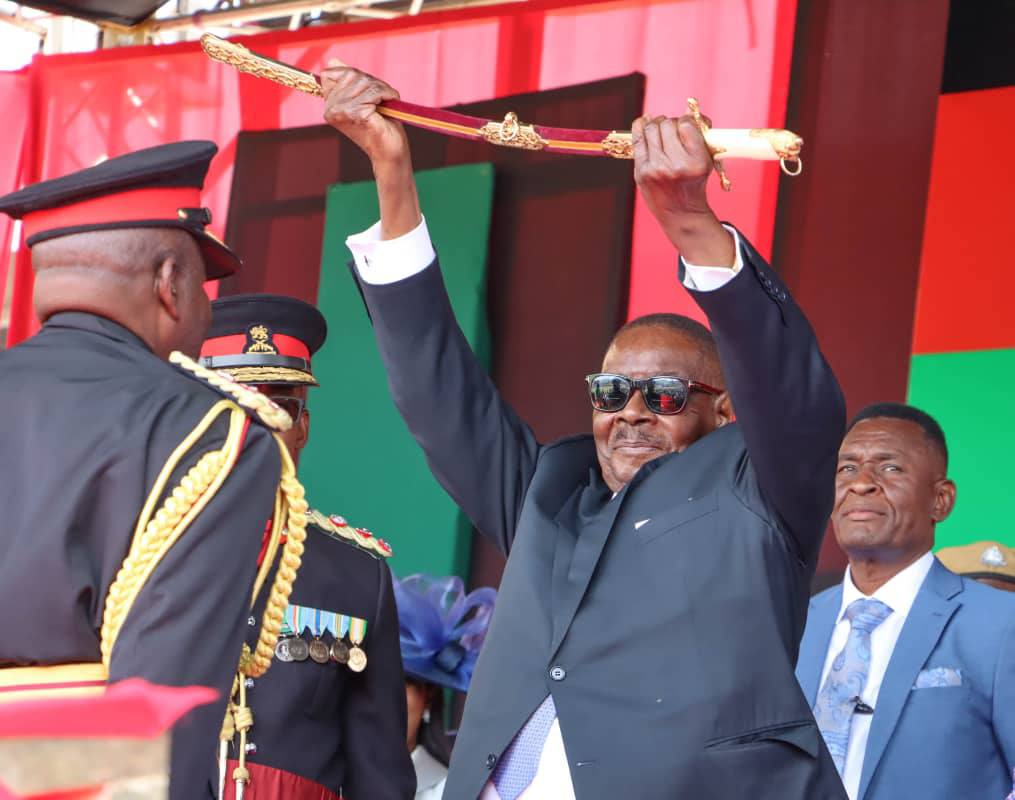
The 7th President of the Republic of Malawi, Prof. Arthur Peter Mutharika
* In a country grappling with deep macroeconomic stress, food insecurity, institutional fatigue and public disillusionment, the first 100 days matter less for dramatic results and more for direction, intent and policy posture
* From the outset, President Mutharika has placed governance discipline at the centre of his leadership message
* His early rhetoric on corruption, accountability and public service efficiency has been unusually direct
Analysis by Chifipa Mhango
As President Peter Mutharika marks his first 100 days in office today, the 12th of January 2026, following his swearing-in on 4th October 2025, it is both fair and necessary to take stock of the early signals coming from his administration.

Advertisement
In a country grappling with deep macroeconomic stress, food insecurity, institutional fatigue and public disillusionment, the first 100 days matter less for dramatic results and more for direction, intent and policy posture.
On these fronts, there are several constructive developments worth acknowledging:
Restoring governance confidence and state authority
From the outset, President Mutharika has placed governance discipline at the centre of his leadership message. His early rhetoric on corruption, accountability and public service efficiency has been unusually direct.
By publicly warning ministers and senior officials that corruption and incompetence will not be tolerated, the President has sent an important signal to both the bureaucracy and the public: that the state intends to reclaim authority and credibility.
Equally significant has been the early configuration of his Cabinet and senior appointments. The emphasis on experience in key economic and security portfolios reflects a preference for stability and institutional memory at a time when the country cannot afford policy experimentation.
While governance reform is ultimately judged by enforcement rather than pronouncements, these early steps help reset expectations within the public sector and among development partners.
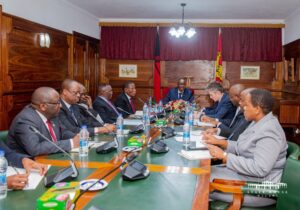
The IMF team toured Malawi to meet Mutharika and his government
Early economic posture: stabilisation before expansion
President Mutharika assumed office amid severe economic headwinds: high inflation, acute foreign exchange shortages, rising public debt, and widespread food insecurity. Within this context, the administration’s early economic posture has leaned toward stabilisation, social protection and productive capacity preservation, rather than headline-grabbing growth promises.
One of the most notable early policy decisions has been the abolition of tuition, examination and development fees in public primary and secondary schools. From an economic perspective, this is more than a social policy, it is a human capital investment strategy.
By reducing household financial pressure and improving access to education, the government is laying a foundation for longer-term productivity gains in a youthful population where skills deficits remain a binding constraint on growth.
Food security and agricultural responsiveness
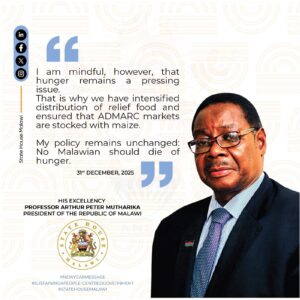
Food insecurity remains Malawi’s most immediate economic and humanitarian challenge, and the Mutharika administration has treated it with urgency.
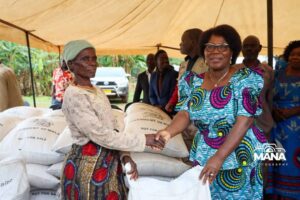
Distribution of relief food to the underprivileged
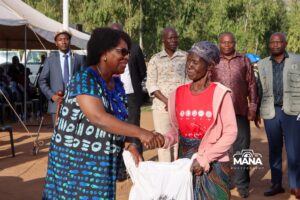

Early maize procurement efforts and the continuation of targeted agricultural input subsidies demonstrate a recognition that hunger is both a social crisis and a macroeconomic risk.
Agriculture remains the backbone of Malawi’s economy, employing the majority of the population and anchoring rural incomes. By prioritising the Farm Input Subsidy Programme and emergency food interventions, the government is attempting to stabilise both livelihoods and inflationary pressures linked to food prices.
While efficiency and transparency will be critical to the programme’s success, the policy direction itself aligns with the country’s structural realities.
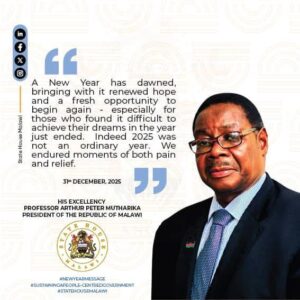
Economic messaging and investor psychology
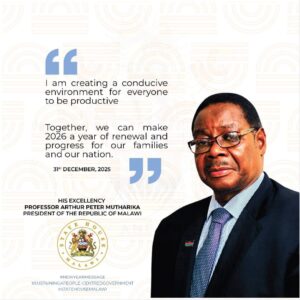
Beyond specific policies, President Mutharika’s early economic messaging has been measured and realistic. His emphasis on production, fiscal discipline and dignity reflects an understanding that economic recovery will not come from consumption-led stimulus alone, but from rebuilding productive sectors such as agriculture, energy and extractives.
Clear articulation of economic constraints and priorities matters. It helps anchor expectations among investors, businesses and development partners. In this regard, the administration’s early communication has contributed positively to restoring a sense of policy coherence at a time when uncertainty has been costly.
A foundation phase, not a verdict
It would be premature to offer a definitive judgement on President Mutharika’s economic legacy at the 100-day mark. Structural reforms take time, and implementation will ultimately determine success or failure.
However, what can be said with confidence is that these first 100 days have been about setting foundations rather than chasing optics.
The combination of governance signaling, social investment in education, responsiveness to food insecurity, and pragmatic economic messaging suggests an administration focused on restoring functionality to the state and dignity to economic policy.
A lighter moment, and a sobering reminder
In a lighter moment that perhaps captures his governing philosophy, President Mutharika himself has remarked that he does not particularly like the ‘100 days’ benchmark, noting that governing a country cannot be meaningfully measured on a stopwatch.
While the comment drew a smile, it also carried a serious message: nation-building is a marathon, not a sprint.
For Malawi, that reminder is timely, and in reality, what His Excellency President Mutharika figuratively meant was: the real test of this administration will not be the first 100 days, but whether the early direction now translates into sustained reform, disciplined execution and inclusive economic recovery. So far, the reset is on the right direction.

Chifipa Mhango
* Chifipa Mhango is Chief Economist & Director of Economic Research and Strategy for South Africa’s Don Consultancy Group. He economic policy expert specialising in macroeconomic stability, public finance and development economics


Advertisement