


* From Nsanje to Chitipa, girls can now see Temwa, Tabitha, Chinzimu, Khumalo, Simwaka, Alufandika, Mkandawire and Madise and believe
* Believe that football can take them somewhere. Believe that dreams aren’t just for others. Believe that they, too, can run
Feature by Tiwonge Kampondeni, Malawi News Agency (MANA)
Two percent. A number so small; it barely registered on any odds maker’s chart.
That was the winning percentage Malawi’s Scorchers were handed before their Women’s Africa Cup of Nations (WAfCON) debut – a statistical shrug, a polite dismissal, a polite way of saying: don’t get your hopes up.

Advertisement
But nobody told the girls. They didn’t read the script. They tore it up instead. They went on to stun 10-times winners and defending champions Nigeria 3-2, edged Ghana 2-1, outlasted Algeria 3-1 and marched undaunted into their first-ever WAFCON final.
Along the way, they punched Malawi’s ticket to the FIFA Women’s World Cup Brazil 2027.
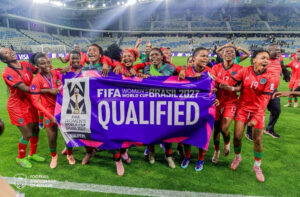
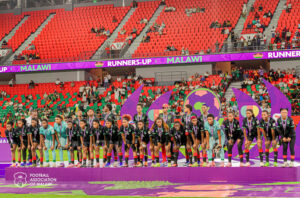
In Morocco, the Scorchers turned a tournament of firsts into a chapter of history. They arrived as unknowns; they left as finalists — falling 0-3
to Cameroon, yes, but walking off that pitch with their heads high, their bags packed for the World Cup and the weight of a nation’s pride on their shoulders.
Two percent was the number. History was what they made of it.
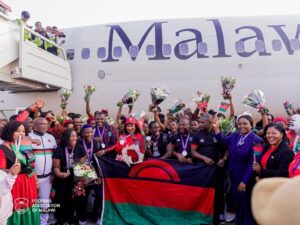
A sea of red and green. When the history makers touched down on that Wednesday at Kamuzu International Airport in Lilongwe, the tarmac became a living canvas of Malawi’s colours.

Thousands surged forward
Millions watched from living rooms, phones clutched in hands, as local television stations and online platforms beamed the arrival live –capturing every ululation, every dance step, every tear wiped away in joy.
“Welcome Home Champions”; “Grand Welcome: The Scorchers”; “Takulandirani Ma Scorchers”. The welcome wasn’t just from the crowd. UNICEF Malawi posted on Facebook: “Dear Scorchers, you have been incredible role models for children and girls across Malawi, showing what is possible when young people are given the opportunity to dream, believe and achieve.”
At 16:36, Malawian Airlines flight ET-APO touched down. The pilots were women — two of them — a fitting tribute for a team that had spent the tournament breaking barriers and proving – loudly, joyfully, undeniably –that football has a place for them.

First Lady Madam Gertrude Mutharika led the thousands who had gathered to honour the Scorchers. For one golden afternoon, the country stopped.
Schools? Paused. Offices? Empty. The nation stood still to celebrate its daughters, who had left as debutants and returned as finalists, World Cup qualifiers and heroines.
The girls who refused to listen
But behind the medals, the goals and the confetti lies another story. A story of resistance, dust and defiance.
For some of these players, the journey began with a closed door. Football is not for girls. Concentrate on school. Football will take you nowhere. They heard it all. From parents. From neighbours. From a world that had already decided their place.
But the girls refused to give up.
They played on dusty grounds that turned to mud in the rain. They travelled long distances and trained when others doubted them. Their love for the game became their fuel.

Two years ago, Kestar Luhanga Chawinga, mother of Tabitha and Temwa, recalled how the family had tried to stop her daughters from playing.
“The girls would not give up,” she said. “Their passion and persistence eventually won the family over, turning resistance into support.”
Today, that same mother and countless others, who once worried, watched those same daughters lead Malawi to its first WAFCON final and a place on football’s grandest stage.
That same determination ran through the Scorchers squad. Faith Chinzimu, Ireen Khumalo, Asimenye Simwaka, Rose Alufandika, Benedetta Mkandawire and Chimwemwe Madise were among the players who helped give Malawi the strength to compete with Africa’s best. Every player had a part to play.
When the Chawingas ran
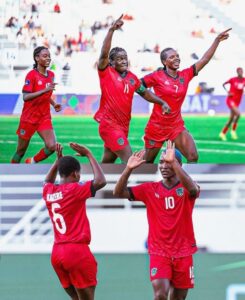
And then there were the sisters. Temwa had the pace. Give her a sliver of space and she was gone. A blur of motion, leaving defenders grasping at air.
Her explosive speed and acceleration troubled defenders throughout the tournament, earning her the Golden Boot.
Tabitha brought experience and leadership. She was calm in the storm and the voice in the huddle. In the semi-final against Algeria, she scored twice in Malawi’s 3-1 victory, while Temwa added the other. Tabitha was named Player of the Match.

The final whistle brought tears and embraces. The Scorchers, who had arrived as debutants, were going to their first WAFCON final.
The engine behind the stars
The Chawingas grabbed the headlines, but football is never a one-woman show. It was about 23 girls who believed.
At the back, Khumalo, Alufandika, Mkandawire and Madise stood firm against some of Africa’s fiercest attacks. Mkandawire, who earned her place after consistent performances for Nyasa Big Bullets Women, represented the new generation of Malawian defenders stepping onto the continental stage.
Madise brought experience from TP Mazembe, having been part of the Congolese club’s CAF Women’s Champions League-winning side in 2024.
In midfield, Faith Chimzimu, Chikondi Gondwe, Letticia Chinyamula, Madyina Nguluwe and Rose Kadzere kept the machine moving.
Kadzere scored the decisive goal against Ghana that secured Malawi’s place at the World Cup.

Further forward, Asimenye Simwaka, Vanessa Chikupila and Sabina Thom gave the Scorchers options, energy and unpredictability. They were not just players. They were an army.
“We Are Ready for the World Cup”
Captain Tabitha Chawinga praised the team spirit that kept the players fighting for one another. Goalkeeper Mercy Sikelo, already looking ahead, declared: “We are ready for the World Cup.”
Before Morocco, the question was whether Malawi could survive the group stage. Now the Scorchers have a place at the FIFA Women’s World Cup Brazil 2027. Now a new generation of Malawian girls has heroes to look up to.
From Nsanje to Chitipa, girls can now see Temwa, Tabitha, Chinzimu, Khumalo, Simwaka, Alufandika, Mkandawire and Madise and believe. Believe that football can take them somewhere. Believe that dreams aren’t just for others. Believe that they, too, can run.
That was the feeling behind the thousands at Kamuzu International Airport and the millions watching from home. They weren’t just welcoming a football team — they were celebrating women who had changed the way Malawians see women’s football.
FAM president Fleetwood Haiya thanked President Arthur Peter Mutharika, sponsors and supporters, declaring that preparations for the World Cup would now begin.
The Scorchers were given two percent to survive the group stage. But football has a way of laughing at predictions. It has a way of ignoring numbers, defying logic and writing its own poetry.
They came from Morocco as WAfCON finalists, World Cup qualifiers and heroes.
Two percent was the prediction. History was the answer. Them girls. Born winners.

Advertisement