
* The 1989 law no longer provides an adequate legal framework for refugee protection.
* The new framework addresses an emerging humanitarian, human rights and security issue without distorting the legal definition of a refugee
* Recommendations include refugees enjoying freedom of expression, association & conscience, education, non-discrimination, travel documents and community integration
By Frank Humphreys, Malawi News Agency (MANA) & Duncan Mlanjira, Maravi Express
Human rights activist Edward Kambanje has welcomed the Special Law Commission’s proposals to replace the 1989 Refugees Act, replacing it with a Refugees Protection and Management Act.

Advertisement
Chaired by High Court judge, Justice Redson Kapindu, the Special Law Commission has found that the 1989 law no longer provides an adequate legal framework for refugee protection.
In his report, Justice Kapindu highlights that the framework addresses an emerging humanitarian, human rights and security issue without distorting the legal definition of a refugee.
The Commission also recommended that refugees enjoy rights including freedom of expression, association and conscience, education, non-discrimination, travel documents and community integration.
Kapindu further said the current Act places more emphasis on controlling refugees than protecting their rights, and that refugees are not allowed to integrate into host communities.
According to United Nations High Commissioner for Refugees UNHCR figures, Malawi hosted 56,779 forcibly displaced people at the end of December 2024 — mostly from the Democratic Republic of Congo, Burundi, Rwanda, Somalia and Ethiopia.
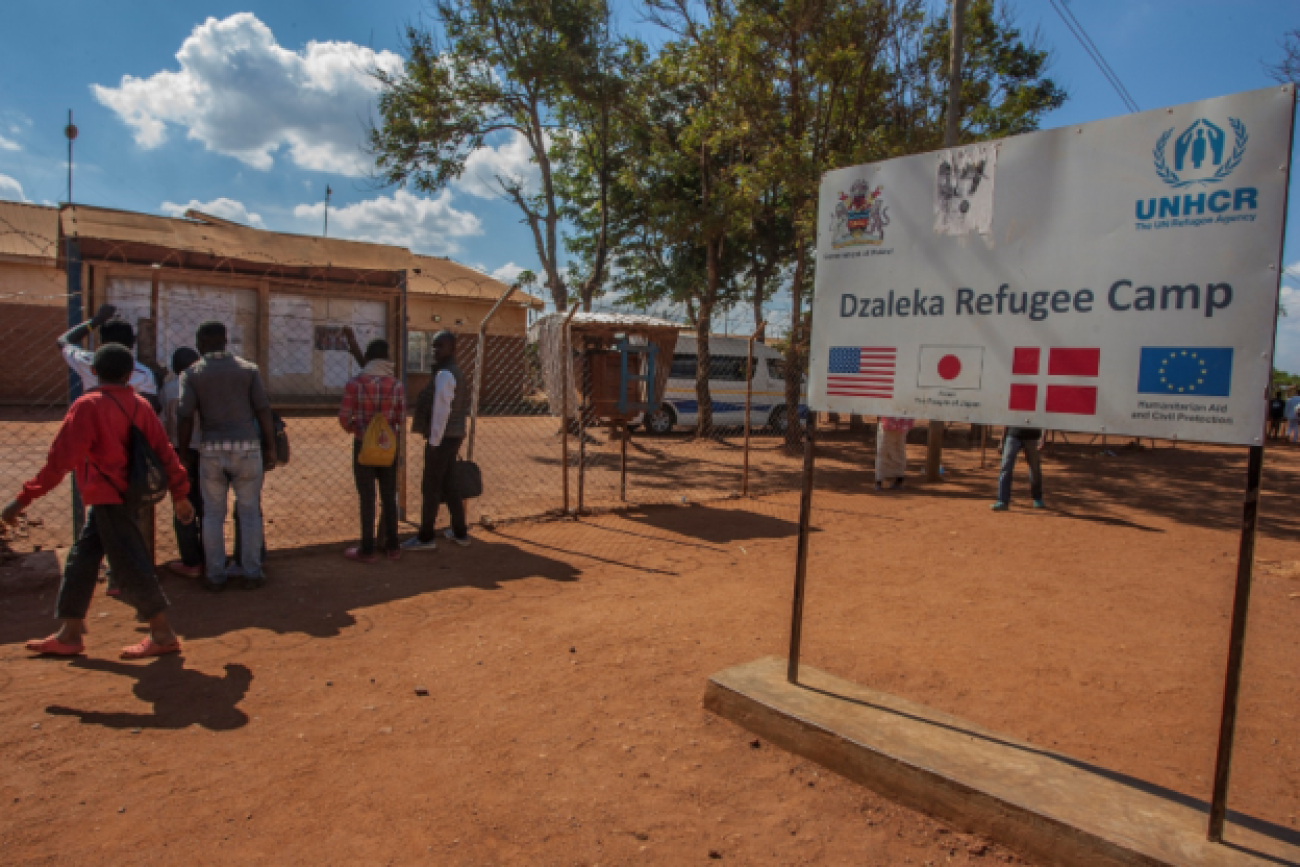
Most of them live at Dzaleka Refugee Camp in Dowa, built for 12,000 people but now home to more than 52,000, with 93% of them women and children.

The report and draft bills of the proposed Act, will go to the Minister of Justice and to the Office of the President & Cabinet (OPC), and if adopted as a government bill, will be tabled in Parliament.
In an interview with MANA, human rights activist Kambaje said the review was overdue but must not come at the expense of security and the economy, emphasising that if implemented, refugees who apply for citizenship must be screened to protect national security.
“From 1989 to 2026, many years have gone by, and it is high time we reviewed these laws, but while we review them, we need to protect our country in terms of security, in terms of the economy, and human rights,” Kambaje said.
Under the reforms, refugees born in Malawi or who have lived in the country for more than 10 years would have the right to apply for citizenship.

Activist Edward Kambanje
And Kambanje said this was a good idea in principle, but he claimed that some refugees in Malawi face criminal cases in their countries of origin.
“We need special groups to screen these people so that we do not allow criminals to have citizenship in our country. That is a threat to national security and to development,” he said.
The Commission also proposes a Department for Refugee Services under the Ministry of Homeland Security, headed by a Commissioner for Refugees.
The current Act creates a committee to decide refugee status, but no body to manage refugees’ day-to-day.
Kambanje supported the Commission’s decision to leave people displaced by disasters out of the refugee definition.
The Commission instead proposes a Disaster Risk Management Amendment Bill, under which the government could grant temporary protection, including permits and health and security screening.
“It is very important to separate these two; we need a clear picture to differentiate migrants from those who are fleeing their countries,” he said.
In the report by the office of the Ombudsman after an intensive investigation into the operations of the Department of Immigration & Citizenship Services, some of the top highlights in the recommendations included the relocation of Dzaleka Refugee Camp to Chitipa District.
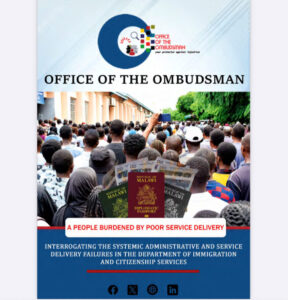
The office of the Ombudsman’s report exposed that that there is “deep-seated and pervasive maladministration within the Department and other associated institutions”, which included serving refugees.
The Ombudsman thus directed the Ministry of Homeland Security, in collaboration with OPC and other relevant Government institutions, to expedite implementation of the proposed relocation of Dzaleka Refugee Camp to Chitipa “after resolving outstanding compensation and land acquisition issues”.
“The relocation process should be accompanied by adequate infrastructure development, comprehensive refugee registration, strengthened security measures and sustainable financing,” said the reports, adding that this should be done within a medium to long term timeline.
The review of the status of refugee is a triumph on the part of INUA Advocacy, an independent civil society organisation (CSO) that advocates for refugee rights in Malawi and beyond.
Founded by Innocent Magambi — a former refugee for 27 years — INUA Advocacy also advocated for amendments to the 1989 Refugee Act which imposes the indefinite encampment of all refugees without the right to work; freedom of movement; nor prospect for integration.


Innocent Magambi
INUA collects and escalates complaints from refugees about the services they receive, and demand appropriate action.
Its goal is to hold those who serve refugees accountable and press for appropriate action from service providers.
It is also pushing for the implementation of the Comprehensive Refugee Response Framework (CRRF) according to the pledges made in 2016 and 2019, and among others.
They were made for rolling out the CRRF include incorporating refugees into the National Development Agenda; introducing a settlement approach and self–reliance to enhance integrated development of the refugees and local community
Of great concern, which INUA keeps highlighting to the media, is that the refugees and asylum seekers are denied by Malawi government to access some essential services such as education, health and the right to economic activities outside Dzaleka Camp.
Health services for the overpopulated Dzaleka are not adequate enough and at the completion of secondary school, strictly at Dzaleka Community Day Secondary School, the refugee children are denied access to public universities.
They fail to enroll for private universities because they are not allowed for an extended exit from the camp, but just a day-long pass for emergencies.
All these challenges are what galvanises INUA Advocacy to assist towards the wellbeing of the refugees and asylum seekers in Malawi and if enacted, the proposed Refugees Protection and Management Act should be a positive step forward.

Advertisement