

* It is not only Tanzania that bore the brunt of the chaos, the post-election unrest was felt deep inside Malawi
* With hundreds of transporters — including fuel tankers — trapped at the Kasumulu Border and supply chains grinding to a halt
* For days, the normally busy border post between Songwe and Kasumulu was under lockdown following violent protests in southern Tanzania, which saw mobs clash with police, vandalise customs offices, and disrupt communication networks
By Odindo Ayieko, correspondent in Nairobi, Kenya
Nearly a month after unrest swept parts of Tanzania following the October 29 election, businesses are still struggling to recover from the days of disruption, property damage and a sudden collapse in consumer confidence in several urban centres.

Advertisement
At a press conference last week, Prime Minister Mwigulu Nchemba said 1,642 vehicles, 672 fuel stations and 2,268 motorcycles were burnt during the unrest — describing the incidents as “coordinated acts of economic sabotage”.
The scale of destruction, confirmed by government figures, points to one of the most severe blows to Tanzania’s small-business sector in recent years.
Across Dar es Salaam, Mwanza, Arusha and Dodoma, shop owners shut early or remained closed altogether as clashes intensified and security forces deployed to restore order.
Roads in several districts were blocked, and video footage widely shared online showed unusually empty streets in normally busy areas.
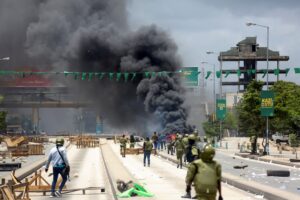
Violence in streets of Dar es Salaam
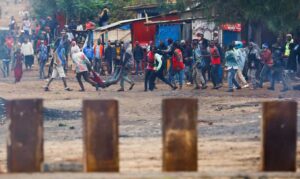
And it is not only Tanzania that bore the brunt of the chaos, the post-election unrest was felt deep inside Malawi, with hundreds of transporters—including fuel tankers—trapped at the Kasumulu Border and supply chains grinding to a halt.
For days, the normally busy border post between Songwe and Kasumulu was under lockdown following violent protests in southern Tanzania, which saw mobs clash with police, vandalise customs offices, and disrupt communication networks.
Malawian truck drivers stranded at the border describe a scene of chaos and fear: “From 11am to around 2pm, there were intense riots,” said Thokozani Banda, a driver who arrived at Kasumulu on Wednesday morning.
“People ransacked everything, destroyed computers in the Customs office. They said they wouldn’t touch our vehicles — only their government property — but it was terrifying.”

Many of the businesses affected in Tanzania have chosen not to speak publicly. Several owners contacted by the BBC declined interviews, citing safety concerns and the risk that their comments might be interpreted politically at a time when the government is working to stabilise the national mood.
Their caution reflects a wider hesitancy among entrepreneurs, who fear public statements could expose them to backlash.
One of the few businesses to address the situation openly has been ‘The Voice Tanzania’, a popular entertainment venue in Dar es Salaam. In a public Instagram statement, the venue confirmed that it had suffered fire damage and loss of property, and is currently under reconstruction.
“We are rebuilding — and coming back bigger, better and stronger,” the management wrote, alongside photographs showing burnt interiors, shattered glass and collapsed structures.

Advertisement
The images provide a rare on-the-record glimpse of the level of damage sustained by small enterprises during the unrest. Several other venues, shops and hospitality outlets were visibly affected, but many have opted for silence — posting only controlled updates on social media that avoid direct reference to the violence.
Youth-driven brands, particularly those in fashion, nightlife and lifestyle retail, have been among the most vulnerable. These businesses depend heavily on daily foot traffic, weekend crowds and end-of-year spending — all of which were abruptly disrupted as tension rose across the country.
The weeks between November and December are typically among the most financially important for small retailers, but the unrest has delayed stock movements, slowed customer turnout and temporarily muted online activity in sectors that rely on Instagram and TikTok engagement.
Local media have reported cases of vandalised shops, burnt motorcycles and damaged fuel stations in several regions, noting that some traders have yet to return to normal operations.

For many small businesses, even a brief shutdown carries long-term consequences. Owners who spoke informally say they are restocking more cautiously, adjusting their December expectations and focusing on basic survival rather than growth.
Despite the challenges, there are signs of a gradual return to normalcy. Foot traffic has begun to pick up in parts of Dar es Salaam, and some youth brands have quietly resumed promotional activity online.
A few have introduced modest discounts to encourage customers back, while others have shifted to online orders and home deliveries as they rebuild confidence.
The post-election period has exposed how closely Tanzania’s economy is tied to public sentiment. Political tension did not only raise questions about security and governance; it also reshaped everyday commerce across the country.
As businesses continue repairing damage and negotiating uncertainty, their recovery will serve as one of the clearest indicators of whether stability both economic and social is beginning to return.


Advertisement