


* The deficit has remained extremely high, widening from approximately 2.9% of GDP in 2019 to about 11.9% in 2025
* Going forward, Government’s fiscal consolidation agenda seeks to progressively reduce the deficit to about 9% over the medium term
* And towards around 3% of GDP in 2030, in line with the SADC benchmarks — Finance Minister Mwanamveka
By Duncan Mlanjira
In his foreword published in the 2026-2031 Corporate Strategic Plan of the Malawi Revenue Authority (MRA) — which was launched on Monday morning, Minister of Finance, Economic Planning & Decentralisation Joseph Mwanamveka contends that “over the past seven years, the country’s fiscal landscape has remained constrained — with persistent budget deficits exerting pressure on public finances”.

Advertisement
“The deficit has remained extremely high, widening from approximately 2.9% of GDP in 2019 to about 11.9% in 2025.
“Going forward, Government’s fiscal consolidation agenda seeks to progressively reduce the deficit to about 9% over the medium term and towards around 3% of GDP in 2030 — in line with the SADC benchmarks.”
He adds that this will be “supported by strengthened domestic revenue mobilisation and improved public finance management” — thus the MRA “continues to stand as a cornerstone of Malawi’s national development, anchoring domestic revenue mobilisation since its establishment in the year 2000”.
“Over the years, the Authority has evolved through successive corporate strategies, strengthening institutional capacity, enhancing operational efficiency, and reinforcing its responsiveness to the country’s growing fiscal demands.
“This 2026-2031 Corporate Strategic Plan is, therefore, being launched at a critical time, as the Government is implementing the National Economic Recovery Plan (NERP) to restore macroeconomic stability and promote inclusive growth through investment in productive sectors — which are agriculture, tourism, mining and manufacturing (ATMM).”
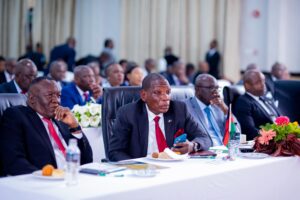

Mwanamveka highlights that the strategic plan — developed under the theme; ‘Leveraging Digital Transformation for Sustained Revenue Growth and Efficient Service’ — is also being implemented in an environment characterised by the four critical constraints — food, fuel, foreign exchange, and fertilizer — “which continue to impact economic productivity and tax revenue performance”.
“Addressing these structural challenges requires a resilient and forward-looking tax administration.
“Therefore the 2026-2031 SCP should prioritise targeted interventions to strengthen domestic revenue mobilisation through enhanced compliance enforcement, widening of the tax net, accelerated digital transformation, and improved taxpayer service delivery.”

He thus urges the MRA to build on 2020-2026 Strategic Plan’s strong performance and continue its efforts towards increasing the tax-to-GDP ratio from around 16.83% to around 20% — in line with Government aspirations, while supporting the objectives of MW2063 national vision and its First 10-Year Implementation Plan (MIP-1).
He also calls upon all taxpayers and the general public to actively support the MRA by honoring their tax obligations fully and on time, and by embracing the digital innovations being introduced.

The Board’s statement in the Plan — submitted by chairperson MacFussy Kawawa — maintains that the Plan “is being implemented from a position of demonstrated institutional strength”.
“Over the previous strategic period, the Authority demonstrated remarkable revenue collection performance, achieving an average revenue performance rate of 99% and exceeding annual targets in four out of the six years of implementation.
“In the final year alone, total revenue collections reached MK4.40 trillion against a target of MK4.32 trillion, translating into a performance outturn of 102% and growth rate of 44% compared to the preceding financial year.”
Other milestones that he highlighted that was achieved under 2020/2026 strategic plan, included areas of taxpayer service delivery, modernisation and institutional capacity development.
“These achievements underscore the Authority’s strong commitment and resilience despite a challenging operating environment,” he says — adding that the 2026–2031 Corporate Strategic Plan, is expected to sustain the performance momentum, building on past experience while addressing identified gaps.
“Much priority should be given to advancing ongoing digitalisation, improving taxpayer service delivery, widening the tax net, strengthening compliance management, and fostering a vibrant institutional culture.”
He pledges the Board’s full commitment to providing financial support and oversight to the MRA “to ensure the effective implementation of this strategic plan”.

MRA’s Msonkho House
On his part, MRA Commissioner General, Felix Tambulasi highlighted that the Plan “provides a clear approach for improving tax revenue collection to meet the growing fiscal demands and support Malawi’s development agenda”.
He indicated that under the outgoing 2020-2026 strategic plan, the MRA “delivered strong performance achieving an average revenue collection performance rate of 99% and annual growth of approximately 30%”.
“Other notable milestones achieved include automation with platforms such as Msonkho Online, the Electronic Invoicing System (EIS), SAP Success Factors, Employee Self Service (ESS) as well as adoption of drone technology to strengthen enforcement.
“MRA also improved in areas of taxpayer service delivery and institutional capacity. Looking ahead to the 2026-2031 period, management expects to strengthen revenue performance through a focused approach anchored on enhanced compliance enforcement, expansion of the tax base, and improved debt and revenue management.


“Priority will also be placed on accelerating digital transformation, leveraging data and analytics for compliance, improving taxpayer service delivery, and strengthening stakeholder engagement.
“In addition, the Authority will reinforce corporate planning, performance monitoring, and accountability frameworks — while investing in institutional capacity, staff integrity, and a performance-oriented organisational culture.”
According to executive summary, the Plan — aligned with MW2063, national fiscal priorities, and regional commitments — is structured around the four balanced scorecard perspectives.

It defines strategic objectives to strengthen revenue mobilisation, enhance taxpayer services, improve operational efficiency, deepen stakeholder engagement, and build strong governance and institutional capacity.
Digital transformation is the cornerstone of the Plan, with priority investments in modern, integrated tax and customs systems, expanded e-services, data and business intelligence, process automation, and strengthened cybersecurity and disaster recovery.
These reforms will be complemented by improved service delivery through simplified procedures, clearer communication, effective dispute resolution, taxpayer education, and a professional, ethical workforce.
Implementation will be undertaken through annual work plans, cascaded scorecards, and a structured monitoring and evaluation framework to track progress, inform timely corrective action, and strengthen accountability.
Collectively, the Plan signals a deliberate shift toward a digitally enabled, service-driven, disciplined revenue administration capable of delivering sustainable revenue in support of Malawi’s development agenda.

Advertisement