

* On the need to make measurable anti-corruption measures central to IMF-supported programmes for Malawi
* My intention is not to discourage international assistance to Malawi, but to encourage an approach that ensures such assistance delivers lasting benefits to the people it is intended to serve
By Duncan Mlanjira
Dr James Kadyampakeni, the Canada-based Malawian economist and accountable governance advocate, has written to International Monetary Fund (IMF) Managing Director, Kristalina Georgieva, on the need to make measurable anti-corruption measures central to IMF-supported programmes for Malawi.

Advertisement
Under the subject; ‘Prioritising the Fight Against Corruption for Malawi’s Economic Recovery’, Kadyampakeni pleads with the IMF to “review the concerns raised and consider the practical steps proposed to strengthen transparency, accountability, and the protection of public resources in Malawi”.
“My intention is not to discourage international assistance to Malawi, but to encourage an approach that ensures such assistance delivers lasting benefits to the people it is intended to serve,” stresses Kadyampakeni.
He appraises the IMF that he truly values its support to Malawi’s “tough economic times”, while highlighting that its interventions have been a lifeline when the country “faced significant challenges”.
“And I recognise how crucial international financial backing is for stabilising our economy. That said, there’s a pressing issue that I believe needs your immediate attention: we can’t achieve lasting economic stability if we don’t tackle corruption and the mismanagement of public resources head-on.
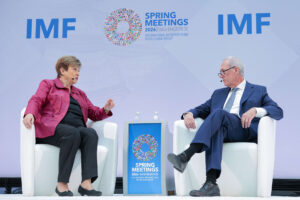
IMF Managing Director, Kristalina Georgieva (left)
“The Bretton Woods institutions, including the IMF, often highlight the importance of fiscal discipline, public-sector reforms, transparency, and accountability.
“These principles are vital, especially in a country like Malawi, where everyday citizens are still grappling with economic struggles.
“However, when governments continue to receive financial aid despite ongoing, credible concerns about corruption, waste, and the misuse of public funds, it raises serious questions about the alignment between these institutions’ stated values and their actions.
“This is where the IMF risks coming off as having a double standard. Its programs often push governments to implement tough economic measures, tackle fiscal imbalances, and make reforms that hit ordinary citizens hard.
“At the same time, those citizens might not see the same urgency when it comes to dealing with corruption allegations, recovering misused public funds, or ensuring that those who commit financial wrongdoing face real consequences.
“The outcome is a painful contradiction: everyday Malawians are asked to cope with rising living costs, shrinking purchasing power, and tough economic adjustments, while the public resources that could fund essential services, boost investments, create jobs, and reduce poverty remain at risk of being misused.”

Kadyampakeni maintains that “Malawi needs more than just financial aid — it requires a solid framework that guarantees public resources are safeguarded and utilized for the benefit of its people”.
“If the IMF truly wants to assist Malawi in achieving sustainable economic recovery, the battle against corruption must go beyond mere promises and become a tangible part of its dealings with the government.
“Financial support and economic reforms should be paired with clear, measurable, and time-sensitive anti-corruption initiatives.
These could include:
1. Transparent tracking of public funds: It’s crucial to enhance independent oversight of how public resources, including those from IMF-supported programs, are allocated and utilized.
2. Accountability for corruption: We need to advocate for credible, independent investigations into verified allegations of corruption and the misuse of public funds, ensuring that there are legal processes and consequences for any wrongdoing that is uncovered.
3. Recovery of stolen public assets: Support should be directed towards effective systems for tracing, freezing, and recovering assets that have been acquired through corrupt practices, all while adhering to the rule of law.
4. Enforceable governance benchmarks: It’s important to integrate clear anti-corruption milestones into program reviews, assessing progress through independently verifiable evidence rather than relying solely on government assurances.
5. Protection of public institutions: We should promote the independence and effectiveness of institutions tasked with auditing public spending, investigating financial crimes, prosecuting corruption, and overseeing public procurement.

Advertisement
“These recommendations shouldn’t be seen as a push to abandon Malawi or withdraw support from a population already facing significant challenges.
“Instead, they represent a call for the IMF to enhance the effectiveness, accountability, and responsiveness of its assistance to truly benefit the people it aims to support.
“The IMF needs to understand that corruption isn’t just a governance issue that can be brushed aside from economic policy.
“It chips away at fiscal discipline, erodes public trust, skews investment choices, robs essential services of vital resources, and hinders the success of economic reforms.
“No matter how much monetary tightening, fiscal adjustments, or external funding is applied, the full potential can’t be realized if public funds are continually misused.
“International financial institutions can’t expect citizens to bear the burden of economic adjustments forever without showing that those in charge of public resources are held to real standards of accountability.
“Malawi’s economic recovery should be evaluated not just by macroeconomic indicators, debt sustainability, or adherence to program conditions, but also by how well public resources are safeguarded, public institutions are reinforced, and the everyday lives of citizens are improved.”

An IMF conference
Kadyampakeni further urges the IMF leadership to ponder on a crucial question: ‘What’s the point of rescuing an economy from financial turmoil if the governance issues that consistently sabotage that recovery are allowed to persist unchecked?’
“Malawi deserves a partnership that blends financial assistance with principled, consistent, and practical actions against corruption.
“The IMF has a chance to show that its dedication to economic stability also means protecting the public resources essential for sustainable development.
“It’s time to go beyond mere words. Let’s make the fight against corruption a visible, measurable, and enforceable aspect of the IMF’s engagement with Malawi, not just a hopeful statement in policy documents.
“The people of Malawi deserve nothing less,” concludes Dr Kadyampakeni, who regularly comments on Malawi’s economy, governance, and politics.

Advertisement