
* Which Homeland Security Minister Mukhito describes as a solemn commitment to building a modern, professional, technologically advanced and people-centred police service
* For every mother who fears for her child’s safety, every businessperson concerned about crime, and every citizen seeking justice, this Plan carries a promise
* That the Malawi Police Service will become more responsive, more accountable and better equipped to protect the people it serves
By Duncan Mlanjira
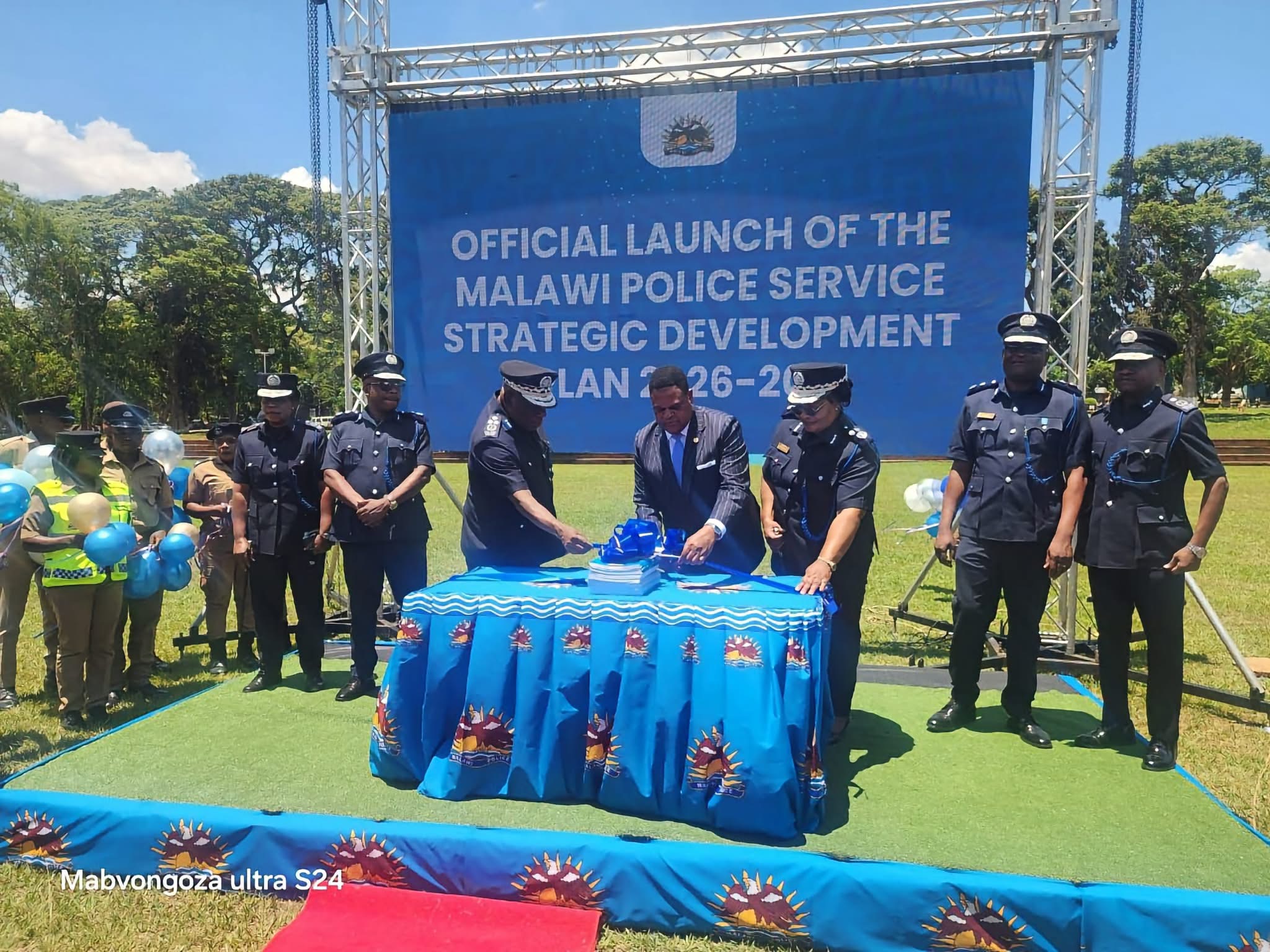
Malawi Police Service (MPS) has launched its 2026-2031 Strategic Development Plan — along with Crime Management Information System, Service Standing Orders — designed to define the future of policing in the country.
The ceremony was held at Malawi Police Headquarters presided over by Minister of Homeland Security, Peter Mukhito, who also participated a celebration parade from Area 30 Interchange to the main venue joined by high-profile dignitaries.




They included the strategic plan’s development partners, United Nations Development Programme (UNDP) officials; Homeland Security Deputy Minister, Norman Chisale; Inspector General of Police, Richard Chakupaleza Chikoko Luhanga; Malawi Defence Force (MDF) Chief, General George Alexander Jaffu Jnr.
Others were Deputy Inspector General of Police responsible for Administration, Evalista Mvula Chisale; Commissioner General of the Malawi Prison Service, Wandika Phiri; Director General of Immigration and Citizenship Services, Denis Chipao; His Worship the Mayor of Lilongwe City, Peter Alex Banda; Secretary for Homeland Security, Linda Pacharo Moyo; and all stakeholders in the public and private sectors.



It has been launched under the theme; ‘Modernising Policing Services: Embracing Digital Transformation’, and Minister Mukhito described the development Plan as representing “a solemn commitment to building a modern, professional, technologically advanced and people-centred Police Service”.
“For every mother who fears for her child’s safety, every businessperson concerned about crime, and every citizen seeking justice, this Plan carries a promise: That the Malawi Police Service will become more responsive, more accountable and better equipped to protect the people it serves.”
He added that “a nation cannot prosper where its people live in fear” and emphasised that “security is not a privilege — it is a fundamental responsibility of the State”.
He highlighted that the theme was mooted in shaping the future of policing through digital transformation, saying: “Crime is changing, criminal networks are becoming more sophisticated, technology-driven and increasingly transnational.


“Our policing methods must, therefore, evolve. We cannot fight 21st-Century crime using 20th-Century methods. Digital transformation must become the foundation of modern policing in Malawi.
“This means embracing electronic crime reporting, digital case management, intelligence-led operations, forensic capabilities and secure information-sharing systems.
“Technology must reduce delays, strengthen investigations, improve response times and bring police services closer to communities.
“However, technology alone cannot transform an institution — we must transform the mindset, skills and conduct of the officers who operate it.”

Advertisement
Mukhito thus directed the Inspector General of Police “to submit, within 30 days of this launch, a time-bound digital transformation roadmap, with clear milestones, measurable targets and defined responsibilities”.
“The Ministry will monitor implementation and demand results. Technology must deliver results, not merely impressive presentations.”
On accountability, the Ministry highlighted that this forms the foundation of public confidence, saying: “The authority entrusted to a police officer is extraordinary — it carries the power to arrest, investigate and enforce the law.
“Such authority must always be exercised with restraint, fairness and respect for human dignity.
“Let me be unequivocal: A police uniform is a symbol of public service, not personal power. Corruption, brutality, abuse of authority and deliberate neglect of duty have no place in a modern Police Service.


“I expect commanders at every level to enforce discipline, investigate misconduct and hold officers accountable for their actions.
“Equally, the Government recognises the sacrifices made by officers serving under difficult and sometimes dangerous conditions. We must improve their welfare, housing, equipment, working conditions and professional development.
“We cannot demand excellence without providing the means to achieve it,” emphasised the Minister, himself a former Inspector General (2004–2012).


He also highlighted Community Policing describing it as security through partnership: “Effective policing begins with the confidence and cooperation of the people.
“No police institution, regardless of its resources, can succeed without public support. Community policing must, therefore, remain central to this Strategic Plan.
“Our officers must be accessible, respectful and responsive. Communities must become partners in preventing crime, sharing intelligence and protecting vulnerable citizens.
“The true measure of police effectiveness is not how much citizens fear the police, but how safe they feel in their presence — that is the standard we must pursue.
On wisdom, courage and restraint, Minister Mukhito quoted the Holy Bible; Matthew 10:16, that teaches; ‘Be ye therefore wise as serpents, and harmless as doves’.
“Although originally spoken by Jesus Christ to His disciples, this teaching offers a timeless lesson that is equally relevant to those entrusted with public authority.
“Our police officers must demonstrate wisdom in detecting threats, courage in confronting criminals and restraint in exercising authority.
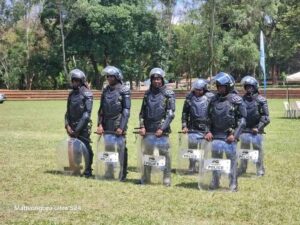
“They must be firm against criminality, yet compassionate towards the innocent. They must demonstrate strength without brutality and authority without arrogance.
“True professionalism is knowing when to act decisively and when to exercise restraint.”
On its implementation, the Minister appealed to the Inspector General Luhanga, that the success of the Strategic Plan “will not be measured by the quality of its printing or the ceremony of its launch but by what changes in the police stations, on the streets and in the lives of ordinary Malawians”.
“Every strategic priority must have an accountable officer, a measurable target and a clear implementation deadline. What gets promised must be delivered, and what gets delivered must be measured.
“Progress must be reviewed regularly, obstacles addressed promptly and results communicated transparently,” he said adding that the Homeland Security Ministry will exercise its oversight responsibility to ensure meaningful institutional transformation.

Advertisement
To the men and women in uniform; the former IG impressed on them that the profession “is a calling of extraordinary responsibility”, adding: “Every day, you stand between law-abiding citizens and those who threaten their peace.
“Some of your colleagues have paid the ultimate price in the line of duty. Their sacrifice must never be forgotten,” he encouraged, with emphasis: “Serve with courage; lead with integrity; treat every citizen with dignity — and remember that behind every case number is a human being seeking protection, justice or reassurance.
“Let your service restore hope where there is fear and confidence where there is uncertainty,” said the Minister while concluding that “the Malawi Police Service of tomorrow must be technologically capable, operationally effective, accountable to the law and trusted by the people.
“This transformation requires leadership, discipline, resources and sustained commitment. But above all, it requires action.
“Let this day mark the beginning of a new chapter in Malawi’s policing history — a chapter in which technology strengthens justice; in which authority is matched by accountability; in which every Malawian can look to the Police Service with confidence.
“The era of promises without results must give way to an era of measurable transformation. Our people deserve a Police Service that is modern in capability, disciplined in conduct and unwavering in its duty to protect.
“That is our commitment, that is our responsibility, and that is the standard by which we shall be judged,” said Minister Mukhito.

Advertisement