
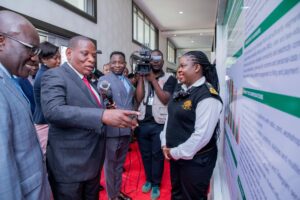
* This document is not merely a corporate road map — it is a social and economic contract with the people of Malawi
* It dictates how we will mobilise the domestic resources required to finance our schools, clinics, infrastructure and social safety nets
* It marks a defining milestone in our country’s fiscal journey—Minister of Finance, Economic Planning & Decentralisation Joseph Mwanamveka
By Duncan Mlanjira
The Malawi Revenue Authority has today launched its 2026-2031 Corporate Strategic Plan, which Minister of Finance, Economic Planning & Decentralisation Joseph Mwanamveka described it as “a defining milestone in our country’s fiscal journey”.

Advertisement
“This document is not merely a corporate road map — it is a social and economic contract with the people of Malawi,” said Mwanamveka at the ceremony held at Sunbird Mount Soche. “It dictates how we will mobilise the domestic resources required to finance our schools, clinic, infrastructure and social safety nets.”
He added that the strategic plan has been developed at a critical juncture in the country’s history as the Government “is vigorously pursuing an agenda centered on restoring macroeconomic stability, strengthening fiscal sustainability, and accelerating inclusive economic growth”.
“However, our country still faces persistent headwinds, including public debt pressures and urgent need for inclusive job creation. Yet, against these challenges, MRA has proven to be the engine room of the nation.
“Thanks to the structural reforms and relentless focus on compliance, MRA recently crossed the historic MK1.40 trillion mark on tax revenues for quarter one.
“However, we cannot rest on yesterday’s successes. The strategic framework we unveil today addresses the realities of a changing world, it transitions Malawi from recovery to an era of modern, high performance growth.”

He thus unwrapped that the strategic plan reflects the government’s “resolve to strengthen fiscal independence, reduce reliance on external financing, and ensure that every kwacha collected works for the people of Malawi”.
He added that a key component of the Government’s fiscal strategy involves the implementation of tax measures and that these measures “are designed not only to mobilise additional revenue, but also to stimulate priority sectors”.
“However, the ultimate effectiveness of these measures depends entirely on the efficiency of their administration. The new Corporate Strategic Plan rightly places a strong emphasis on aggressive revenue mobilisation, the expansion of the tax base, risk-based compliance enforcement, digital transformation, and enhanced taxpayer service delivery.
He emphasised that the Government expects MRA “to ensure that tax measures are executed seamlessly” and that simultaneously, it “must strengthen taxpayer education so that citizens and businesses alike fully understand both their civic obligations and the profound impact that taxation has on national development”.

Advertisement
“Furthermore, the strategic plan extends far beyond mere revenue collection. Through bolstered customs administration, intelligence-led enforcement, and risk-based compliance, this strategy will actively combat smuggling, under-declaration, and the illicit movement of prohibited goods.
“In doing so, we will protect government revenue while ensuring the safety and well-being of Malawians,” said the Minister, adding that the heart of the strategic plan lies the core values of performance and accountability.
He stressed that President Arthur Peter Mutharika’s administration places a premium on keeping promises and strictly adhering to key performance indicators (KPIs), stating that through the Manifesto Implementation Unit, the Head of State “is personally tracking how various government ministries, departments, and agencies adhere to [Democratic Progressive Party’s] Manifesto commitments”.

“The MRA is one of the pivotal institutions being monitored on these key indicators, and this Corporate Strategic Plan will be instrumental in delivering the Government’s vision over the next five years.
In his remarks, MRA’s Board chairperson, Macfussy Kawawa attested to that the strategic plan is a rigorous, forward-looking blueprint that defines MRA’ strategic trajectory, anchors institutional priorities, optimises resource allocation — while establishing a transparent framework for performance measurement and institutional accountability.
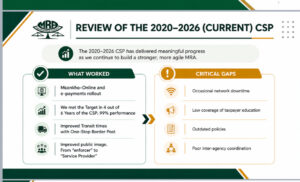
“This new Plan builds seamlessly upon the remarkable achievements and invaluable insights gained during the 2020-2026 strategic cycle. Over that period, the Authority maintained an exceptional average revenue performance rate of approximately 99% — exceeding annual revenue targets in four of the six years.
“Most notably, in the final year of that cycle, the Authority successfully mobilised MK4.40 trillion against a target of MK4.32 trillion. This represents a stellar performance rate of 102% and reflects a phenomenal annual revenue growth of 44%.

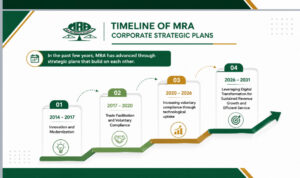
“Beyond these exceptional fiscal metrics, the previous strategy catalyzed vital institutional transformations. We aggressively advanced our digital landscape, elevated taxpayer service delivery models, improved operational systems and invested in institutional capacity.
“While these milestones provide a solid foundation for future growth, they must not — and will not — engender complacency.”
Kawawa took cognizance that the growth of the digital economy, evolving taxpayer expectations, emerging compliance risks and increasing demands for efficient public service delivery, require that MRA must “continuously innovate and refine its approach to its statutory mandate”.
“The 2026-2031 Corporate Strategic Plan serves as our definitive, strategic response to these dynamic macroeconomic realities. It places a primary emphasis on fortifying revenue mobilisation and sustainability, optimising resource allocation, and reinforcing fiscal accountability.
“Simultaneously, it focuses on sharpening operational efficiency, strengthening corporate governance, enhancing taxpayer service delivery, fostering public trust, deepening stakeholder collaboration, and cultivating organisational resilience.
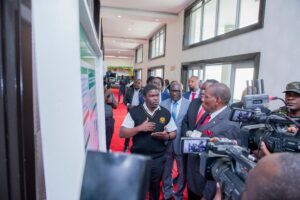
MacFussy Kawawa (2nd left)
“To achieve these aims, the Plan leverages digital transformation, data and analytics, risk-based compliance frameworks, and an expanded tax base as its core institutional levers.
“These priorities are absolutely essential to building a world-class revenue administration capable of sustaining Malawi’s long-term economic aspirations.”
He pledged that Board will unequivocally oversee that the strategy “must translate into clear, measurable outcomes” — emphasising that “the ultimate success of the Plan will not be judged by the eloquence of its text, but by the discipline of its execution”.
“To ensure success, these strategic priorities will be systematically cascaded throughout the entire fabric of the Authority — moving deliberately from the corporate level down to our divisions, departments, and individual officers.
“Every single member of our staff has an instrumental role to play in bringing these strategic objectives to fruition. The Board stands fully committed to providing Management with the strategic oversight, guidance, and institutional support required to navigate this journey.
“Concurrently, we will remain unyielding in our demand for strict accountability, prudent resource management, and verifiable progress against the commitments articulated in this Plan.”

He appraised the Minister and the gathering that the “successful implementation of this strategy requires employees who are highly committed, ethical and accountable”.
“Our core organisational values — Fairness, Innovation, Ethics, Service Excellence, Transparency and Accountability, beautifully summarised by the acronym FIESTA — must be visibly embedded in how we conduct our business, at all levels, every single day.
“The first year of implementation is always the most critical. The benchmarks we establish during the 2026/27 financial year will set the pace and tone for the remainder of this strategic cycle.
“We must, therefore, embark on this mission with an absolute sense of urgency, rigorous institutional discipline, and a profound collective ownership.”
He turned to the Commissioner General, Felix Tambulasi, his management team and the entire staff of the Authority “to fully embrace this strategy, take complete ownership of its vision, and aggressively translate its priorities into tangible, high-impact results”.
“On behalf of the Board of Directors, I reaffirm our commitment to partnering with management to successfully execute this Plan, thereby positioning the Malawi Revenue Authority as a benchmark of modern revenue administration and service excellence.”

Advertisement