
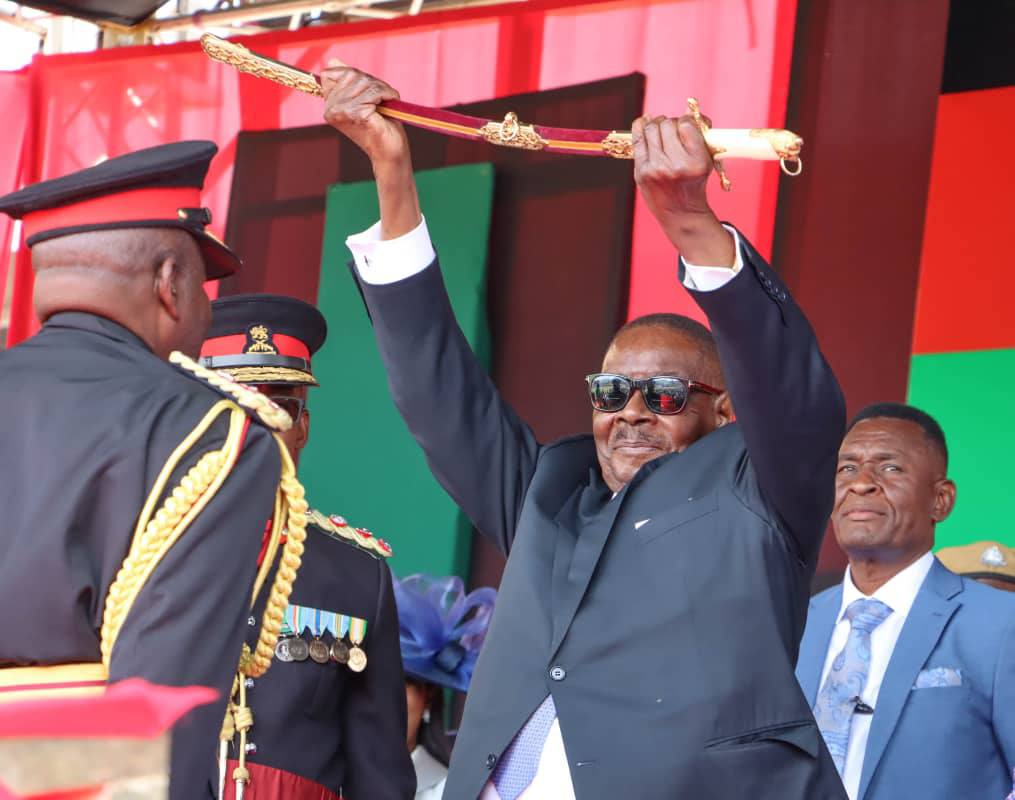
* One year into its mandate, the President owes Malawians more than political rhetoric — he owes them answers
* Because when the lights go out, the fuel disappears, corruption cases disappear, parliamentary oversight becomes contested and public confidence begins to disappear with them, ordinary Malawians are left asking one simple question:
* Who is actually in charge — and who will rescue us from this cycle?
By Dr. James Kadyampakeni
When I wrote about the Democratic Progressive Party (DPP) returning to power in September 2025, I deliberately made one point clear: my argument was not an endorsement of Professor Arthur Peter Mutharika as a leader — it was an attempt to understand the mood of the Malawian electorate.
For many Malawians, the 2025 election was, above all, a protest against the Lazarus Chakwera administration.

Former President Lazarus Chakwera
People were angry about the economy. They were angry about the cost of living, foreign-exchange shortages, fuel shortages and declining public confidence in government.
More importantly, allegations and concerns surrounding corruption had seriously damaged the credibility of the administration.
People wanted change.
But I also warned my readers not to suffer from political amnesia. The DPP had been removed from government for reasons that included corruption, poor governance and declining public confidence.
The Mutharika administration of 2014-2019 was hardly a model of clean government. Malawians had already experienced what happens when political parties become comfortable with power and begin treating public institutions as instruments of political survival.

Advertisement
So when Malawians voted Chakwera out and brought Mutharika back, I saw it as something bigger than a simple change of political party.
It was a warning. It was Malawians saying: we have had enough.
The tragedy is that barely a year later, many of the same questions are once again confronting the country.
Have we really changed the system? Or have we simply changed the people occupying the offices?
The political memory of Malawians is short — but their suffering is not
Malawians have repeatedly been told that the next government will be different.
Every new administration promises to fight corruption; every new president promises to restore the economy; every new government promises accountability, transparency and better management of public resources.
Then the familiar pattern begins — political allies are rewarded; institutions become weaker; oversight becomes inconvenient; those close to power become increasingly powerful — and ordinary Malawians are told to be patient.

That is why corruption should not be treated simply as a political slogan because it is an economic issue; it is a development issue; a poverty issue; and it is a governance issue.
When public money is stolen or mismanaged, the consequence is not an abstract accounting problem in Lilongwe — it is a mother who cannot obtain medicine at a government hospital; a child sitting in an overcrowded classroom; a farmer unable to obtain fertiliser; a business that cannot operate because electricity is unavailable; a truck driver spending hours looking for diesel.
It is a young graduate who cannot find a job because the economy is not creating productive employment — that is the real cost of corruption.
The discontinuation of corruption cases
This is where the present administration must provide convincing answers.
In February 2026, prosecutors discontinued two major financial-crime cases involving senior public officials. The cases included allegations relating to public funds, procurement and the handling of a US$350 million Reserve Bank of Malawi (RBM) facility.
Among those affected were individuals who subsequently occupied, or returned to, senior positions in government and public institutions.
Separately, the prosecution involving Deputy Minister Norman Chisale was discontinued, along with a case involving former Anti-Corruption Bureau (ACB) Director General Reyneck Matemba. The decisions generated public concern about the direction of Malawi’s anti-corruption fight.

Advertisement
Let us be precise. The Constitution gives the Director of Public Prosecutions prosecutorial powers, including the power to discontinue criminal proceedings before judgment.
That legal authority exists. The question, therefore, is not simply whether the DPP had the legal power to discontinue a case.
The bigger question is: Why were these cases discontinued, and can Malawians be satisfied that the decisions were made independently, transparently and in the public interest?
That is the question government should answer. Because when people facing serious corruption-related allegations are subsequently appointed to senior positions, and prosecutions against senior officials are discontinued, the public is entitled to ask whether the fight against corruption is genuinely being strengthened or whether political considerations are once again influencing accountability.
The government cannot simply say, “the DPP has constitutional powers,” and expect the public to stop asking questions.
Constitutional power must be accompanied by constitutional accountability.
If the cases were weak, tell Malawians why. If the evidence was insufficient, explain it. If there were procedural defects, publish the reasons.
If there was new evidence, tell the public. If there was a legitimate prosecutorial reason, Parliament and the public should be able to understand it.
Silence creates suspicion. Transparency creates confidence.

What message are we sending about corruption?
There is something even more dangerous than corruption itself. It is the belief that corruption carries no consequences.
Once citizens begin to believe that political connections can protect individuals from accountability, the fight against corruption is already in serious trouble.
A civil servant can be dismissed for a relatively minor offence while politically connected individuals facing much more serious allegations can return to positions of authority.
What message does that send to the young officer entering government service? What message does it send to an accountant, and to a procurement officer, to a police officer, to the ordinary taxpayer?
If the public sees one standard for ordinary citizens and another for politically connected people, trust in government inevitably suffers.
And without trust, democracy becomes little more than an election every five years.
Development partners are watching
There is another audience that Malawi cannot ignore: its development partners.
The World Bank, International Monetary Fund (IMF) and other development partners are not simply watching Malawi’s political speeches — they are looking at institutions, fiscal management, governance, procurement, public enterprises, foreign-exchange management and the credibility of reforms.
The World Bank’s September 2026 Malawi Economic Monitor is particularly sobering — it says Malawi continues to face macroeconomic imbalances, foreign-exchange shortages and structural constraints.
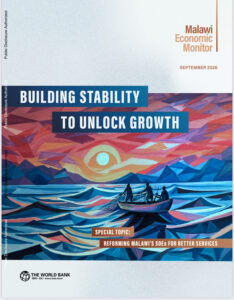
It specifically identifies unreliable electricity, weak state-owned-enterprise governance, political interference, fragmented oversight and limited transparency as continuing problems.
That matters.
Malawi cannot simultaneously ask international institutions for financial support while giving the impression that accountability is negotiable when politically connected individuals are involved.
Development partners want to see whether reforms survive political transitions.
They want to know whether institutions work independently; they want to know whether public money is protected; whether procurement systems are credible; whether anti-corruption institutions can investigate the powerful without political interference.
And they have every reason to watch carefully.
The IMF itself remains engaged with Malawi over a possible new Extended Credit Facility, after the previous programme terminated in May 2025 without completing the required reviews.
Current discussions are taking place against the backdrop of foreign-exchange shortages, debt pressures and the need for macroeconomic reforms.
This is why governance is not separate from economics.
Investors watch institutions; donors watch institutions; creditors watch institutions; businesses watch institutions; and ordinary Malawians live with the consequences when those institutions fail.

And now the fuel queues are back
Perhaps nothing illustrates the problem better than what ordinary Malawians are experiencing.
The Mutharika administration inherited a severe fuel crisis. In February, the President told Parliament that his administration had acted decisively to restore fuel supplies and end queues, while announcing plans to expand national fuel-storage capacity.
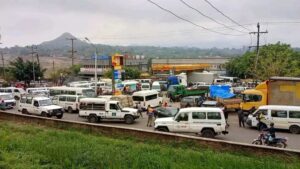
Yet by late September 2026, fuel queues had returned. Reports from Lilongwe described motorists spending hours looking for diesel, with some filling stations running dry. The Times also reported long fuel queues in Mzuzu.
We must be careful not to pretend that every fuel shortage is caused by corruption. Malawi has a structural foreign-exchange problem, is landlocked, depends heavily on imports and is vulnerable to disruptions in international supply chains.
But that does not absolve government of responsibility.
Government must explain why the same problem keeps returning. Where is the foreign exchange going? How are fuel procurement decisions being made?
Who are the suppliers? What are the contractual arrangements? What are the margins? What safeguards exist against politically connected middlemen benefiting from shortages?
These are legitimate public-interest questions. Malawians should not have to speculate.
Electricity: Back to the same old story
The same concern applies to electricity. In September, ESCOM confirmed a nationwide blackout following a system shutdown. The problem came on top of continuing generation constraints.
EGENCO reported that several generating units were operating below installed capacity.
For ordinary citizens, the technical explanation matters less than the consequence — the lights are off; businesses cannot operate; welding shops stop working; barbers stop working; maize mills stop working.
Manufacturers lose production time; students struggle to study; hospitals must rely on backup systems. And now Malawi is facing fuel shortages at the same time it is being asked to consider diesel generators as part of the response to electricity shortages.
That should concern everyone.
The Consumers Association of Malawi has questioned the economics and transparency of proposed generator arrangements and called for disclosure of contracts and ownership information.
These are allegations and demands from a consumer watchdog, not established findings of criminal wrongdoing, but they deserve transparent answers from government.
Malawi should not be condemned to an endless cycle of: blackouts → emergency generators → diesel shortages → emergency procurement → higher costs → more debt → another crisis.
That is not an energy strategy. It is crisis management.
Where is the President?
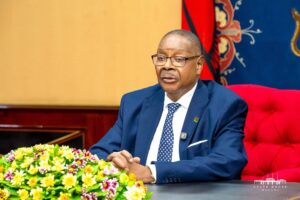
This brings us to President Mutharika himself. A president cannot delegate responsibility for everything.
Cabinet ministers have portfolios; permanent secretaries administer departments; chief executives manage public institutions.
But the President remains ultimately responsible for the direction of his government.
When corruption allegations arise, Malawians expect leadership. When Parliament’s oversight is challenged, Malawians expect leadership. When fuel queues return, Malawians expect leadership.
When electricity disappears, Malawians expect leadership. When questions are raised about the treatment of the Vice-President, Malawians expect leadership.
The President does not necessarily have to personally solve every problem. But he must speak. He must set the standard. He must tell the country what is acceptable and what is not.
He must make it clear that public resources belong to the people of Malawi — not to the President, not to Cabinet, not to political parties, not to relatives, friends or political financiers.
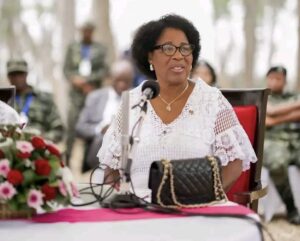
Vice-President Jane Ansah
What about Jane Ansah?
The treatment of Vice-President Jane Ansah also raises questions that cannot simply be ignored.
Ansah has publicly complained about being excluded from presidential engagements and Cabinet activities. Those are her stated claims and deserve an explanation from the presidency.
Whatever disagreements may exist inside government, Malawi’s constitutional offices cannot be reduced to personal relationships.
If the Vice-President has a constitutional role, the public deserves to understand how that role is being exercised.
And if there is a political or administrative disagreement between the President and Vice-President, the public should not have to learn about it through leaks, rumours and competing statements.
Leadership requires clarity.
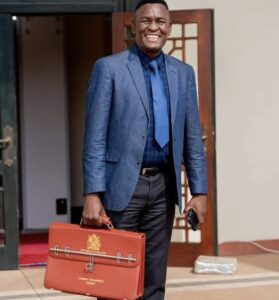
Norman Chisale
And then there is Norman Chisale
Perhaps the most uncomfortable question concerns Norman Chisale. How does an individual who has been at the centre of serious public controversy become a custodian of state power?
Chisale’s corruption-related prosecution was discontinued, and he now serves as Deputy Minister of Homeland Security.
That does not mean that discontinuation of a prosecution establishes guilt — it does not.
But it creates a legitimate public-interest question about political judgment.
What criteria does this administration use when deciding who should occupy positions of public trust? Is legal eligibility enough? Should public confidence matter? Should unresolved allegations matter?
And what message does such an appointment send to Malawians who have spent years demanding stronger accountability?
These are not questions about one individual. They are questions about the standard of government.
We have been there before
This is why I remain uncomfortable with the idea that removing one government automatically solves Malawi’s problems. It does not.
Chakwera was removed because Malawians lost confidence in his government. But the answer cannot be to replace one culture of impunity with another.
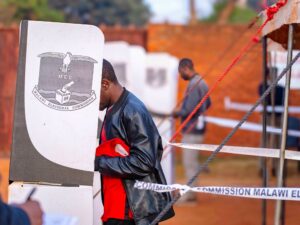
Malawi cannot continue changing presidents without changing institutions. We cannot continue replacing political parties while leaving the underlying governance system untouched.
We cannot continue pretending that corruption is only a problem when the other party is in government. Corruption has no political party.
A stolen kwacha does not carry a DPP, MCP, UDF or any other political label. It is simply a stolen kwacha.
Malawians are tired
Malawians are tired of being asked to sacrifice while those close to power appear protected.
They are tired of hearing about austerity while seeing questionable government expenditure; tired of being told there is no foreign exchange while fuel shortages persist; tired of blackouts; tired of promises; they are tired of political speeches that sound different from the reality they experience every morning.
The World Bank’s latest assessment confirms that Malawi’s economic challenges remain severe: growth is too weak to substantially improve living standards, foreign-exchange shortages persist, inflation remains elevated and unreliable electricity continues to constrain economic activity.
This is not merely an opposition talking point — it is an economic reality.
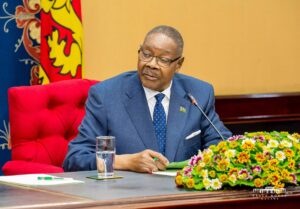
What should Mutharika tell Malawians?
As the President approaches the end of his first year, I believe Malawians deserve a straightforward national conversation.
What has changed? What has not changed? Why have major corruption cases been discontinued? What safeguards exist to ensure that politically connected individuals are not treated differently?
Why are fuel queues returning after government said the crisis had been addressed? What is the long-term plan for electricity? What is being done to strengthen Parliament’s oversight role?
Why are questions surrounding the Vice-President being allowed to fester? And what does the President intend to do to restore public confidence in institutions?
These questions should not be dismissed as political hostility. They are questions from citizens who pay taxes and have entrusted government with enormous power.
Who will rescue Malawi?
Perhaps the most dangerous assumption in Malawi is that somebody else will eventually come to rescue us.
The IMF will rescue us; the World Bank will rescue us; the donors will rescue us; the next president will rescue us; the diaspora will rescue us — NO.
External partners can provide financing, technical assistance and support. They cannot build a democratic culture for us.
Ultimately, Malawi must rescue Malawi. And that begins with leadership; it begins with institutions that cannot easily be captured by politicians; with Parliament exercising meaningful oversight; with prosecutors being able to make decisions without fear or favour.
It begins with transparent procurement; with public officials declaring and explaining conflicts of interest; government contracts being open to public scrutiny; ministers understanding that public office is a responsibility, not an opportunity for personal enrichment.
And above all, it begins with the President making one thing absolutely clear: Nobody is above the law; not a minister; not a deputy minister; nor a presidential adviser; a political supporter; a relative; a former cabinet minister; a current cabinet minister; and not the President himself.
That is the standard Malawians should demand from every government.
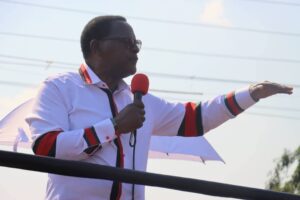
Chakwera on his campaign trail
I supported neither Chakwera nor Mutharika blindly. I supported the principle that governments must be held accountable.
If Chakwera failed, Malawians were right to remove him. If Mutharika’s government begins repeating the same mistakes, Malawians have every right to question it.
That is not disloyalty — that is democracy.
The DPP did not return to government to inherit Malawi, it returned to government to serve Malawi.
And one year into its mandate, the President owes Malawians more than political rhetoric — he owes them answers.
Because when the lights go out, the fuel disappears, corruption cases disappear, parliamentary oversight becomes contested and public confidence begins to disappear with them, ordinary Malawians are left asking one simple question:
Who is actually in charge — and who will rescue us from this cycle?
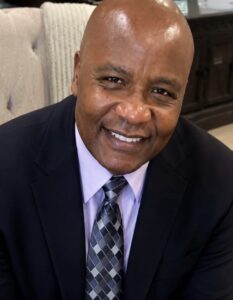
Dr. James Kadyampakeni
* Dr. James Kadyampakeni is Canada-based Malawian economist and accountable governance advocate, who regularly comments on Malawi’s economy, governance, and politics.