
* Repeated postponements of Morocco’s professional championship, due to several commitments including CHAN, the Arab Cup and AfCON 2025, have severely disrupted its national schedule
* South Africa, who are set to host 2026 COSAFA Women’s Championship scheduled from February 18 to March 1, expresses readiness to step in if CAF decides that alternative arrangements are necessary
By Duncan Mlanjira
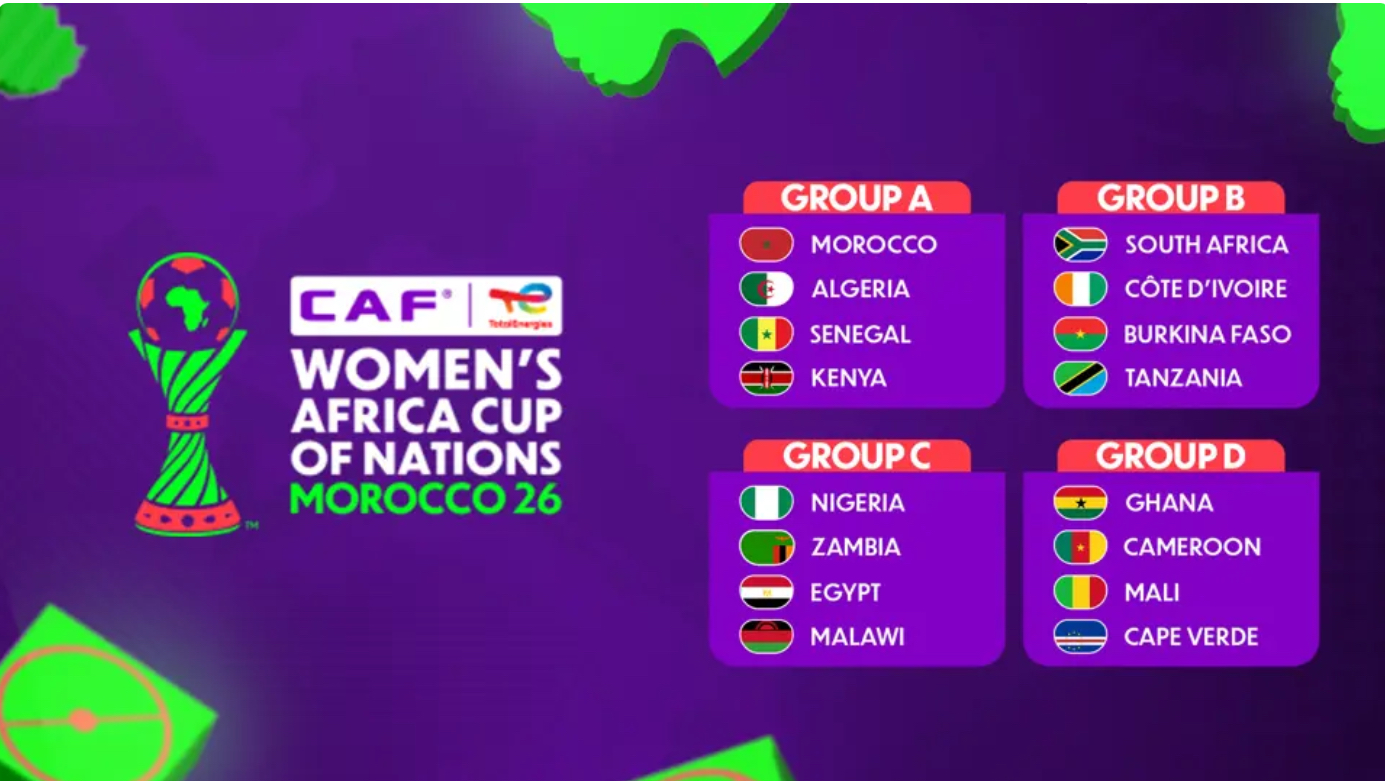
With less than 40 days to host Women’s Africa Cup of Nations (WAfCON) 2026, from March 17 to April 3, hosts Morocco are reported to be preparing to submit an official request to the Confederation of African Football (CAF) to postpone the tournament to a later date due to intense pressure on its domestic league fixture list.

Advertisement
A report by Foot Africa quotes Morocco’s daily Al Mountakhab as saying Royal Moroccan Football Federation (FRMF), led by president Fouzi Lekjaa highlights that the intense pressure on the national fixture list includes repeated postponements of its professional championship, due to several commitments including the African Nations Championship (CHAN), the Arab Cup and the AfCON, which Morocco concluded hosting on January 10.
These, according to the report, have severely disrupted Morocco’s domes schedule as they also have to honour the requirement by world football governing body, FIFA that local championships must conclude before May 15, thus making the organisation of the WAfCON 2026 “even more complicated”.
“At the same time, Moroccan clubs are active on the continental stage, in both the CAF Champions League and the CAF Confederation Cup, which adds further pressure on the calendar and the availability of recently renovated stadiums,” says the report.
On top of that the Morocco FA has arranged a packed international schedule next month for its women’s national team with friendly matches followed by participation in the FIFA World Cup in the United States along with honouring the WAfCON.
“In light of these constraints, the FRMF is expected to advocate for a postponement at the next CAF meeting, while reaffirming Morocco’s readiness to host the competition at another date,” reports Foot Africa.

Meanwhile, South Africa has expresseed readiness to step in if CAF decides that alternative arrangements are necessary, quoting sports minister, Gayton McKenzie, who emphasised that “no formal decision has been taken to relocate” the WAfCON 2026 away from Morocco.
Initially McKenzie’s deputy Peace Mabe had publicly announced that South Africa would step in and stage the finals, who told SABC Sport: “When Morocco said ‘We are not able to host’, South Africa, we said ‘Yes, we are available’. We are going to take it.”
She was quoted declaring this at an awards ceremony on Sunday but the BBC Sport quoted McKenzie clarifying his deputy’s statement, emphasising that Morocco “remains the officially designated host” the WAfCON 2026.
“[The remarks made] do not constitute a formal confirmation or assumption of hosting responsibilities,” he is quoted as saying. “CAF has not yet triggered any alternative hosting process.
“South Africa has expressed its willingness to support CAF if required, should alternative hosting arrangements for the 2026 Wafcon become necessary. These engagements form part of ongoing discussions initiated by CAF as it considers various contingencies in line with [its] responsible stewardship of the continental game.”

South Africa are also set to the host the Council of Southern Africa Football Associations (COSAFA) Women’s Championship scheduled from February 18 to March 1.
Morocco was set to stage the WAfCON for the third time in a row after years of investment in footballing infrastructure as it builds towards co-hosting the 2030 FIFA World Cup.
The BBC Sport indicates that the fact that the North African country has been a willing supporter of the women’s game has solved a potential dilemma for CAF in recent years, given few nations have expressed an interest in staging the WAfCON — which attracts far fewer supporters than the men’s AfCON.
The BBC Sport also indicate that South Africa has reportedly tabled a bid to host the AfCON 2028, and sports minister McKenzie is quoted as saying the Rainbow Country will continue to pursue a long-term strategy to put on major sporting events.
He also emphasised that his deputy Mabe’s remarks “reflect government’s longstanding engagement on supporting African football and South Africa’s confidence in its proven ability to host major international sporting events”.

Advertisement
With just 43 days until the 16-team WAfCON kicks off, “even if South Africa did step in to replace Morocco, it would face a logistical challenge to be ready on time despite having 13 CAF-approved stadiums,” opines the BBC Sport.
Thus the tournament, as reported by The Guardian, may now be postponed by up to two weeks to give South Africa adequate preparation time as any possible hosting would depend on several steps — that include a formal request from CAF confirming the need for a new host; approval through the country’s government and ministerial processes, identification of host cities, stadiums, accommodation, and transport capacity; and signing of government guarantees and operational agreements.
Neither Moroccan authorities nor CAF have issued a formal explanation for the sudden withdrawal, a decision that sparks debate, particularly as speculation emerges following “lingering tensions from the controversial AfCON 2025 final against Senegal that may have contributed to the withdrawal, though these claims remain unverified”, as reported by The Guardian.

“Historically, CAF has imposed sanctions on host nations that withdraw close to the commencement of a tournament,” says the report. “In 2015, Morocco was suspended and fined after withdrawing from hosting the men’s AfCON over Ebola concerns, sanctions that were later overturned by the Court of Arbitration for Sport.
“However, observers suggest CAF may adopt a softer stance this time, given the close relationship between CAF president Patrice Motsepe and Morocco FA president, Fouzi Lekjaa, who is CAF vice-president.
“For Morocco, the late withdrawal raises questions about its future role and reliability as a major host in African football, as the continent watches closely how the situation unfolds,” reports The Guardian.

CAF president Motsepe and Morocco FA president Lekjaa