
* As NICO Group outlines its financial capacity to support transformative mining projects aligned with the MW2063 national vision
* NICO reaffirmed its commitment to supporting the Government’s development agenda through strategic investments and partnerships
By Duncan Mlanjira
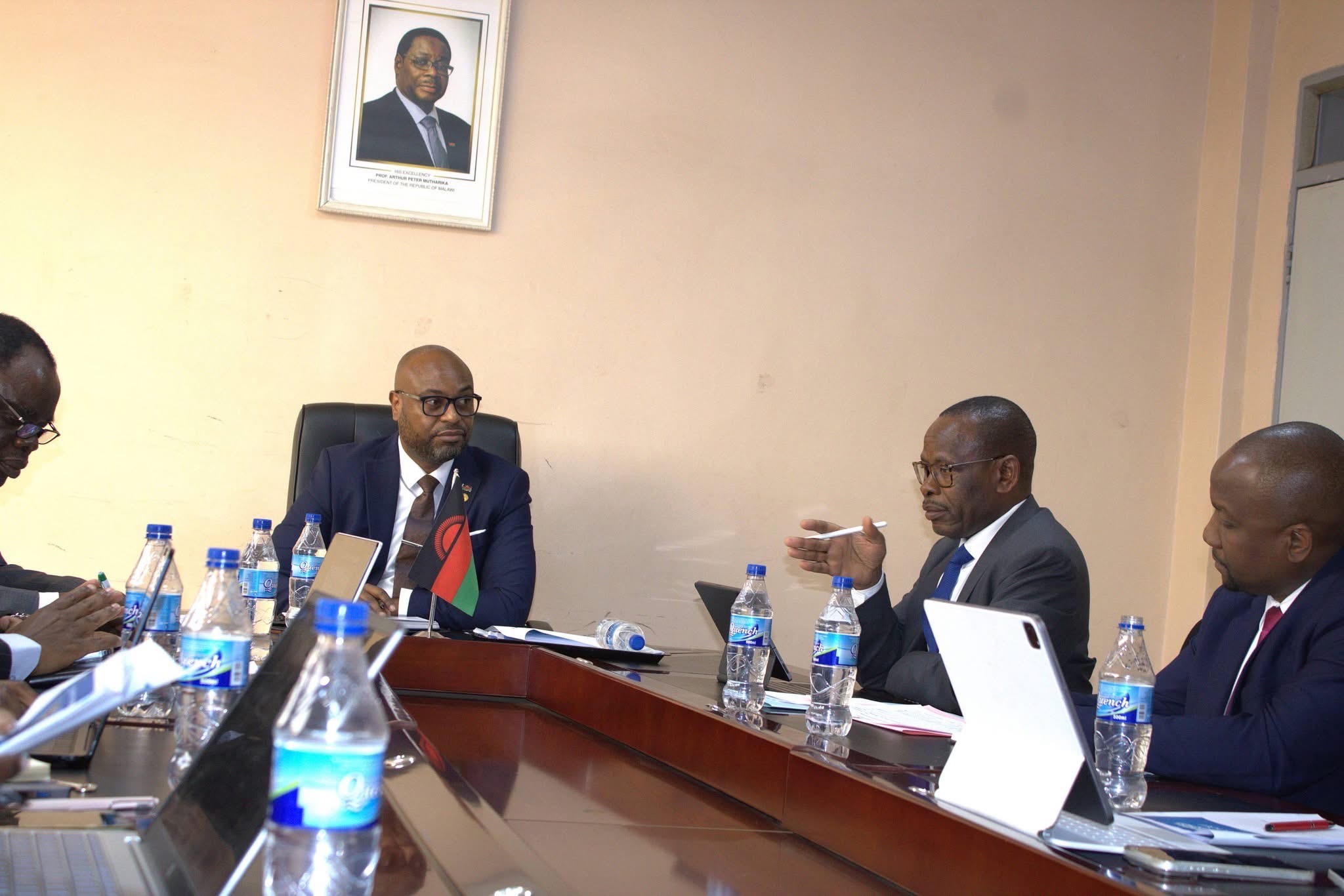
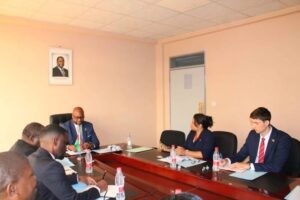
During an engagement with the Malawi’s largest and most diversified financial services conglomerate, Minister of Mining, Thoko Tembo emphasised the need for stronger partnerships between Government and the private sector.

Advertisement
The Ministry’s media platform reports that Tembo described investment as a critical pillar in unlocking Malawi’s mining potential and driving the country’s economic transformation.
During the engagement, NICO Group Managing Director, Vizenge Kumwenda, made a presentation reaffirming the Group’s commitment to supporting the Government’s development agenda through strategic investments and partnerships.
He also outlined the Group’s financial capacity to support transformative mining projects aligned with the MW2063 national vision.
The report further said the engagement underscores the Mining Ministry’s commitment to fostering strategic partnerships with local investors to promote value addition, mobilise investment and accelerate the sustainable development of Malawi’s mining sector.
Minister Tembo is reported to have said the mining sector cannot thrive without investment, noting that local investors have a vital role to play in developing the industry.
“As a country, we cannot talk about mining without talking about investment because investors are a key pillar of the sector.
Mining is capital intensive, and investment is crucial to the growth of the industry,” he is quoted as saying.
The Minister added Government is committed to working with strategic partners to ensure the mining sector delivers benefits for all stakeholders.
“We should partner and ensure that we move forward together to achieve the dreams of the sector so that everyone benefits, the Government, Malawians and the private sector,” he said.
The same message was relayed two weeks ago, when the Minister visited Portland Cement processing factory and limestone mining in Balaka, describing it as a major contribution towards Malawi’s industrialisation, employment creation and economic growth.

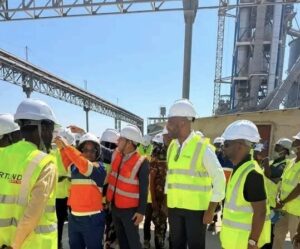
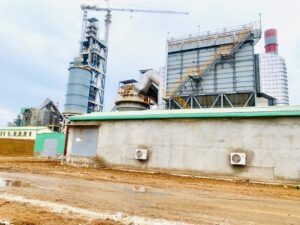
“This investment demonstrates the important role the private sector plays in driving economic transformation,” he told the media.
“It is encouraging to see a company of this magnitude investing in value addition, creating jobs and contributing to Malawi’s industrial growth.”
He said this after being appraised that, through the K200 billion investment the Government collects approximately K35 billion annually in tax revenue and K1 billion in mining royalties.
Portland Cement Chief Executive Officer (CEO), Jianguo Alex Liu added that the factory generates about US$15 million in foreign exchange annually through cement exports to Zimbabwe and Mozambique.
The company, which created a huge employment opportunities to close to 500 people, has a capacity of producing 800 million tonnes of cement per year.
Last week, the Minister also received a courtesy call by the Ambassador of the Federal Republic of Germany, Her Excellency Ute König, who underscored opportunities to strengthen cooperation between Malawi and Germany in the development of the country’s mining sector.
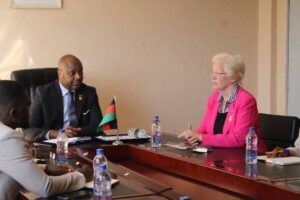
The Ambassador is reported to have said mining remains a priority for Germany as global demand for rare earth minerals continues to grow.
She noted that Malawi’s abundant rare earth deposits present significant opportunities for foreign exchange generation, job creation and increased investment in the country’s mining sector.
The courtesy call provided an opportunity for the two sides to discuss issues of mutual interest, including investment and enhanced cooperation in Malawi’s mining industry.
On his part, the Minister described mining as a key driver of Malawi’s economic transformation under the MW2063 and called for greater collaboration in critical minerals development, value addition, geological mapping and skills development.
He added that Malawi values its longstanding bilateral relations with Germany and appreciated the country’s continued support in governance, education, renewable energy and private sector development.
The Government has undertaken significant reforms to create a modern, transparent and competitive mining sector that attracts responsible investment.
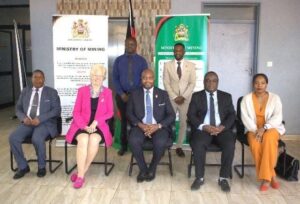
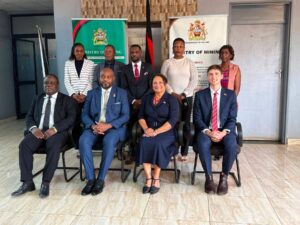
Mining cooperation and investment opportunities also topped discussions when the Minister met Australian High Commissioner to Malawi, Her Excellency Minoli Perera.
He stated that Australia is a key investment partner, with Australian companies leading major mining projects such as Kayelekera Uranium, Kasiya Rutile & Graphite, Kanyika Niobium, and Kangankunde Rare Earths.
He also highlighted Government’s efforts to create a competitive investment environment through strengthening legislation, while seeking Australia’s support in skills development, investment promotion, environmental and social governance, and critical minerals value chains.
High Commissioner Perera said Malawi and Australia share strong historical ties and similar economic foundations in agriculture and mining and reaffirmed Australia’s continued support through scholarship programmes, mining governance, and policy development.
She further emphasised that her government expects Australian companies operating in Malawi to uphold high standards and comply with both Australian and Malawian laws.
She said Australia is ready to support Malawi’s efforts to secure better mining deals and invited the Ministry to identify priority areas where further Australian assistance would be beneficial.
But while this is so, concerns have been raised that Australiaan company, Lindian Resources is suspected of carrying out some irregularities at its Kangankunde Rare Earths Mine in Balaka.
Speaker of Parliament, Sameer Suleman has since ordered Minister of Mining Tembo to suspend mining activities and directed Parliamentary Committee on Natural Resources to review the Australian company’s licence.

Advertisement