
* The factory generates about US$15 million in foreign exchange annually through cement exports to Zimbabwe and Mozambique
* As Mining Minister Thoko Tembo commended the K200 billion investment in the mining and manufacturing sectors
* Describing it as a major contribution towards Malawi’s industrialisation, employment creation and economic growth
By Mary Makhiringa, Malawi News Agency (MANA)
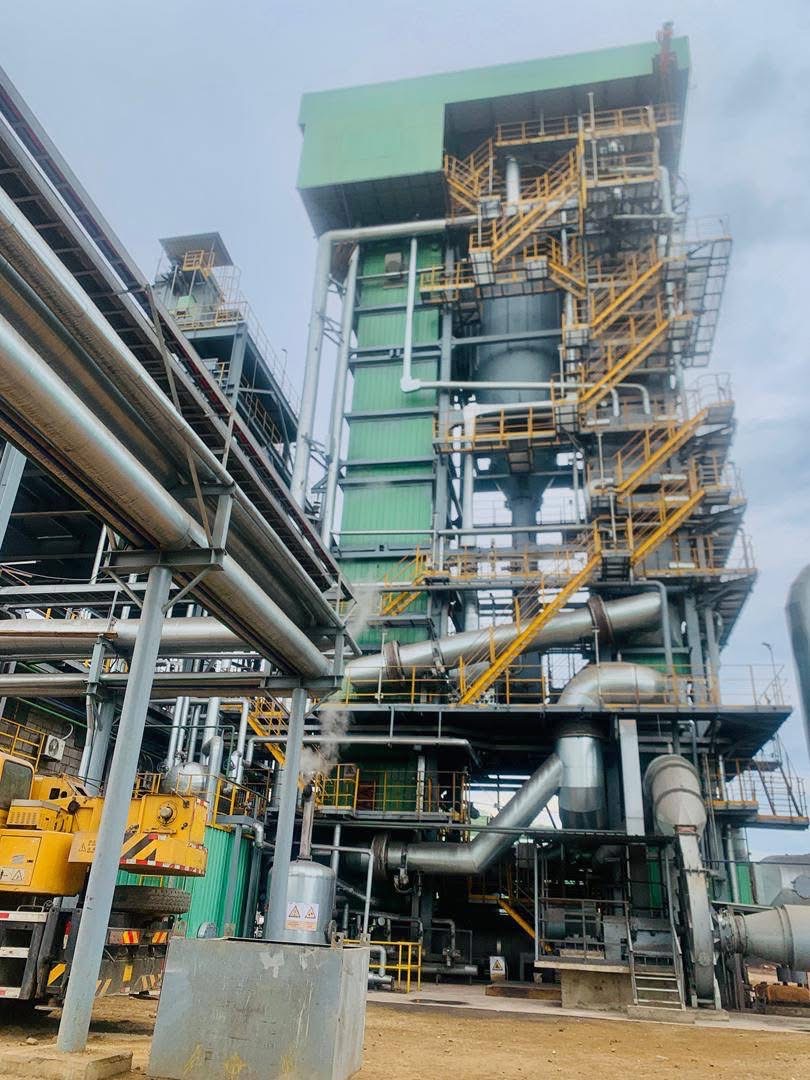
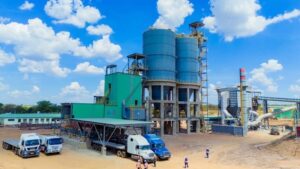
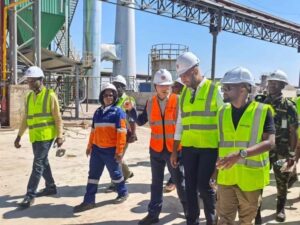
During his tour of Portland Cement Malawi Ltd’s Balaka factory on Monday, Minister of Mining, Thoko Tembo was appraised that, through the K200 billion investment the Government collects approximately K35 billion annually in tax revenue and K1 billion in mining royalties.

Advertisement
Portland Cement Chief Executive Officer (CEO), Jianguo Alex Liu added that the factory generates about US$15 million in foreign exchange annually through cement exports to Zimbabwe and Mozambique.
The company, which created a huge employment opportunities to close to 500 people, has a capacity of producing 800 million tonnes of cement per year.
The CEO reaffirmed the company’s commitment to quality production and regulatory compliance, saying with government’s continued support, Portland Cement “remains committed to producing high-quality cement products that meet national standards while fully complying with all regulatory requirements”.

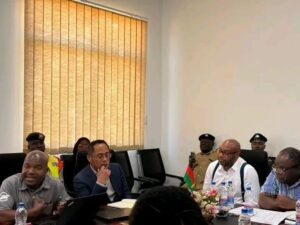
He said the company places great importance on environmental protection, responsible mining and workplace safety.
“Beyond our business operations, we are committed to improving the welfare of surrounding communities through various corporate social responsibility initiatives aimed at enhancing education, livelihoods and socio-economic development,” he said.
Balaka Council vice-chairperson, Councillor Tiyanjane Chisowile attested to that the investment is a major boost to the district’s socio-economic development, saying: “Portland Cement has created employment opportunities for our people and continues to demonstrate its commitment to community development.
“We are particularly pleased with the planned construction of classroom blocks at Ngonga Primary School, which will improve the learning environment for learners in the area,” said Chisowile.

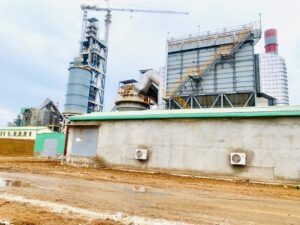


After touring the cement processing plant and the limestone mining area, Minister Tembo commended the company’s operations, describing it as a major contribution towards Malawi’s industrialisation, employment creation and economic growth.
“This investment demonstrates the important role the private sector plays in driving economic transformation,” he told the media.
“It is encouraging to see a company of this magnitude investing in value addition, creating jobs and contributing to Malawi’s industrial growth.”
Tembo observed that Portland Cement’s production capacity “is sufficient to satisfy the local market and has the potential to generate foreign exchange through exports”.
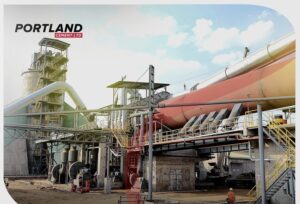
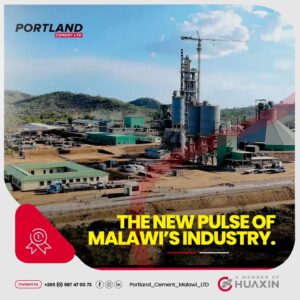


“Such investments are key to strengthening Malawi’s economy and improving our competitiveness in the region,” said Tembo, who also commended the company for promoting responsible mining and sustainable business practices.
“Government remains committed to creating an enabling environment for investors. The Ministry of Mining will continue working closely with Portland Cement and other investors to promote sustainable mining, value addition and industrial growth,” he said.
Tembo’s tour is part of Ministry of Mining’s close collaboration with investors to unlock the full potential of Malawi’s mining sector by promoting an open door policy that encourages dialogue with stakeholders to resolve challenges affecting the sector.

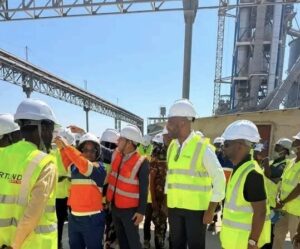

“We are encouraging an open policy,” Tembo said. “We are working in collaboration with stakeholders to ensure that where there are challenges or areas requiring support, we work together to find solutions.”
He thus recognised it cannot be over-emphasised that Portland Cement is contributing to national development by helping stabilise cement prices, creating jobs and supporting surrounding communities.
“The price of cement has stabilised at a lower level, which is vital for building the nation,” said Minister.
The Balaka plant was commissioned in December by Minister of Finance & Economic Affairs, Joseph Mwanamvekha, who also described it as a major milestone that will reduce Malawis reliance on imported cement and boost national economic growth.


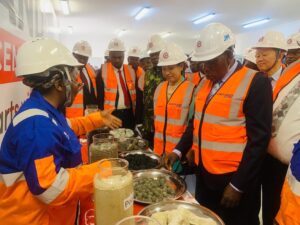
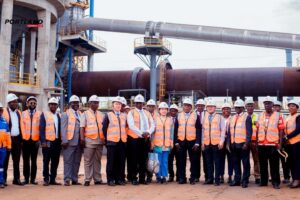
Mwanamvekha commended the Chinese investors behind the project, noting that the plant will significantly strengthen local cement manufacturing and support the country’s industrialisation agenda.
“This plant is more than a production site — it is a strategic investment in Malawis economic future,” said Mwanamveka of the plant, which took 11 months to complete — reflecting Malawi’s commitment to creating a more resilient and competitive economy.
“It is also a step towards achieving the bottom-up economic transformation agenda. This investment will attract more opportunities that will create jobs and support development in Ngonga.”
Present was Chinese Ambassador to Malawi, Lu Xu, who called for continued cooperation between Malawi and the Peoples Republic of China, saying the project reflects the strength of the partnership.


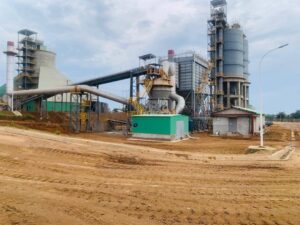
“The opening of the plant is a clear demonstration of what continued collaboration can achieve,” she said, expressing confidence that the facility will contribute meaningfully to Malawi’s economic transformation.
The plant’s annual production triples Malawi’s total annual consumption of cement and also produces clinker, which it had been importing — thus it has eased pressure on forex needed to import it.
Apart from that, the plant has also transformed the face of Ngonga while the district is getting more economic growth opportunities as a result of the investment.—Editing by Duncan Mlanjira, Maravi Express

Advertisement