

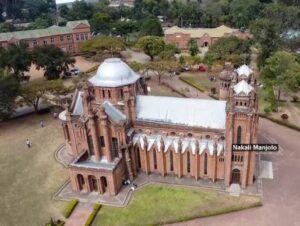
The historic St. Michael’s and All Angels cathedral at the centre of CCAP Blantyre Mission
* The Sesquicentennial will be celebrated on October 23-25 under the theme; ‘150 Years of Blantyre Mission: Remembering the Past, Celebrating God’s Faithfulness, Transforming the Future’
* As we celebrate, we must, therefore, avoid looking at history merely with nostalgia. We must ask: What does this 150-year history require of us today?
By Duncan Mlanjira
The Church of Central Africa Presbyterian (CCAP) Blantyre Mission — commonly known as the Henry Henderson Institute (HHI) — has clocked 150 years of its establishment and the Blantyre Synod announced that the Sesquicentennial will be commemorated in grandeur on October 23-25.
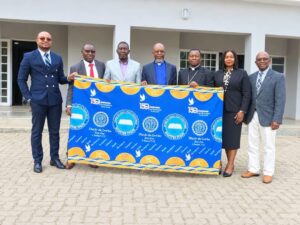
At a press briefing on Thursday at HHI, CCAP-Blantyre Synod’s Secretary General, Rev. Anderson Juma thoroughly unpacked the history of the Blantyre Mission — with emphasis that historically, it is “undeniable that Blantyre Mission is one of the important institutions that helped shape the Malawi we know today”.
“The Mission became a centre of faith, learning, literacy, commerce, agriculture, skills development, health and social engagement.
“Its influence extended far beyond the boundaries of the Mission itself; the modern city of Blantyre grew around this historic Mission, and the Mission subsequently became connected with institutions and communities throughout southern Malawi and beyond.
“The story that began here in 1876, therefore, became part of the larger story of Malawi.

Rev. Juma addressing the media accompanied by members of the Sesquicentennial organising committee
“As we celebrate, we must therefore avoid looking at history merely with nostalgia. We must ask: What does this 150-year history require of us today?
“If previous generations invested in education, what are we doing for the education of today’s children?
“If previous generations established institutions that served communities, how are we serving our communities today?
“If the Church once raised questions of justice and the welfare of ordinary people, what prophetic responsibility does the Church have in contemporary Malawi?
“If Blantyre Mission was once a centre of hope, learning and transformation, how can we ensure that its legacy continues to produce hope and transformation for future generations?”
Rev. Juma made this assertion after detailing the history of Blantyre Mission, emphasising that “this is not simply an anniversary of an institution — it is a commemoration of an important chapter in the history of Malawi”.
The story goes back to the 19th Century and to the missionary vision associated with the Scottish missionary and explorer, Dr David Livingstone, whose appeal was for Central Africa to experience Christianity, education, legitimate commerce and social transformation.
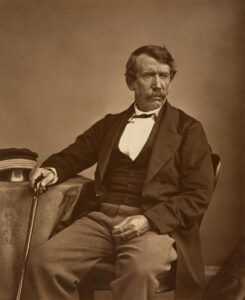
Dr. David Livingstone
Following Livingstone’s death in 1873, the Church of Scotland responded to this vision by sending a missionary party to Central Africa.
In 1876, Henry Henderson, to whom HHI is named in his honour, together with other members of the missionary party, travelled into the Shire Highlands in search of a suitable place for a mission station.
On October 23, 1876, the mission site in the area of Chief Kapeni was identified and was named Blantyre, after Blantyre in Scotland, the birthplace of David Livingstone.
Historical accounts describe this site as becoming a centre for Christian mission, education, commerce and agriculture in what is now southern Malawi.
“The modern city of Blantyre subsequently grew around the Mission,” said Rev. Juma. “In this sense, the history of Blantyre Mission and the history of Blantyre City are inseparably connected.


“The name of our city itself carries the memory of the Scottish missionary movement and of the historical encounter that began at this place in 1876.
“The beginnings were not easy. The early missionaries faced disease, deaths, cultural misunderstandings, logistical difficulties and other challenges — yet the Mission survived, developed and expanded its work.
“In 1881, the Mission entered a new phase under the leadership of Rev David Clement Scott, whose ministry became particularly important in shaping the educational, linguistic, ecclesiastical and social character of the Mission.
“One of the great monuments of this period is St Michael and All Angels Church, whose construction took place between 1888 and 1891.
“The church remains one of the most important historical landmarks associated with the establishment of Christianity in Malawi.”


Key milestones and legacy
For 150 years, asserts the Synod, Blantyre Mission has been “much more than a place of worship — it became a centre from which different forms of Christian, educational, economic and social activity developed.
“The Mission’s contribution must, therefore, be understood broadly:
* First, there is the spiritual and ecclesiastical contribution. The Mission helped establish Presbyterian Christianity in Malawi and became one of the foundations from which the Church of Central Africa Presbyterian developed.


The Church of Scotland itself records that the Church of Scotland founded its mission in Blantyre in 1876 and that the later CCAP developed from the Scottish and Dutch Reformed missionary traditions;
* Second, there is the educational contribution. From its early years, the Mission regarded education as an important instrument of Christian and social transformation.
Schools were established, teachers were trained, literacy was promoted and practical skills were developed.
The Henry Henderson Institute, established in 1909, became an important institution for education, teacher training, theological formation and technical skills.

HHI school off Chileka Road


Indeed, historical research indicates that the Scottish Missions established schools that produced many of the political, religious, diplomatic and civic leaders of Malawi.
Mission education also created an educated African population that increasingly questioned unequal social and political structures.
* Third, there was an important economic and agricultural contribution. The Scottish missionary enterprise was influenced by the vision of Christianity and commerce.
Mission activity became connected with agriculture, legitimate trade and the development of skills. Historical accounts indicate that cash crops such as tea, coffee and cotton became part of the emerging commercial economy, while the African Lakes Company was established in connection with the broader Scottish missionary enterprise.

Tea plantations in Thyolo and Mulanje culminated from the Blantyre Mission through African Lakes company
* Fourth, Blantyre Mission contributed to the development of social services, including education, health and community development.
Scottish missions in Malawi developed networks of schools and hospitals, while training people who subsequently served society in different professions.
* Fifth, the Mission played a significant role in public life and the moral and political consciousness of Malawi. This is an area of history that deserves to be remembered carefully and honestly.
The Church’s history was not isolated from the political developments of the country. During the colonial period, missionaries and African Christians sometimes challenged policies that they believed were unjust.
David Clement Scott, in particular, became known for his concern for justice and for his conflicts with colonial authorities.

Historical scholarship describes the Scottish missionaries as taking up, at various points, a prophetic role and speaking on behalf of ordinary people affected by unjust policies.
Mission education also contributed to the emergence of an educated African leadership that would participate in the political development of the country.
In this respect, the history of Blantyre Mission is connected not only with the history of the Church but also with the emergence of modern Malawi.
A legacy that belongs to Malawi
“As we commemorate 150 years,” asserts the Secretary General, “we do not claim that the development of Malawi belongs to one institution or one group of people.

“Malawi’s history has been shaped by the contributions, sacrifices, wisdom and struggles of many communities, traditional leaders, religious traditions, missionaries, educators, medical workers, farmers, workers, political leaders, women, young people and ordinary Malawians.
“We want this anniversary to belong not only to members of the CCAP Blantyre Synod but to the people of Malawi.
“Blantyre Mission has touched Malawian society in many different ways, and therefore we believe that Malawians from different walks of life should have an opportunity to participate in this historic occasion.”

Advertisement
The CCAP Blantyre Synod, and its members, thus extends invitation to all Malawians; all Christian Churches and Muslim brothers and sisters as this is an opportunity for everyone “to come together, remember where we have come from, give thanks to God for His faithfulness, and commit ourselves to building a better Malawi”.
“As we mark 150 years of Blantyre Mission, we are not simply celebrating an institution that has survived for a century and a half — we are celebrating a story.
“A story of faith; of education; of service; of struggle; of transformation — and above all, a story that has become part of the history of Malawi.”

Advertisement