
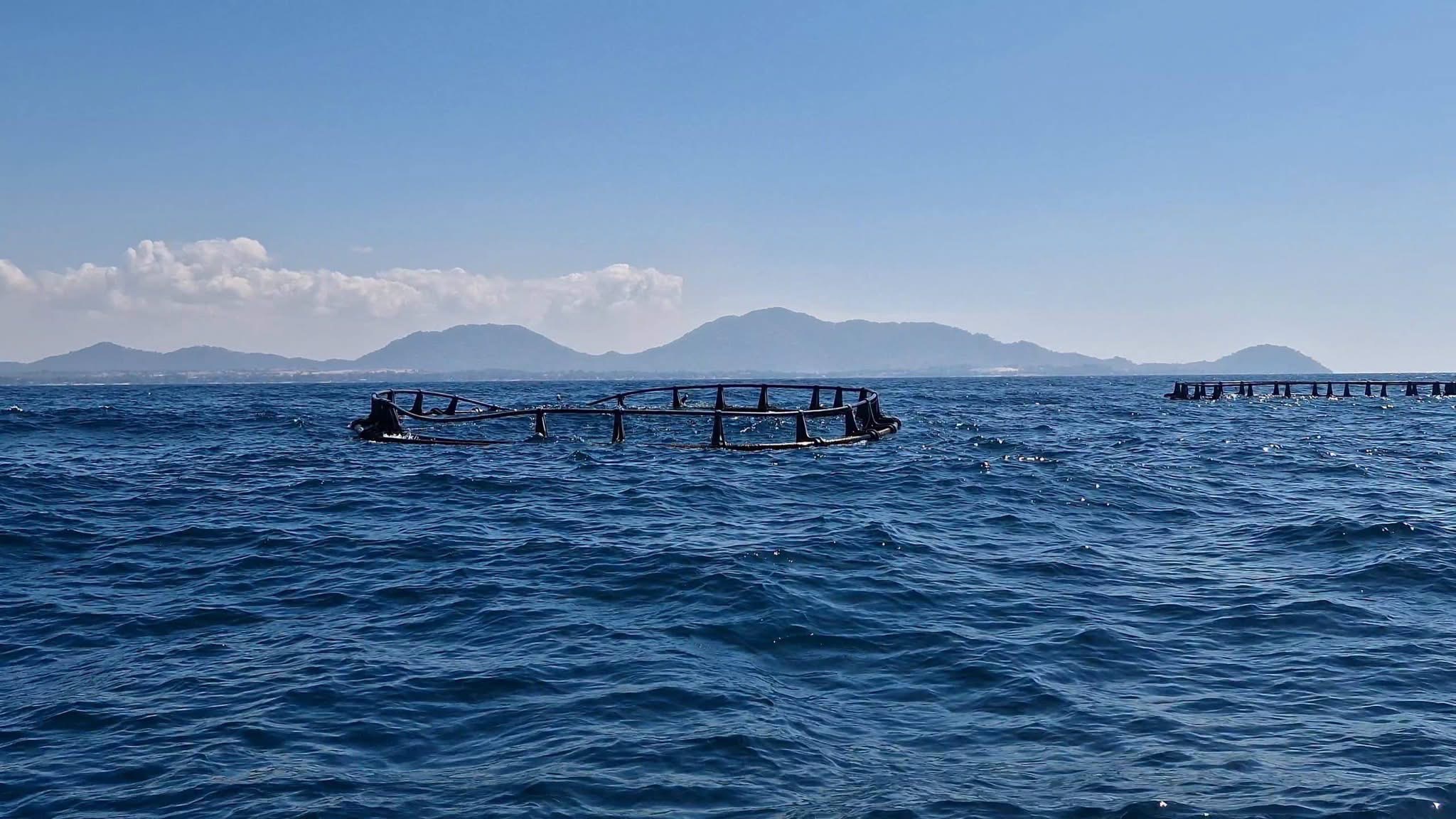
Aquaculture on Lake Malawi
* Ministry of Natural Resources considering tax and duty waivers for investors in cage fish farming as part of efforts to reduce the high cost of production and encourage more investment in the aquaculture sector
* Many investors in fishing industry are struggling with expensive inputs and equipment required for fish farming
* The Ministry of Finance will be engaged to explore possible incentives that can make the sector more affordable and attractive
By Zenak Matekenya, Malawi News Agency (MANA)
As pressure on Malawi’s natural fish resources continues to grow, the Ministry of Natural Resources is turning to aquaculture as a key solution to increase fish production, improve food security and reduce dependence on declining catches from natural water bodies.

Advertisement
Minister of Natural Resources, Patricia Wiskes said this on Saturday during a tour of Lake Malawi Aquaculture, a chambo production farm, and Chikombe Fish Landing Site in Salima, where she highlighted the need to expand fish farming while strengthening conservation efforts in lakes and rivers.
Wiskes said the Ministry is considering tax and duty waivers for investors in fish cage farming as part of efforts to reduce the high cost of production and encourage more investment in the aquaculture sector.
She said many investors are struggling with expensive inputs, particularly equipment required for fish farming, and that the Ministry of Finance will be engaged to explore possible incentives that can make the sector more affordable and attractive.
“The aim is to reduce the high cost of importing essential equipment,” Wiskes said, adding that the government is prioritising aquaculture as one of the sectors that can contribute to national development by increasing fish availability and creating opportunities for investment.
Wiskes said increasing farmed fish production will help bridge the gap created by declining fish stocks in Lake Malawi and other natural water bodies.
The Minister also dismissed concerns that aquaculture-bred Chambo cannot reach market size, saying her visit to Lake Malawi Aquaculture demonstrated the potential of such produced fish.
She witnessed aquaculture-bred chambo weighing up to 1.2kgs at the farm, describing this as evidence that aquaculture can produce quality fish for the market.
In his remarks, Managing Director of Lake Malawi Aquaculture Limited, David Nkhwazi, said the growth of aquaculture requires improved access to quality fingerlings, fish feed, affordable financing and investment incentives.
“If these issues are addressed alongside tax relief, more investors will come into fish cage farming,” Nkhwazi said, while expressing his appreciation for the technical and financial support provided during the establishment of the enterprise.
He appealed for the continued creation of a conducive policy and investment environment to enable the aquaculture industry to grow and contribute even more to national development.

Advertisement
At Chikombe Fish Landing Site, Wiskes commended the community for conserving Mbenje Island, which she described as an important fish breeding ground that has contributed to improving livelihoods.
Paramount Chief Makanjira said the community needs the Ministry of Natural Resources to finalise by-laws that will strengthen the management and conservation of fish and other natural resources on Mbenje Island.
He said delays in approving the by-laws have made enforcement of conservation measures difficult.
Along with her deputy Minister Chipiliro Mpinganjira, Wiskes emphasised that the Ministry is actively transitioning the fisheries sector from traditional, small scale subsistence fishing to a modernised, commercialised aquaculture industry in line with the MW2063 national vision.
She said key initiatives focus on boosting local production, creating export markets, and providing high quality infrastructure to reduce reliance on imported fish.
“From what I see today, Malawi has the potential to produce high quality fish, and what is important is to put everything in place, including having more investors in the fishing sector.
“There are enormous opportunities in fish farming, and aquaculture is no longer an alternative but a strategic pillar for unlocking Malawi’s economic growth, creating jobs, and improving food and nutrition security,” said the Minister.
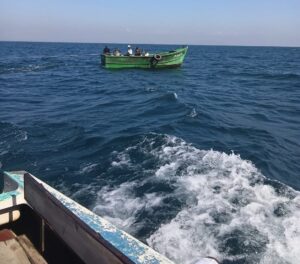
Illegal fishers intercepted

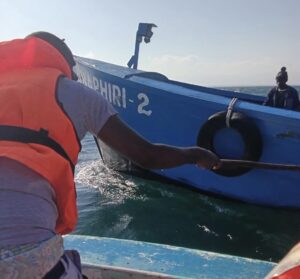
Meanwhile, the Department of Fisheries has intensified enforcement on Lake Malawi as on July 18, the Namiyasi Fisheries Monitoring, Control and Surveillance (MCS) Unit, working jointly with the Marine Police, conducted an enforcement operation on the Lake’s south eastern arm in Area A, targeting large-scale fishing operations.
During the operation, three trawlers were found fishing illegally within Area A, in which trawling is prohibited and the inspection further revealed that the vessels were using under-meshed nets inserted inside the cod end and were operating without valid fishing licences.
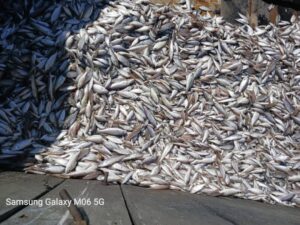
Consequently, the illegal fishing gear was confiscated in accordance with the law, in an operation the Department of Fisheries was supported provided by Ripple Africa.
“Protecting Malawi’s fisheries resources requires compliance with fisheries laws and licence conditions,” said the Department. Authorisation matters; licence conditions matter.
“We will continue to enforce the law to safeguard our fisheries for present and future generations,” says the Department on its official social media platform.—Editing by Duncan Mlanjira, Maravi Express