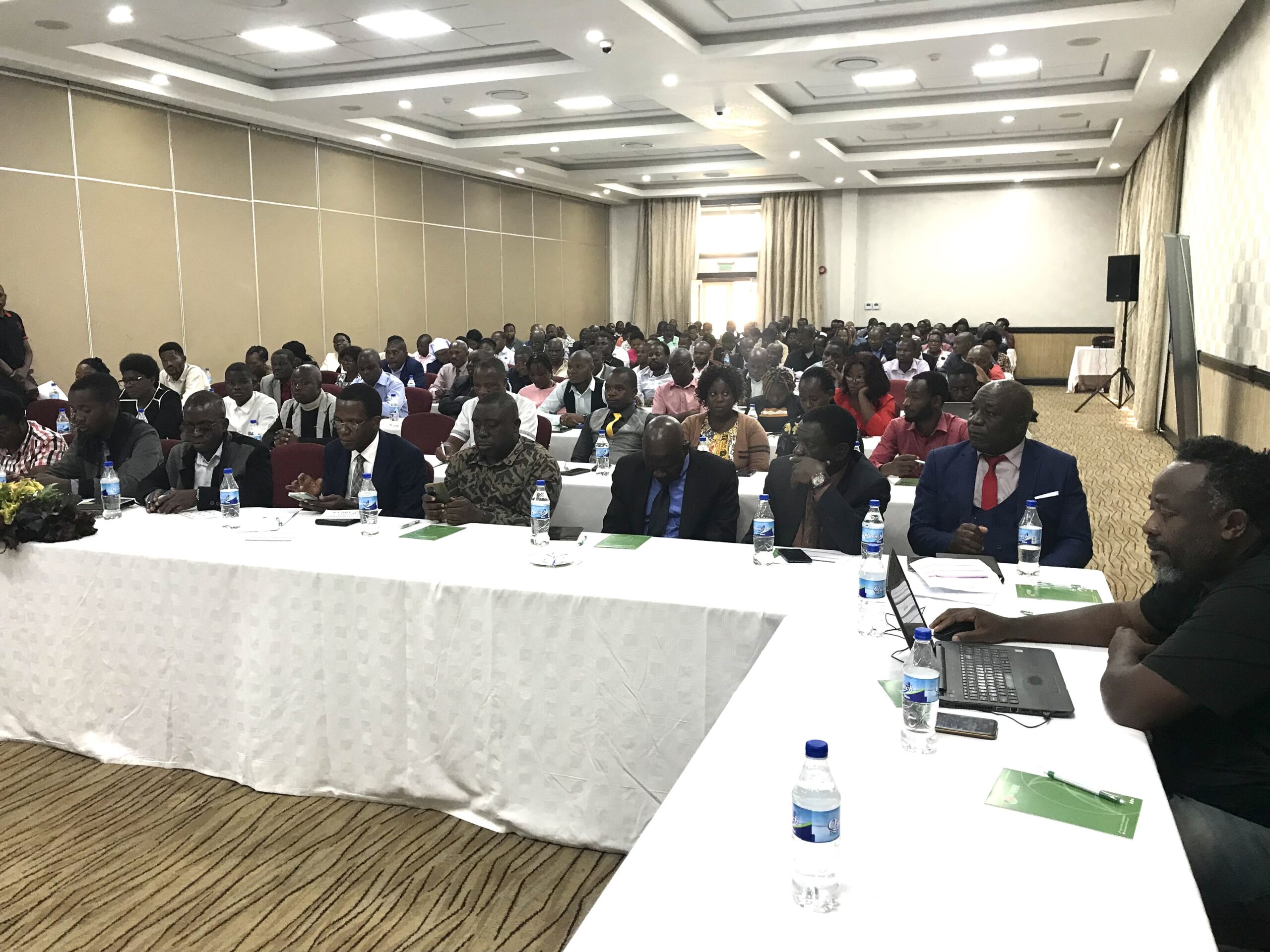
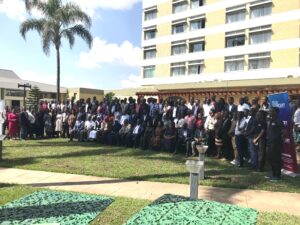
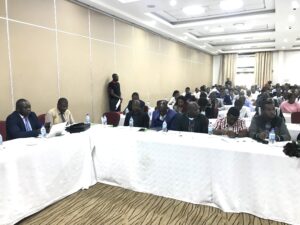
The teachers from the Shire Highlands and South West Education Divisions
* Young minds in schools are now conversant with computer and smartphone usage — thus they are very vulnerable to online threats
* The trainer of trainers workshop in Blantyre covered topics such as ‘school rules & child online protection’, ‘online safety’ and ‘data protection’
By Duncan Mlanjira
Malawi Communications Regulatory Authority (MACRA) is enhancing cybersecurity by training school teachers to be trainers of child online protection, taking cognizance that the young minds in schools are now conversant with computer and smartphone usage — thus they are very vulnerable to online threats.

Advertisement
Having engaged with students from 45 schools in various parts of the country on cyber crime and its effects, MACRA saw it fit to also train teachers into trainers of child online protection since computer studies has been added as part of school curriculum.
Under Malawi Computer Emergency Response Team (mwCERT), MACRA thus brought together over 150 teachers from the Shire Highlands and South West Education Divisions to a trainer of trainers workshop held at Sunbird Mount Soche in Blantyre today that covered topics such as ‘school rules & child online protection’, ‘online safety’ and ‘data protection’.
In his opening remarks, Head of mwCERT, Christopher Banda, emphasised that children are vulnerable to cyber attacks much more than adults, such as mobile phone fraud, theft of their personal data, character assassination, among others.
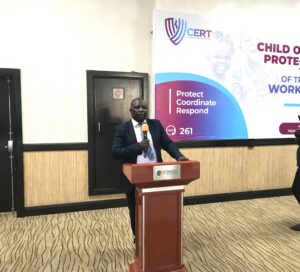
Head of mwCERT, Christopher Banda
Thus MACRA decided to engage the teachers, most of whom teach computer studies also for them to be conversant on cyber threats and how they can shape the young minds to detect and avoid the threats.
“Teachers are the second parents who shape children’s minds into responsible citizens,” he said. “You are already trainers of trainers. At MACRA, we developed the child online protection systems and we needed teachers to familiarise themselves with what is contained in the child online protection.
“As children are now conversant with smartphones, they are constantly online scouring through social media where they sometimes make friendships with people they don’t know. We need to make them be familiar with red flags that they can detect that what they have encountered is fraud.
“It’s our shared responsibility to protect the youths from the cyber threats — that is why we considered teachers as the rightful partners to amply child online protection,” said Banda, who added that MACRA is engaging with the Ministry of Education to review the curriculum on computer studies to include child online protection.

In an interview with the media, headteacher for Stella Maris Secondary School, Sister Evarista Kapwata said the workshop couldn’t have come at the right moment than now, emphasising that indeed children are prone to cyber threats.
“We teach the students basic computer studies such as software and how they can navigate through the internet and dangers they might encounter,” she said. “But through this workshop, we have learnt a lot that will help us shape how to safely use the global interconnectivity.
“We have been appraised on how to spot threats that the students might not be aware of and in turn our students too will become trainers to other young minds on issues they should avoid on the internet,” Sister Kapwata said.

Advertisement
The mandate of the mwCERT is “protecting the nation’s critical infrastructure and safeguarding digital ecosystem” and just a fortnight ago, the MACRA department launched cyber drills in partnership with universities to train skilled cybersecurity professionals for staff and students to be better prepared to effectively handle real-world cybersecurity threats.
The mwCERT will be implementing the cyber drills in tertiary academic institutions across Malawi and was launched at Malawi University of Science & Technology (MUST) targeting its information & communication technology (ICT) staff and students.
It will further be rolled out for University of Malawi (UNIMA); Malawi University of Business & Applied Sciences (MUBAS); Lilongwe University of Agriculture & Natural Resources (LUANAR); Mzuzu University (MZUNI); Malawi College of Accountancy (MCA); National College of Information Technology (NACIT) and several other private tertiary institutions.
Like many developing countries, Malawi faces a shortage of skilled cybersecurity professionals capable of defending its digital infrastructure against the growing cybersecurity threats — thus mwCERT rolling out the cyber drills, which are designed to strengthen the awareness and technical capabilities of youth, who are the emerging into ICT professionals.


Advertisement
“The drills are to meant to provide a technical environment and practice to build capacity in these young minds as they will highlight serious cybersecurity threats,” the Head of mwCERT said at the launch.
“There are many threats that Malawi is prone to that include mobile money fraud, phone hacking, impersonation, hate speeches, character assassinations, theft of personal data, and several others, which we need to protect in order to build a competent and cyber-resilient generation ready to defend the nation’s digital assets as they transition into the workforce.”
MACRA recognises that key to this is to involve universities’ staff and students, who are already in the ICT programmes — thus rolling out the cyber drills with MUST with the other universities to follow — whose private institutions include University of Livingstonia; Malawi Assemblies of God University; DMI-St. John The Baptist University and Daeyang University.