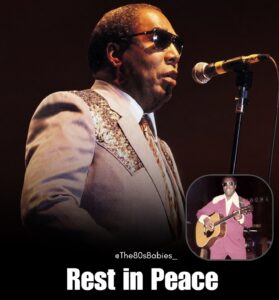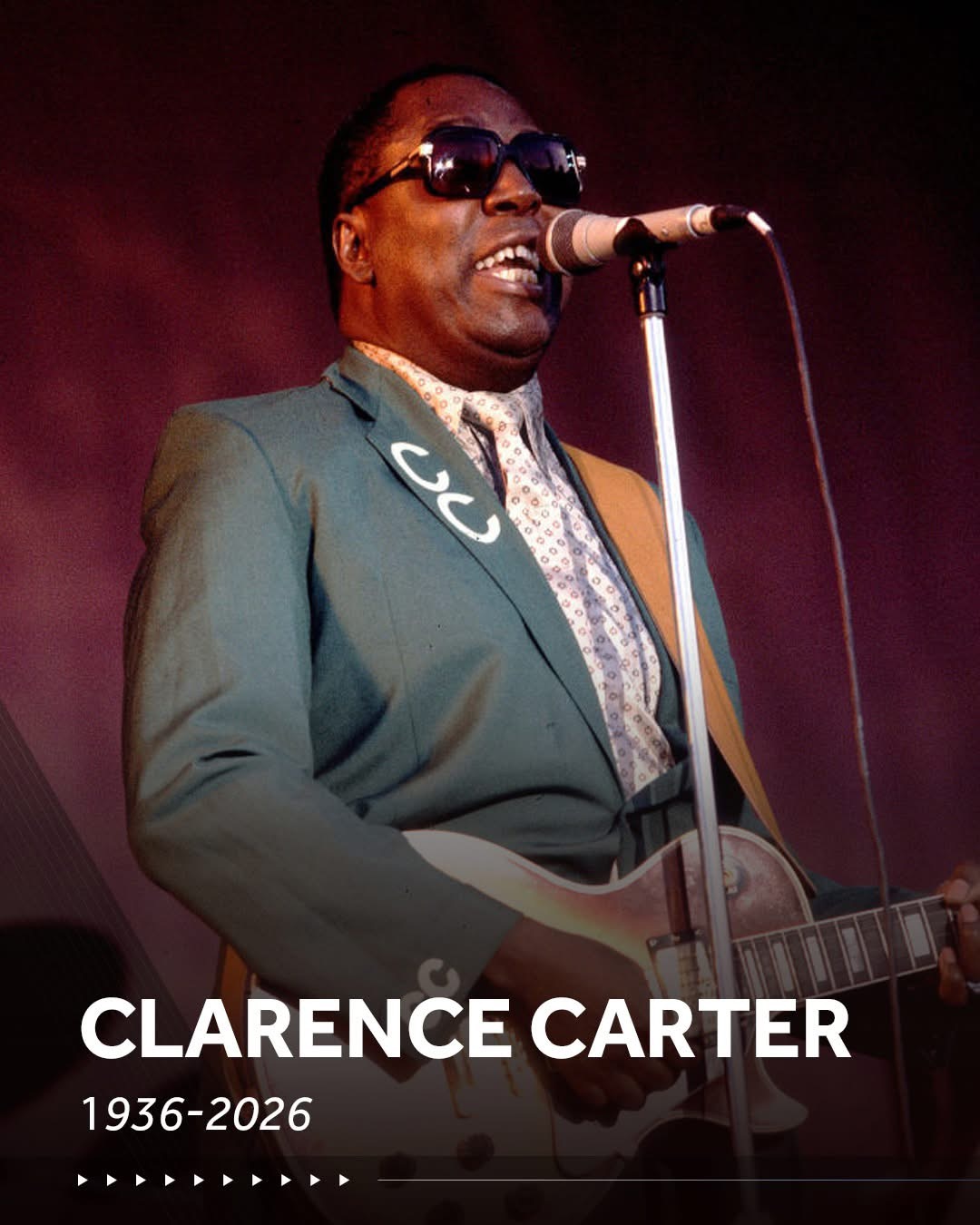
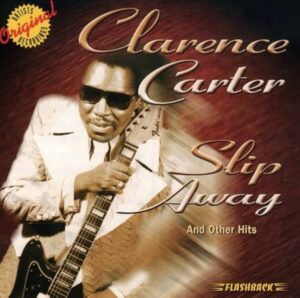
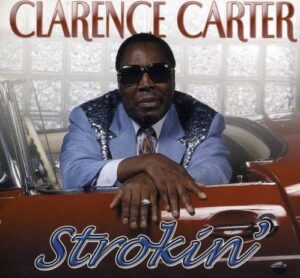
* Best known for lust-filled soul hits like ‘Slip Away’ and ‘Back Door Santa’, he performed with the fervor of a backwoods preacher and the bawdy humor of a juke joint sexual hit ‘Strokin’’
* The two-time Grammy nominee and Alabama native “leaves behind a legacy of timeless music,” his record label said in a statement
By Alexandra Del Rosario, Los Angeles Times
Clarence Carter, the blues and soul singer famous for songs including the raunchy hit ‘Strokin’’ featured in Eddie Murphy’s ‘The Nutty Professor’, died on Thursday, aged 90.

Advertisement
Fame Recording Studios in Carter’s native Alabama announced the singer-songwriter’s death in a statement shared on Facebook, saying Carter “was more than an artist to us,” and that he “was family” — without disclosing additional details about Carter’s passing, including the cause of death.
The Grammy-nominated musician, who was blind since age 1, was most popular in the late 1960s and early ’70s, with chart-busting hits including 1968’s romantic ‘Slip Away’; 1970’s ‘Patches’ and the Christmas hit ‘Back Door Santa’.
He released a steady stream of music through the ’90s — releasing 22 studio albums over the course of his career — and earned two Grammy Award nominations.
Carter received his first nod in 1970 for composing ex-wife Candi Staton’s single ‘I’d Rather Be an Old Man’s Sweetheart’, which was nominated for the rhythm & blues song category. He received his own nomination in R&B vocal performance the following year for his story-driven ‘Patches’, about a young man fulfilling his father’s expectations.
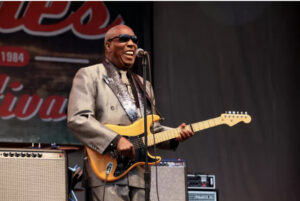
Former Los Angeles Times pop music critic Robert Hilburn wrote in 1992: “Clarence Carter is one of the most overlooked soul stylists of the modern pop era.”
Among Carter’s musical talents was a knack for descriptive lyricism, which he channeled for unapologetically sexual songs ‘G Spot’ and ‘Strokin’’ in which he spares no detail in his approach to lovemaking.
‘Strokin’’, released in 1986, notably received play in 1996‘s ‘The Nutty Professor’ as Murphy’s titular character drives over to a date.
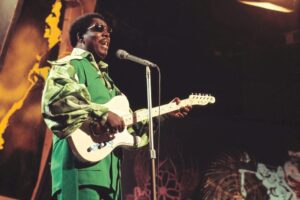
Born in 1936 in Montgomery, Alabama, Carter took an interest in music in his youth, enjoying the blues records his stepfather bought and learning to play the guitar.
“I would lie in my bed and hear those bands playing and say to myself, ‘One of these days I’m going to play just like that,’” he told the LA Times in 1987.
He graduated from Alabama State College in 1960 with a Bachelor’s in music and worked briefly as a schoolteacher before beginning his professional music career.
Carter formed a duo with friend and singer Calvin Scott, but his collaborator was later seriously injured in an automobile accident. Carter then went solo and began recording music with producer Rick Hall and Fame in Muscle Shoals, amid the late-’60s soul boom.

Advertisement
After the success of his early hits in the ’70s, Carter struggled to find the same chart success amid disco’s popularity: “Nobody’s gonna keep a hit record all the time,” he told LA Times.
In the early ’80s, his ‘Working on a Love Building’ was a moderate hit. Carter signed to Ichiban Records to record his 1986 album ‘Dr. C.C.’ which featured ‘Strokin’’ among its tracks.
“By the time I finished doing that song and walked back up to the control room, [the engineer] was laughing so hard he hadn’t even turned the tape machine off,” he said a year after the hit’s release.
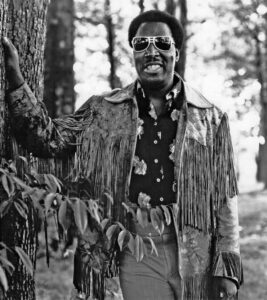
Carter released his final studio album, ‘Sing Along With Clarence Carter’, in 2011 but continued to release live albums and compilations until 2020. He also continued performing live through the 2010s.
The singer-songwriter was married to Staton from 1970 to 1973 and they share a son, Clarence Carter Jr. He married Joyce Jenkins in 2001 and has lived in DeKalb County, Ga., since 1983.
“Clarence Carter leaves behind a legacy of timeless music, unforgettable performances, and a friendship we will always cherish,” Fame Studios said in its statement. “We extend our love and prayers to his family, friends, and fans around the world.”