

* No motivation on the table can justify an approval for such a delegation, and this raises serious concerns on the actual approving authority of this trip by Vice-President Michael Usi and the delegation, in relation to costs involved
* Coming from a country ranked as one of the poorest countries on the planet, with an economy of US$11.3 billion as of 2024, and GDP per capital of just around US$558 or 0.4% of the global average GDP per capita, as per Reserve Bank of Malawi (RBM) data of 2024
By Duncan Mlanjira
The news circulating of the list of Malawi Government delegation, led by Vice-President Michael Usi to Turkmenstan for the 3rd UN Conference of landlocked developing countries (LLDC3) “is very disturbing and sad for a country that is going through massive economic challenges, but also presented to be under austerity measures, unless that has been abandoned”.

Advertisement
This is maintained by South Africa’s Don Consultancy Group (DCG) Chief Economist, Chifipa Mhango in a statement as regards to the revelation that went viral on social media indicating that an entourage of 43 has accompanied Usi to the conference.
“No motivation on the table can justify an approval for such a delegation, and this raises serious concerns on the actual approving authority of this trip by Vice-President Michael Usi and the delegation, in relation to costs involved,” says Chifipa.
“Even if the trip was sponsored by an external party, this just demonstrates lack of responsibility at leadership level — coming from a country ranked as one of the poorest countries on the planet, with an economy of US$11.3 billion as of 2024, and GDP per capital of just around US$558 or 0.4% of the global average GDP per capita, as per Reserve Bank of Malawi (RBM) data of 2024.
The revelation of the entourage was amplified by social issue influencer, Onjezani Kenani on his Facebook page, that indicated that Zimbabwe sent 34; Mali 20; Zambia 16; Burkina Faso 14; Botswana 12; Uganda 12; Chad 10; eSwatini 10; Rwanda 9; Lesotho 8; Burundi 7; Ethiopia 6; Niger: 6; South Sudan 5 and Central African Republic 2.
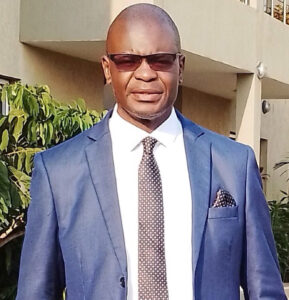
Chifipa Mhango
Thus Chifipa says the choices the country’s leadership “make today, destroy the future of tomorrow. For some years, I have highlighted the worsening trend of the fiscal management of the Malawian economy by the Malawi Congress Party MCP) administration — to which patterns of expenditure demonstrate reckless spending.
“The circulating delegation list is not just a list but represents expenditure figures, which is described as externalised expenditure as it involves international travel that erodes the county’s hard-earned foreign reserves by our tobacco farmers, among other sectors of our economy.”
He quotes Malawi’s current official reserves figures, as sourced from the RBM database, “that stand at MK184.9 billion as of May 2025 or US$105.6 million — thus represents only 0.4 months or 12 days of import cover for mainly essentials products such as fuel, medicines, among others”.
“It is very sad that out of a total of 80 delegates from other listed countries, 43 were from Malawi. It, therefore, comes as no surprise when we see a continuous upward trend on the recurrent expenditure line of the Government, which has ballooned from MK1.2 trillion in 2019 to MK4.4 trillion in 2024.
“One can just conclude that what the country’s President, Dr Lazarus Chakwera, defined as austerity measures only applied as a message to Malawians in his national address and nowhere being implemented.
“The delegation list and the emerging information on some of the delegates’ defined roles of responsibility clearly demonstrate our moral decay at the current Malawi government level.
“Malawi needs a total overhaul of the system and renewal of norms and values, for our economic challenges are man-made. No economy can progress under fiscal mismanagement of this nature.
“This is not just a delegation list but represents how, as the country, we have drained our Gross Official Reserves over the past five years to reach the import cover of 12 days to the point of not able to import fuel into the country.
“It is by no surprise that our development partners, such as the International Monetary Fund (IMF), have abandoned us — hence the need for a change of leadership of the country; for even the IMF seems to be indicating lack of trust of the current leadership in managing the allocated funds.
Malawi News Agency (MANA) reports that the conference presents opportunities to explore solutions and forge partnerships, addressing challenges and unlocking full potential for a more equitable and prosperous future.
Usi arrived in Turkmenistan through the capital Ashgabad on Sunday and yesterday proceeded to Awaza, Turkmenbasy, where the conference is taking place and among the delegation includes the countrys Permanent Ambassador to the UN, Agnes Chimbili Molande, and Roy Kachale — the ambassador at Malawi’s Embassy in Qatar, which covers Turkmenistan.
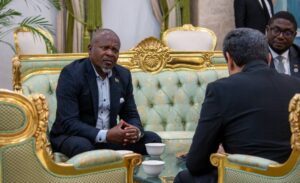
There are also top officials from the Ministries of Finance and Foreign Affairs, says the report, adding the Usi is expected to undertake several tasks, such as leading with opening remarks at the conferences side event called unlocking Sustainable Development Goals (SDGs) Financing in LLDCs through Integrated National Financing Frameworks (INFFs) to be done on Thursday.
He is also going to take advantage of the conference to have bilateral talks with different partners, including the government of Portugal.
According to Ambassador Chimbili Molande, the Vice-President will meet Portugal’s Secretary of State to talk about possible opportunities of supporting Malawi in the area of science and technology.
“Portugal is leading at the UN on issues of science, technology and innovation, with Malawi having adopted digital transformation, we have an opportunity here to engage,” said Chimbili-Molande.
On the LLDC3, the ambassador added that Malawis presence at the conference provides new opportunities for partnerships.
“We would like to explore what new partnerships we can have at the end of this conference; and moving forward in the next 10 years. We need cooperation between landlocked developing countries to explore what we can do together at the regional level or the continental level,” she said.
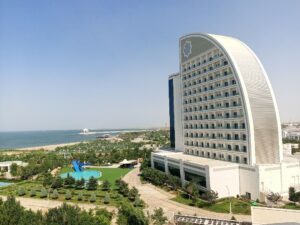
Venue for the conference
Landlocked countries, which lack direct sea access, face significant hurdles in trade, connectivity, and development and without coastal ports, they rely on transit nations, causing higher trade costs and delays.
The event is co-organised by the United Nations Development Programme (UNDP) and the INFF Facility, which includes UNDP, the United Nations Department of Economic and Social Affairs (UNDESA), UNICEF, and the Organisation for Economic Co-operation and Development (OECD).
Launched in 2022, the INFF Facility supports countries in implementing their INFFs and promotes collaboration for learning, innovation, and effective delivery.
Over 65 countries have already delivered or are implementing financing policy reforms shaped through their INFFs, spanning public and private finance and catalyzing SDG-aligned investments.
LLDCs face unique challenges due to their lack of direct access to the sea, which limits trade opportunities and connectivity.—Reporting in Turkmenistan by Vincent Khonje, MANA


Advertisement