
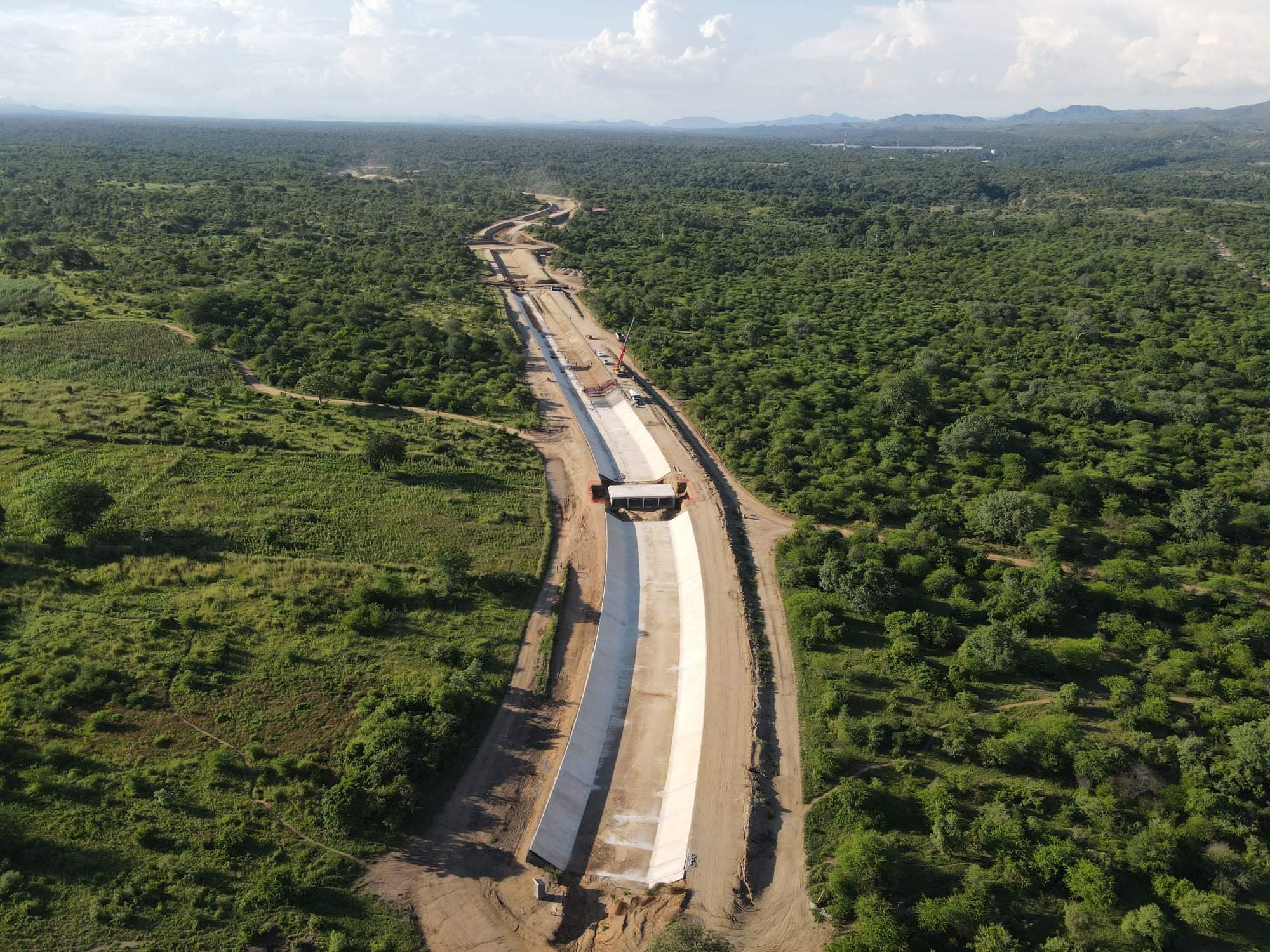
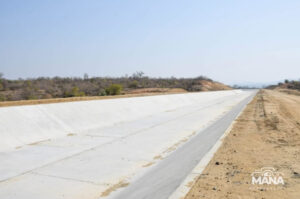
* As Shire Valley Transformation Programme’s project coordinator assures that farmers will begin using water from the canal in October through the temporary main water intake being completed
* Construction of the permanent water intake is expected to be completed by 2031, which delayed due to the redesign of the initial main intake, which was destroyed by Cyclone Ana-induced floods in 2021
Maravi Express
After touring the Shire Valley Transformation Programme in Chikwawa District to assess progress of the construction works, Minister of Agriculture, Irrigation & Water Development, Roza Mbilizi reports that she is “committed to ensuring that the project is completed on time and used for its intended purpose”.

Advertisement
Writing on her Facebook page, Mbilizi said she was impressed with the progress so far having been appraised that “most of the canal construction is nearly complete, and the remaining work includes the intake system and the water treatment plant”.
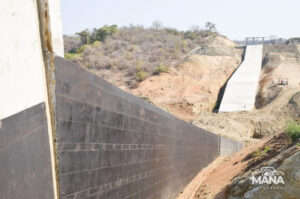
Project Coordinator, Limbani Gomani determined that farmers will begin using water from the canal in October this year through the temporary main water intake currently under construction, with the permanent intake expected to be completed by 2031.
Construction of the main intake has delayed due to the redesign of the initial main intake, which was destroyed by Cyclone Ana-induced floods in 2021 as well as effects of Cyclone Freddy in 2023.
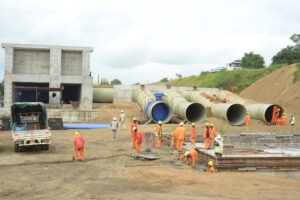


The government’s flagship agriculture project, which is the biggest in Sub-Saharan Africa, was launched in 2018, whose completion deadlines have changed several times due to various reasons, but its farmer cooperatives programme is right on track.
Thus Minister Mbilizi also visited Kambadwe Cooperative to see appreciate how they are preparing well for the programme, which is expected to become a central key for food production to help to reduce food shortages across the country.
“This project will not only transform the Lower Shire but also benefit the whole of Malawi,” said Mbilizi. “After engaging with Kambadwe Cooperatives, it is clear that this programme will improve people’s lives through agricultural commercialisation in Malawi.”
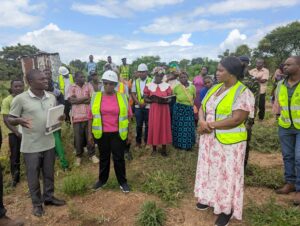
Members of the Kambadwe Cooperative
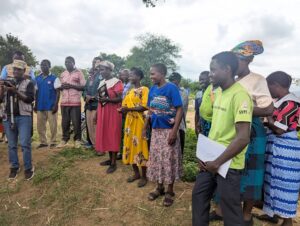
In January, when the Manifesto Implementation Unit in the Office of the President and Cabinet engaged two farm cooperatives, Kambadwe and Mwanaalilenji, it reported that these agricultural commercialisation partnerships are expected to play a critical role in strengthening food security as the country shifts from rain-fed agriculture to irrigation-based farming.
The Manifesto Implementation Unit’s design engineering specialist, George Matipwiri reported that the programme would significantly contribute to addressing food insecurity, describing it as a game changer.
“Mwanaalilenji Farm Cooperative Board secretary, Teleza Mwalija reported that their’s is a 774 hectares of land ready for cultivation for crops such as maize, millet, soybeans, sesame and cotton, which already have available markets.
In scaling up investment in the agriculture sector in the 2026/27 National Budget, positioning it as a key driver of food security, economic growth and national transformation, the government reported in March that K40 billion has been allocated to the National Irrigation Development Programme under the Public Sector Investment Programme (PSIP).
According to the Ministry of Agriculture, Irrigation & Water Development public relations officer, Salome Gangire, the budget prioritises irrigation expansion, farm input support and market development to boost productivity and reduce reliance on rain-fed farming.

Agriculture commercialization projects

An additional K6 billion for irrigation operations, while K111.4 billion has been set aside for the Farm Input Subsidy Programme (FISP) to support smallholder farmers with affordable inputs.
Government has also committed substantial resources to strengthening national food systems and stabilising prices as total of K60 billion was allocated for maize procurement and storage through the Strategic Grain Reserve, alongside another K60 billion through ADMARC to ensure maize availability and price stability.
In addition, K26.6 billion will support contract farming and large-scale production initiatives, while K11.3 billion was earmarked for local seed production to improve access to quality seed and reduce costs.
These interventions are expected to increase output, stabilise food supply and improve farmer incomes. Key programmes set to benefit include the programmes for mega farms, national irrigation development, contract farming initiative and government seed production.
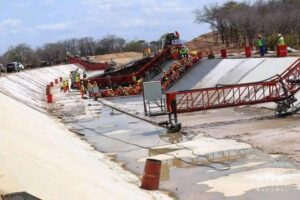
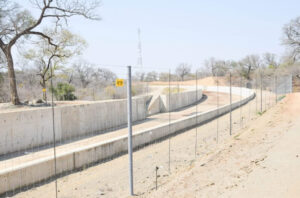
Further allocations include K237 billion for the Shire Valley Transformation Programme, K18 billion for mega farms, K26.7 billion for structured markets and K1.8 billion for mechanisation to modernise farming and increase efficiency.
Government is also promoting inclusive growth through initiatives, such as the Empowering Women and Youth in Agriculture (EWAYA), the Youth Innovation Fund and the SPICE project, which aim to increase participation of young people and women in agriculture.
Overall, the agriculture budget is expected to boost productivity, create jobs across value chains, enhance exports and reduce reliance on imports, while contributing to national economic growth and improved rural livelihoods.—Additional reporting by Priscilla Mwakifuna, Malawi News Agency (MANA), Pempho Nkhoma, ZBSNews & Isaac Salima, Times360Malawi; editing by Duncan Mlanjira, Maravi Express

Advertisement