* His appointment reflects a strategic alignment of global expertise with national priorities, particularly as Malawi advances toward its MW2063 development agenda
* Given the complexity and immediacy of ESCOM’s operational challenges, the Board considered it imperative to secure a leader capable of delivering results from day one, into the future
By Duncan Mlanjira
Effective April 1, 2026, William Kaipa, a distinguished professional engineer with over 37 years of experience spanning infrastructure, energy and resources, takes up the position of chief executive officer (CEO) of Electricity Supply Corporation of Malawi (ESCOM).

Advertisement
Kaipa is a holder of Master’s degree in Engineering Management from the University of Pretoria and a Bachelor of Science in Engineering from the University of Malawi, who is also a registered member of the Engineering Council of South Africa (ECSA).
Kaipa’s résumé includes a career that is defined by senior leadership roles at some of the African continent’s most significant energy and infrastructure institutions, including South Africa’s electricity provider, ESKOM, the Airports Company South Africa (ACSA) and ARUP.
His energy infrastructure mastery includes being lead mechanical engineer for the R3.5 billion 1,332 megawatts (MW) Ingula Pumped Storage Scheme and involvement in the 140MW Majuba Underground Coal Gasification (UCG) Pilot Plant, “demonstrating deep expertise in complex generation systems and project execution”.
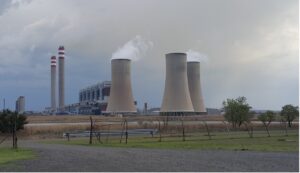
His strategic utility leadership includes senior roles at ESKOM’s Lethabo Power Station, overseeing engineering support, plant performance improvement and operational optimisation within a large national grid environment.

In a public announcement, ESCOM’s Board of Directors chairperson Alfred Nhlema indicates that the appointment followed a deliberate and carefully considered process, in accordance with the Board’s mandate to safeguard the institution’s stability, performance and strategic direction, “particularly during periods of heightened strategic and operational urgency”.
In its strategy to secure Malawi’s energy future, the Board says it is confident that Eng. Kaipa “brings the depth of experience, leadership maturity and technical authority required to stabilise operations, accelerate ongoing projects and position ESCOM for long-term sustainability”.
“His appointment reflects a strategic alignment of global expertise with national priorities, particularly as Malawi advances toward its MW2063 development agenda
“Given the complexity and immediacy of ESCOM’s operational challenges, the Board considered it imperative to secure a leader capable of delivering results from day one, into the future.”

Advertisement
The Board describes the appointment as a strategy in an “exceptional context”, saying it “acknowledges that considering the current critical state of the power sector, characterised by urgent system reliability challenges, ongoing infrastructure projects — and the need for accelerated reforms — an expedited and targeted executive search approach was both necessary and in the best interest of the nation”.
“Accordingly, the Board has exercised its governance discretion — within applicable legal and policy frameworks — to identify and secure a candidate of exceptional calibre with proven ability to deliver immediate impact at scale.
“The Board reaffirms its unwavering commitment to the principles of transparency, accountability and good corporate governance,” assures Nhlema. “This appointment represents a measured and exceptional decision taken within the confines of the Board’s fiduciary responsibilities, balancing procedural norms with the urgent need to ensure continuity of leadership and service delivery.”
According to Wikipedia, the R3.5 billion 1,332 MW) Ingula pumped-storage hydroelectric scheme which Kaipa was its lead mechanical engineer consists of an upper and a lower dam 4.6km apart and is connected to a power station by tunnels.
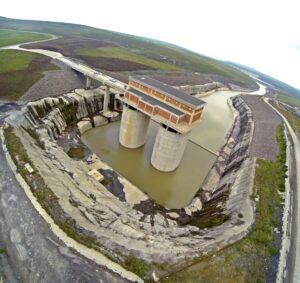
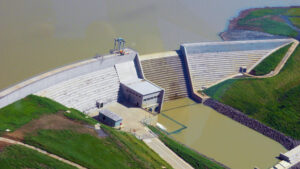
The power station uses 4 Francis pump turbines rated at 333MW each, giving it a total rating of 1,332MW installed capacity, whose first two generators were commissioned in March 2016, the third in August 2016, with the fourth and final one in January 2017.
The pumped-storage hydroelectric plant uses water from an upper reservoir to generate electricity during the peak demand periods of the day — and at night, excess power on the grid generated by conventional coal and nuclear plants is used to pump water to the upper reservoir.
The 140MW Majuba Underground Coal Gasification he was involved in presents a promising unconventional mining approach that converts in situ coal into fuel gas through high-temperature reactions, facilitated by a system of injection and production wells drilled into the coal seam.