

* The way forward is clear — education, protection, and respect for bodily autonomy. Parents need accurate information, not fear
* Communities need open conversations. And government systems — from health to education to civil registration — must recognise intersex people as human beings with rights
* Some civil society organisations are beginning to include intersex issues in broader discussions on sexual and reproductive health and rights — however, activists say progress is slow
By a correspondent
All the child wanted was a perfect Christmas gift — instead, what the child received was a packet of ridicule.

Advertisement
They had gathered to celebrate a child’s birthday, laughter expected to fill the room — but the celebration quickly turned cruel: “Is she a boy or a girl?” some asked openly; others laughed: “Mkazi Mamuna (boy or girl?”) they mocked.
“How do we even play with such a person?” they asked sarcastically. The child was turning five on Christmas Day.
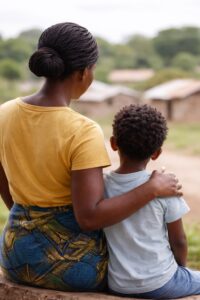
For her 26-year-old mother, the scenario cut deep: “My child has suffered ridicule throughout,” she says quietly. “From the day my child was born, people have been asking questions I could not answer.”
When the baby was delivered, doctors told her there were “complications”. They could not clearly determine the child’s sex. “They said my baby was born with unusual private parts,” she recalls. “The most painful thing was when relatives asked me, ‘So, is it a boy or a girl?’ — I had no answer.”
Confused, frightened, and under pressure from family expectations, the young mother pleaded with doctors to surgically assign the child a sex. “I asked them to remove the male organ,” she said. “I thought that would solve everything.” This time, the doctors refused.
“They told me they could not do it,” she explains. “They said in the past, some children were operated on too early, and later it was discovered that doctors had removed the wrong organ — the one that was stronger and more developed.”
The warning came too late to erase the pain, but it prevented further harm. Doctors explained that earlier surgical interventions on other intersex children had caused irreversible damage, leaving some with life-long physical and psychological complications.
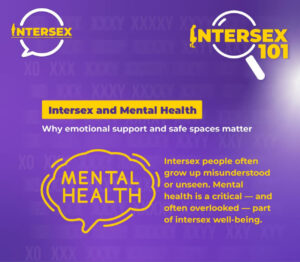
Today, her child lives with the consequences of a system that once rushed to ‘fix’ bodies it did not fully understand — and of a society that still struggles to accept what it does not easily define.
For now, the child remains without an assigned gender, waiting for time and development to reveal which sex characteristics will prove stronger, and for the day when the child can reach puberty and make that choice for itself.
In Blantyre’s densely populated Mbayani township, Desire* lives with her own daily struggle. Born with ambiguous genitalia, she grew up knowing she was “different”.
“I was born with both organs,” she says. “As I grew older, I chose to live as a woman. That is who I am.”
But the choice has not brought peace. “Sometimes the male part makes me desire men, sometimes I feel attracted to women.It confuses me. I live in confusion every day,” Desire explains.
Her confusion is not about identity alone, but about survival in a society that demands clear categories: “People think you are pretending, or that you are cursed.You are never fully accepted.”
Like many intersex people in Malawi, Desire has never received specialised counselling or long-term medical guidance — instead, she has learned to navigate stigma on her own.

According to medical experts, intersex variations are far more common than many people realise. Dr Zaziwe Gunda, an expert in sexual and reproductive medicine, explains that one in every 1,500 to 2,000 children is born intersex.
“This means intersex people exist in our country,” he says. “Yet awareness remains dangerously low. Intersex is not an abnormality — it is a natural part of human biological diversity that has long been misunderstood.”
Dr Gunda explains that intersex refers to people born with sex characteristics — such as chromosomes, hormones, or genital organs — that do not fit typical definitions of male or female.
“Some variations are visible at birth through ambiguous genitalia, others only become apparent later, during puberty.”
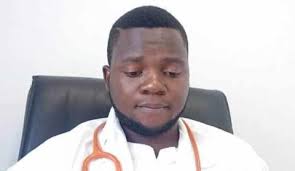
Dr. Gunda
Biology, he adds, is complex. “We learn about XX for female and XY for male, but human development is not always that simple. Sexual organs develop in stages in the foetus. Testes, for example, start internally before descending. When development varies, intersex traits can occur.”
Dr Johns Phiri, another medical expert argues, the problem is not biology, but society’s reaction to it: “When we rush to ‘fix’ intersex bodies instead of educating communities, we violate dignity and basic human rights. Many surgeries are done too early, without the child’s consent and without clear medical necessity.”
In Malawi, the pressure to assign a sex quickly — often driven by cultural expectations, birth registration systems, and social norms — leads parents and health workers to make irreversible decisions.
Dr. Johns Phiri
A senior official in the Ministry of Health, speaking on condition of anonymity, admits the system is not fully prepared.
“Our health workers are trained within a strict male-female framework,” the official says. “Intersex variations challenge that framework, and we need more specialised training, guidelines, and counselling services.”
The official adds that policy gaps remain: “We are beginning conversations around sexual and reproductive health rights, but intersex issues have not been adequately mainstreamed.”
At community level, ignorance often translates into cruelty. Traditional group leader Maria Makhanamba from Mulanje District says intersex children in her village have faced rejection from an early age.
“Many people think it is witchcraft or punishment,” she explains. “I know of families who hid their children and were also forced to drop out of school because they were ridiculed.”
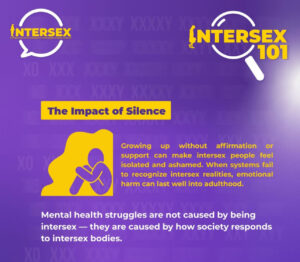
A primary school teacher from Lunze Rose Gondwe echoes the concern: “Children learn prejudice from adults. When parents gossip, children repeat it on the playground.”
The result is isolation, depression, and in some cases, abuse. “Intersex people grow up believing they are a problem,” says the teacher. “That belief can be deadly.”
On his part, legal counsel Madalitso Banda says the way forward is clear — education, protection, and respect for bodily autonomy: “Parents need accurate information, not fear. Communities need open conversations.
“And government systems — from health to education to civil registration — must recognise intersex people as human beings with rights.”
Some civil society organisations are beginning to include intersex issues in broader discussions on sexual and reproductive health and rights — however, activists say progress is slow.
“Intersex people in Malawi remain invisible,” says advocate Chris Thumba from Centre for Human Dignity. “Until we name the issue, we cannot protect those affected.”
Back in her small home, the young mother watches her child play. She worries about school, about friendships, about the future: “I just want my child to be happy. I want people to stop laughing and start understanding.”
For Desire, dignity begins with being believed: “I am not a joke,” she says firmly. “I am a human being.”
As Malawi debates human rights, equality, and inclusion, the voices of intersex people are asking a simple question: Will the country continue forcing them into boxes, or will it finally allow them to exist as they are — whole, human, and deserving of respect?


Advertisement