
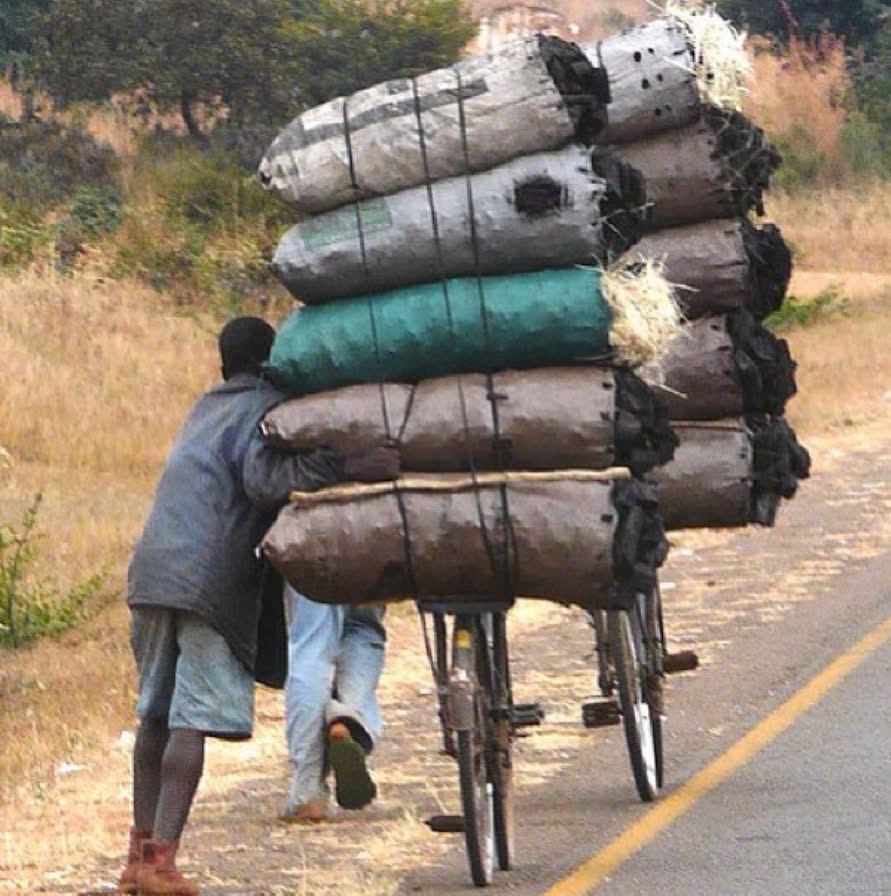
* But when thousands of people depend on the same woodland, tree by tree and year by year, the cumulative loss can be devastating
* Maintains environmental conservation advocate Ian Bartlett as he joins others who advocate for alternative sources of energy while addressing rural people’s economic livelihoods
Analysis by Duncan Mlanjira
Over the years, environmental conservation stakeholders have always maintained that the advocacy against forest degradation — through firewood and charcoal production — should be amplified by offering alternatives to sources of cooking energy.

Advertisement
The dire need for firewood, charcoal and building materials such a burnt bricks, are the contributing factors to the wanton cutting down of trees.
The Ministry of Natural Resources indicates that Malawi loses an estimated 25,757 hectares of forest annually through human activities — with 14,192 hectares degraded and 11,565 hectares permanently deforested.
Thus the government says it is now promoting alternatives, especially on building materials, to encourage production of cement blocks as part of efforts to phase out burnt bricks in public infrastructure and reduce demand for firewood.
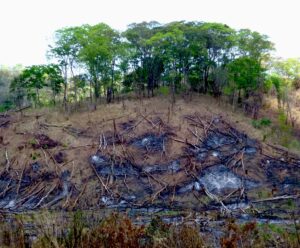
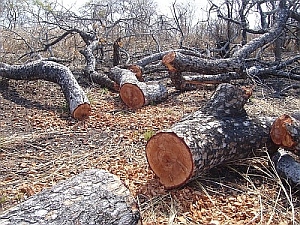
But such alternative should also be focused on the rural masses, whose only source of cooking energy is firewood and charcoal as they cannot afford any other substitute — such as electricity or liquid petroleum gas (LPG).
Environmental conservation advocate, Ian Bartlett, alludes to this observation when he posted on his Facebook account the following pictures:
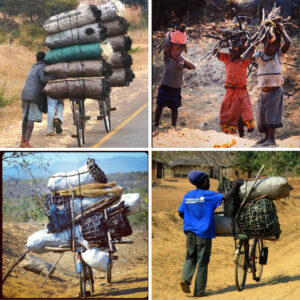
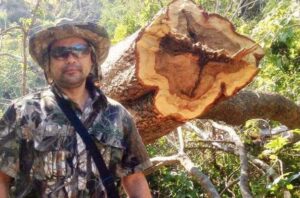
He explained: “This is what deforestation looks like when survival depends on the forest. These photographs tell a difficult story.
“For many rural families, firewood and charcoal are not abstract environmental issues — they are part of everyday survival.
“But when thousands of people depend on the same woodland, tree by tree and year by year, the cumulative loss can be devastating.”
Bartlett, also trending as The Real Crocodile Hunter, speaks from experience as he further explains that he has “witnessed that pressure firsthand at Mpatamanga Wildlife Ranch — a large privately protected forest land situated on the banks of the Shire River in Neno District.
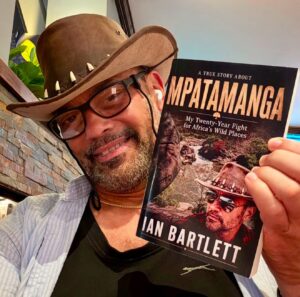
“When I began protecting the land, charcoal burning, uncontrolled cutting and illegal logging were constant threats,” says Bartlett.
“What followed became a conservation journey lasting more than 20 years — protecting natural Miombo woodland and allowing indigenous trees to regenerate rather than planting a new forest.
“Today, more than 500,000 indigenous trees have been scientifically estimated across the conserved woodland at Mpatamanga.”
Through that experience, Bartlett has authored a book entitled;‘Mpatamanga detailing his 20 years experience in private environmentalconservation — a story about what happens when one piece of African woodland is given the chance to survive.

“Deforestation is measured in hectares and statistics,” he explains. “But photographs like these remind us that behind those numbers are people, poverty, energy needs — and an increasingly fragile natural environment.
Bartlett, author of the book; ‘The Real Crocodile Hunter’ — that chronicles his experiences in dealing with problem animals that threaten peoples livelihoods — quietly dedicated himself to protecting a tract of indigenous woodland along the Shire River — whose full details are available on its website; Mpatamanga Wildlife Ranch.
He began as a personal commitment to preserve a threatened landscape, which has evolved into one of Malawi’s most significant examples of long-term private woodland conservation.
While his crocodile hunting experiences made him renowned internationally as ‘The Real Crocodile Hunter’ — a title earned during a decade spent assisting with problem crocodile control operations in Malawi — it is Bartlett’s conservation work that may ultimately leave the greater legacy since Mpatamanga represents a rare example of environmental recovery.

An independent forest inventory conducted by the Forestry Research Institute of Malawi (FRIM) attests to that Mpatamanga Wildlife Ranch covers approximately 238 hectares and contains an estimated 519,180 indigenous trees.
The assessment concluded that the woodland is recovering from historical disturbances, including charcoal production and illegal logging that affected the area before it came under improved management.
The inventory identified 68 indigenous tree species and documented the presence of several protected and threatened species, including African Blackwood (Dalbergia melanoxylon), Burkea africana, Pericopsis angolensis, Pterocarpus angolensis, and Terminalia sericea.
Forestry experts involved in the assessment noted that the woodland exhibits the characteristics of a recovering Miombo ecosystem. The overwhelming majority of trees recorded were younger regenerating stems, suggesting that years of protection have allowed natural regeneration to occur on a significant scale.
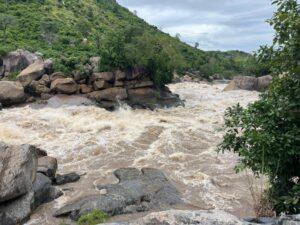
Mpatamanga Gorge, whose banks is the Mpatamanga Wildlife Ranch
The findings come at a time when Malawi continues to face serious environmental challenges — as deforestation remains one of the country’s greatest threats, driven by charcoal production, fuelwood demand, agricultural expansion, and population growth.
The loss of indigenous woodland affects biodiversity, water resources, soil stability, and the country’s resilience to climate change. The FRIM report found no evidence of illegal logging or charcoal production during the assessment and recommended continued protection, monitoring, and sustainable management to safeguard the recovering forest.
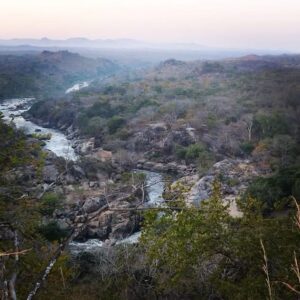
Located along the scenic Mpatamanga Gorge on the Shire River, the ranch not only protects woodland but also preserves an area of exceptional natural beauty.
The gorge, with its dramatic landscape and riverine ecosystem, forms part of a wilderness increasingly rare in many parts of Malawi.
The challenges Bartlett encounters
Mpatamanga may be safe for now, but with the increasing need for cooking energy, it is still a threat to encroachment unless measures are taken to address rural people’s economic statuses.
In their testimonies, especially during tree planting seasons, the rural folks usually indicate that what drives them for mass production of charcoal is the readily available market from city dwellers, whose only source also cannot afford alternative cooking energy such as electricity and LPG.



Electricity connections in cities are mostly for lighting as in cooking it requires investing into the right equipment, which to many is unaffordable — coupled with higher electricity tariffs.
LPG equipment is also very expensive and replenishment of the gas cylinders is much cumbersome since the refilling points are beyond reach of most of high density areas of the cities.
But, as rightly said by Bartlett, “for many rural families, firewood and charcoal are not abstract environmental issues — they are part of everyday survival”.

Advertisement