

Chifipa Mhango
* Malawi has spent decades measuring how much its economy produces, imports and exports
* However, we have not placed sufficient emphasis on understanding how much domestic value our economic activities generate
* And how much income ultimately accrues to Malawian residents. This is an important missing dimension in our economic transformation debate—Chief Economist Chifi Mhango
By Duncan Mlanjira
Malawi needs to rethink how it measures economic progress by moving beyond traditional indicators of Growth Domestic Product (GDP) growth, exports and investment towards assessing how much economic value is actually created and retained within the domestic economy.
This has been highlighted by Chifi Mhango, the Chief Economist and Executive Director of Economic Research & Strategy at Don Consultancy Group (DCG), arguing that — while Malawi continues to pursue agricultural commercialisation, mining development, industrialisation and export diversification — “insufficient attention is being given to the domestic economic value generated by these activities, particularly where production depends heavily on imported inputs, foreign technology, external financing and internationally sourced services”.

Advertisement
“Malawi has spent decades measuring how much its economy produces, imports and exports,” he says in a statement. “However, we have not placed sufficient emphasis on understanding how much domestic value our economic activities generate and how much income ultimately accrues to Malawian residents.
“This is an important missing dimension in our economic transformation debate,” maintains Mhango.
He quotes an analysis by Don Consultancy Group of Malawi’s 2025 merchandise import data, based on United Nations COMTRADE statistics, which indicates that the country imported approximately US$4.05 billion worth of goods.
“Of this amount, mineral fuels and oils accounted for approximately US$803.3 million, representing 19.8% of total imports, followed by vehicles at US$361.5 million, machinery at US$333.4 million, fertilizers at US$297.5 million and electrical equipment at US$203.5 million.
“Combined, imports of fuel, fertilizers, machinery and electrical equipment amounted to approximately US$1.64 billion, equivalent to 40.4% of Malawi’s merchandise import bill.”
These categories, continues Mhango, “are particularly important because they include essential inputs and capital equipment used across agriculture, manufacturing, mining, construction and other productive activities’.
Mhango further notes that these figures “expose an important structural challenge in Malawi’s economy, where increased domestic production can simultaneously generate additional demand for imported goods and foreign exchange, which is scarce”.

Irrigation farming in Nkhata Bay towards agricultural commercialisation


“When Malawi expands agricultural production, we often require more imported fertilizer, machinery, fuel and chemicals.
“When manufacturing expands, we require imported equipment and intermediate materials. Mining development similarly demands significant imported machinery, technology and specialised services.
“The question is whether our economic expansion is sufficiently deepening domestic supply chains to reduce these structural vulnerabilities over time,” explains Mhango.
The country’s external economic position reinforces these concerns. According to Malawi’s 2026 Annual Economic Report, the current account deficit widened to approximately US$1.87 billion in 2025 from US$1.70 billion in 2024, representing a deterioration of about 9.9%.
The merchandise trade deficit stood at approximately US$2.02 billion, while the services account recorded a deficit of US$521.2 million.
Based on the government’s rounded balance-of-payments estimates, merchandise export receipts of approximately US$1.04 billion covered only about 34% of merchandise imports, which Mhango maintains that it highlights the country’s “substantial dependence on external financing and foreign exchange inflows to sustain its international transactions”.
He thus cautions that “the trade deficit should not automatically be interpreted as economic value lost, because imported goods include productive capital equipment and essential inputs”.
“Nevertheless, the persistent imbalance demonstrates the importance of strengthening domestic production capabilities and export competitiveness.”

Advertisement
To illustrate the potential economic implications, Mhango observes that the DCG “developed a quantitative scenario using selected 2025 import categories”.
“A hypothetical 5% reduction in foreign exchange requirements for fuel, fertilizers, machinery and electrical equipment would represent approximately US$82 million annually — while a 10% reduction would represent US$164 million and a 15% reduction approximately US$246 million.
“At an illustrative 10% reduction, the potential annual foreign exchange saving would be equivalent to approximately 8.8% of Malawi’s reported 2025 current account deficit, although the actual impact would depend on domestic replacement costs, imported inputs required for local production, changes in output and other economic adjustments.
“These are illustrative scenarios rather than forecasts, but they demonstrate why Malawi should pay greater attention to the foreign exchange intensity of domestic production.
“The objective should not be to restrict economically necessary imports indiscriminately, but to identify where domestic productive capabilities can be developed competitively.”
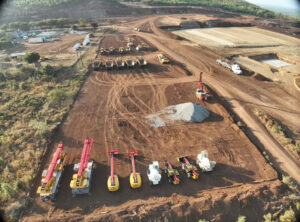
Kangankunde rare earths mine that is developing in Balaka
Mhango further argues that the country’s emerging mining sector presents an opportunity to introduce a more sophisticated approach to evaluating economic development projects.
“A mining investment generating US$500 million in annual exports, for example, should not be assessed solely on export earnings, but also on its contribution to domestic value added, local procurement, government revenue, employment, skills development and income accruing to Malawi’s residents.”
According to Mhango, two investments generating similar export revenues “may deliver substantially different benefits to the domestic economy depending on their production structures, local supplier participation, imported input requirements and financing arrangements”.
“Malawi must begin distinguishing between the gross value of economic activity and the actual domestic economic value generated.
“A large investment announcement or substantial export figure does not automatically mean that the country is maximising its developmental benefits. We must understand the economic linkages created within Malawi,” he says.
Against this background, the DCG proposes the development of a Domestic Value Retention Index (DVRI) as a complementary economic measurement framework.
The proposed framework would assess domestic value added relative to gross production, domestic value embodied in exports, and the extent to which income generated through economic activity ultimately accrues to Malawi’s residents.
The proposed index would require the National Statistical Office, the Reserve Bank of Malawi (RBM), the Malawi Revenue Authority (MRA), the Ministry of Finance and relevant industry institutions “to strengthen the integration of national accounts, trade statistics, enterprise surveys and supply-chain information”.

The Reserve Bank of Malawi
The Chief Economist believes “the framework could initially focus on agriculture and agro-processing, manufacturing, mining and tourism, where the relationship between investment, imported inputs, domestic production and export earnings is particularly important”.
He further recommends that major investment agreements, particularly in mining and industrial development, “incorporate measurable domestic value-addition and supplier-development objectives”.
“These should be supported by commercially realistic local procurement programmes, technical skills development, infrastructure investment and incentives that encourage domestic enterprises to participate competitively in industrial supply chains.
“Local economic participation should not simply be measured through ownership arrangements or procurement commitments. It should be measured through actual domestic production, value addition, enterprise development, employment and income generation.
“That is how we begin to build an economy with stronger internal productive capabilities,” emphasises Mhango, who, however, cautions that “domestic value retention must not become a justification for inefficient import substitution or excessive protectionism”.
“Malawi must remain internationally competitive, and any effort to develop domestic suppliers should be based on economic feasibility, productivity, quality and long-term commercial sustainability.”
According to Mhango, “the wider policy implications extend to Malawi’s foreign exchange challenges, fiscal sustainability and industrial development ambitions.

“Strengthening domestic productive capabilities could progressively reduce selected external vulnerabilities, support export diversification and expand the country’s taxable economic base.
“Malawi’s economic transformation requires more than attracting investment and increasing production. It requires a deliberate strategy to ensure that economic activity builds domestic productive capabilities and creates sustainable national income.
“We should be asking not only how much our economy is growing, but how much lasting economic value that growth is creating for Malawi.”
Editor’s Note:
Chifipa Mhango has more than 30 years of experience spanning economic research, macroeconomic and fiscal analysis, corporate strategy, financial services, development finance, trade policy, investment advisory and strategic planning across Africa.
He has held senior leadership roles in both the public and private sectors in South Africa, providing economic intelligence and strategic advice to businesses, government institutions and other decision-makers.
His work focuses on translating economic and policy developments into practical strategic insights that support informed decision-making, competitiveness and sustainable growth.

Advertisement