
MRA Commissioner General addressing the media accompanied by his executive management team
* It is unfortunate that some traders have chosen to close their shops in protest against the implementation of EIS
* It is even more concerning that some are reportedly threatening fellow traders who wish to continue operating
* VAT is not paid by the shop owners; they merely collect the VAT on behalf of MRA and one would wonder why the shop owners are resisting the EIS
* There is a common misconception that VAT is paid by businesses — this is not correct; businesses simply collect and remit VAT to Government
By Duncan Mlanjira
Malawi Revenue Authority (MRA) has put it on record that, despite a section of some traders protesting against the introduction of the Electronic Invoicing System (EIS), there are over 7,500 out of 9,000 value added tax (VAT)-registered operators, who already onboarded onto platform and are actively and seamlessly transacting.

Advertisement
This was share this afternoon by MRA Commissioner General Felix Tambulasi at a press briefing held at Msonkho House in Blantyre, to enlighten the public that the EIS has now been fully rolled out as part of MRA’s ongoing efforts to modernise the tax administration and improve its service delivery.
This also follows the action by some traders, who are trying to take MRA to ransom by closing their shops in protest against the EIS implementation, which the Commissioner General described as “unfortunate” — especially “more concerning that some are reportedly threatening fellow traders who wish to continue operating”.
“Such actions are counterproductive,” Tambulasi said. “The closure of shops negatively affects businesses themselves and undermines the growth of the Malawi economy.
“MRA has demonstrated flexibility and commitment to stakeholder engagement by extending the transition period on three occasions,” said the Commissioner General, while highlighting that the EIS was launched in August 2025 with an initial deadline of November 2, 2025 — but was later extended to February 1, 2026.
The MRA further the transition period to May 1, 2026 while the Government also made efforts by revising the VAT threshold upwards — from K25 million to K50 million “to ensure that only major traders are accounting for VAT”.
“In addition, MRA has been conducting extensive training sessions across the country to equip taxpayers with the necessary knowledge and skills to use the system effectively.

“These efforts will continue,” he said as he made special appeal to all businesses “to embrace EIS and resume normal operations” because system is designed for the benefit of all.
He emphasised that “the EIS is a progressive and reliable platform” and that “like any new system, initial challenges are expected” — thus MRA twice extended the transition from the old electronic fiscal devices (EFDs), which experienced similar challenges when EFDs were first introduced.
“Yet today, it is ironic that a system once resisted is now being defended,” Tambulasi said. “The reality is that times are changing and we must move with technological advancements to remain efficient, competitive and compliant.”
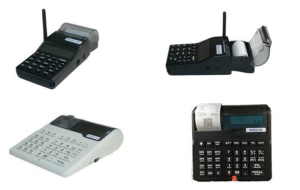
Obsolete EFDs
He explained that prior to the introduction of EFDs, businesses were using manual, handwritten receipts and the EFDs “marked an important step towards automation at that time” but now — with modern technologies, the EFDs “have since become outdated, costly and inefficient for modern business operations”.
“Over the years, taxpayers have raised concerns about the high cost of compliance associated with EFDs. These devices are expensive to acquire, maintain and operate.
“An EFD machine costs approximately K2.5 million and the maintenance costs are equally on the high side. The system also posed technical limitations that made it difficult for MRA to effectively trace and track VAT transactions.”
He added that when EFDs faced resistance from the business community, MRA MRA implemented compliance initiatives such as the Lisiti Langa campaign to encourage consumers to demand fiscal receipts and promote compliance.
“Today, times have changed and technology has significantly advanced. It is against this background that MRA has introduced ESI to replace EFDs,” he said, which emphasing that “EIS is not a new tax — it is simply a new, modern and efficient system for issuing invoices and managing tax records”.

On the more than 7,500 out of 9,000 VAT-registered operators have already onboarded onto EIS Tambulasi observed that “this is a strong indication that the system is workable and beneficial”.
“EIS offers numerous advantages — it is cost-effective, web-based and eliminates the need for expensive hardware. It also provides businesses with enhanced capabilities, including real-time monitoring of transactions and better stock management.”
For those who are still encountering challenges and need some guidance during the onboarding, MRA it is committed to supporting taxpayers during the onboarding period, Tambulasi assured that MRA teams are working around the clock to provide technical assistance.
Also available if the MRA Call Centre, which remains available to respond to all enquiries related to EIS by just dialing Toll-free 672 — or to visit any of the MRA stations for any technical assistance, which is available 24/7.

“We will be offering free targeted technical support to taxpayers who may still require assistance. During this period, however, VAT operators will not be allowed to use EFDs.
He clarify to the general public that VAT is a consumption tax charged at 17.5%, which is paid by the consumer when they buy goods from shops: “It is not paid by the shop owners.
“The shop owners merely collect the VAT on behalf of MRA and one would wonder why the shop owners are resisting the EIS. There is a common misconception that VAT is paid by businesses — this is not correct; businesses simply collect and remit VAT to Government.
“MRA remains committed to working with all stakeholders to ensure a smooth and successful roll out,” concluded the Commissioner.