

* The issues that led to the party being voted out in 2019 have not been forgotten by the public. Corruption, policy inertia, and disregard for accountability remain red lines for many Malawians
* If this administration fails to listen, to reform, and to clearly break with past practices, the current goodwill will evaporate quickly
* Hope alone is not enough — it must be matched by credible action, transparency and a genuine willingness to govern differently from before
Analysis by economic expert Dr. James Kadyampakeni
As President Prof. Arthur Peter Mutharika marks 100 days in office, a number of social media influencers have rated his performance at over 90%, praising what they see as a strong start. I respectfully disagree with that assessment.

Advertisement
The President made several ambitious promises during the campaign, many of which he is now struggling to fulfil. That difficulty is not surprising, because many of those commitments appear to have been made without a rigorous financial assessment.
Soon after his election, I sent him a congratulatory message in which I urged him to commission a forensic audit of government resources. Such an audit would have grounded his agenda in facts and allowed him to recalibrate his promises based on the country’s true fiscal position.
I doubt that message was ever read, and if it was, it must not have been positively received; however, the point remains relevant.
I also offered unsolicited advice regarding Cabinet appointments. A number of individuals appointed were, at the time, out on bail with serious corruption cases still before the courts, involving similar roles they held in the previous administration.
While the presumption of innocence is a legal principle, politically, it was a serious misjudgment to return such figures to positions of authority before those matters were resolved. It sent the wrong signal to a country desperate for a clean break from the past.
Meanwhile, Malawians continue to suffer under a high cost of living. In this context, the decision not to change leadership at the Reserve Bank of Malawi was another missed opportunity. The institution has largely maintained the same failed policy approach pursued under the previous government.
Repeating the same policies and expecting different outcomes is not reform — it is policy inertia. At best, it reflects a lack of urgency. At worst, it suggests an unwillingness to confront hard truths.
It is also important to acknowledge that the Minister of Finance appears to be doing his best to align policy ambitions with the limited resources available. The reality, however, is that the nation is struggling, and there are still no visible policy reforms that inspire confidence or offer a clear path out of the current economic distress.
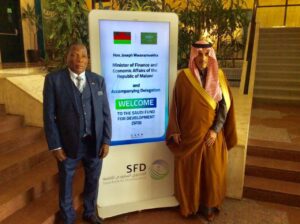
Minister of Finance Joseph Mwanamveka

As a patriotic Malawian, I continue to speak up because silence does not help the country. I take pride in my experience of developing policies that deliver tangible results, and that experience informs my interventions.
As I did with Professor Mutharika, I extended my best regards and constructive input to other ministers, including the Ministers of Agriculture and Mining. In that case, I offered unsolicited but practical advice on the need for serious agricultural diversification.
I pointed to the revenue potential already being generated from cannabis in the United States and Canada and noted that Malawi’s climate is well-suited for its production if properly regulated and managed.
I also urged the Minister to critically revisit the role of ADMARC as it functioned during the HKB era, when it served as a foundational institution for agricultural development and market stabilisation.
Over time, ADMARC has been abused, underutilised, and effectively left in ruins — despite its strategic importance. Revitalising such an institution, alongside diversifying agriculture, could have given this administration a realistic and credible fresh start.

ADMARC
Unfortunately, there has been no response to any of these contributions, nor even a differing view that might have allowed for meaningful debate. That absence of engagement is a missed opportunity.
A government confident in its direction should welcome rigorous ideas and open discussion, especially when the stakes for the nation are this high.
Mining is another sector where, for reasons that remain unclear, the government does not appear to be as assertive or transparent as it should be.
There are only two plausible explanations. Either there is a reluctance to invite public scrutiny, or there is an unwillingness to confront entrenched interests.
History gives citizens reason to be cautious. Malawians have not forgotten how, under Bingu, mineral resources were effectively sold for peanuts, while the limited returns to the country contrasted sharply with wealth reportedly siphoned into offshore accounts.

Advertisement
This history matters because it shapes public trust today. In my debate on Hardtalk, I argued that Malawi should be using its natural resources strategically to raise capital that can be invested in development projects.
Properly negotiated mineral agreements can be a powerful tool for financing infrastructure, industrial development, and social services. Instead, mineral contracts have consistently lacked transparency, leaving citizens to wonder how much the nation is receiving in return and who truly benefits from these deals.
Without openness, clear terms, and public accountability in the mining sector, it is difficult to speak of reform with any credibility. If the government is serious about giving Malawians hope, it must be willing to open this sector to scrutiny, renegotiate from a position of national interest, and ensure that the country’s natural wealth is converted into tangible development outcomes rather than private gain.
In summary, while APM’s return to power has given many Malawians a sense of hope, it is important not to forget the context in which that outcome occurred. Malawians made a difficult and pragmatic choice. As I have argued before, they did not so much vote for the DPP as they voted against the MCP, for reasons that are well known and widely felt across the country.
It would, therefore, be naïve and politically dangerous for the DPP to assume that this result is a blank cheque or a license to ignore citizen concerns by reverting to old habits. The issues that led to the party being voted out in 2019 have not been forgotten by the public.
Corruption, policy inertia, and disregard for accountability remain red lines for many Malawians. If this administration fails to listen, to reform, and to clearly break with past practices, the current goodwill will evaporate quickly.
Hope alone is not enough — it must be matched by credible action, transparency and a genuine willingness to govern differently from before.


Advertisement
well composed piece with concrete policy proposals.It is encouraging to see those with experience and doing well in diaspora act unselfishly by offering free advice. i hope our government will listen and not take these words of wisdom personal.