

Interim Managing Director Kondwani Msimuko (right) receives the award
* Also recognised the National Exporter and for excellence in Station-Level Excise Duty compliance at both the Dedza and Blantyre stations
* The recognition underscores Illovo’s commitment to corporate responsibility and national development through consistent tax compliance
By Duncan Mlanjira
In celebrating its Silver Jubilee, Malawi Revenue Authority (MRA) also honoured top taxpayers and one of them was Illovo Sugar Malawi Plc, which was recognised as a key partner and a significant contributor to the nation’s economy.

Advertisement
The event at the Bingu International Convention Centre (BICC) in Lilongwe on Friday, August 1 — graced by President Lazarus Chakwera — marked 25 years of MRA’s operations when two government tax departments of Customs & Excise and Income Tax that were operating under the Ministry of Finance, were merged into one in 2000 giving birth to Malawi Revenue Authority.
The award highlighted Illovo Sugar Malawi’s position as the leading large taxpayer in the manufacturing sector — that contributed MK58.2 billion in the 2024 financial year, an increase from MK46.7 billion made in 2023.
The company was also recognised as the National Exporter (Sugar) and for excellence in Station-Level Excise Duty compliance at both the Dedza and Blantyre dry ports.
“The recognition underscores Illovo’s commitment to corporate responsibility and national development through consistent tax compliance,” said Illovo on its communication platform.

President Chakwera at the celebration

The economy impact played by Illovo goes way beyond tax compliance as the company also provides numerous opportunities along its value chain, which include opportunities empowering sugarcane growers from its estates’ sorrounding communities in Nchalo, Chikwawa and Dwangwa in Nkhotakota.
Under indirect impact in its production’s value chain, these over 6,785 growers, through various smallholder schemes, deliver their cane to Illovo’s mills through cane supply agreements and are paid for their produce.
According to the company’s financial report of the year ending September 2024, payments to growers in 2024 were MK45 billion; MK33.6 billion in 2023 and MK20.8 billion in 2022, which is shared by the farmers as dividends in their cooperatives.
It is one of the country’s largest single private-sector employer providing permanent, seasonal and casual employment opportunities for over 10,000 people and an additional 5,000 through its supply chain creating a total of 15,000 jobs.
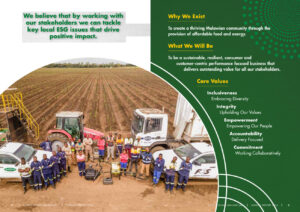



Many local industries are dependent upon Illovo Sugar Malawi for their viability, and the employment created by these businesses provides an income base for many families.
During the peak of the growing season, Illovo Sugar Malawi typically cultivates around 2 million tons of sugarcane across both estates, with Malawian growers contributing an average of 470,000 tons.
Illovo also supports industries that supply and the small local businesses that have emerged around the sugar estates such as transportation, harvesting, and retail —providing direct, indirect, and induced impacts.
The direct impacts include the employment of workers on Illovo farms and factories, interest spending, shareholder dividends, investments, and other financial contributions — while induced impacts refer to the economic effects resulting from the spending by both direct and indirect employees, which leads to increased consumption and employment in other sectors of the economy.

Additionally, Illovo Sugar Malawi’s induced impacts include the employment opportunities created in the rural economy as an indirect result of the company’s value chain, such as the establishment of small to medium-sized (SME) service providers, who are also rural employers.
Illovo strongly believes that for its business to be successful, it must evolve alongside the Malawi market, whilst creating shared economic value through its community investment programme, under the theme; ‘Creating a Striving Community’.
“Our ‘Thriving Community’ purpose is integral to who we are as a business, and underpins our corporate positioning,” says Illovo in its financials. “Illovo Sugar Malawi recognises that for our business to be successful we must evolve alongside the Malawi market, whilst creating shared economic value.”
This corporate social investment is through supporting crucial sectors of education, health, provision of potable water, food security and afforestation. Illovo has built schools, clinics, boreholes and priotises in local employment, gender equity and safe working conditions — thus contributing to long term societal resilience, whose investment is in hundreds of millions of Kwacha.


“We will ensure this through our commitment to fulfil our purpose in creating a thriving Malawian community through the provision of affordable food and energy,” says Illovo. “Integral to this is ensuring the long-term sustainability of the business through its practices that will secure the business’s profit while safeguarding the planet and people.”
Illovo’s purpose is supported by four pillars — Sugar Market Leader; Community Connected; Value & Quality Driven Industry; and Sustainable Agriculture.
The company was incorporated in Malawi as a private company,Sugar Corporation of Malawi (SUCOMA) Limited), on May 31, 1965 and then converted to a public company on September 15, 1997.


Illovo Group Holdings Limited (Illovo) through SUCOMA Holdings Limited, holds 76% of the issued share capital of Illovo Sugar Malawi with the balance of the shares being held by the public and other institutional investors.
The ultimate holding company is Associated British Foods plc (ABF), in the United Kingdom — a diversified international food, ingredients and retail group with sales revenue of £20.1 billion achieved in the year ended August 31, 2024.
Illovo Sugar Malawi developed significant agricultural and milling assets at the Dwangwa and Nchalo estates — with Dwangwa factory producing refined and brown sugar, while Nchalo produces brown and value-added specialty sugars.
Both operations also produce molasses — a by-product of the sugar manufacturing process, which is currently sold as a fermentation raw material to the two fuel alcohol distilleries in Malawi.
The balance of sugar produced is exported to regional African, European Union (EU) markets and also markets in the USA and apart from being a major contributor to the country’s economy through tax compliance, it thus generates valuable forex.


Advertisement