

* Bill No. 1 of 2025: Companies, Registration and Intellectual Property Centre and Bill No. 2 of 2025: Copyright (Amendment)
* We didn’t receive a response from State House, Office of the President & Cabinet (OPC), or the special advisor to the President on creative industries
* We did what we could to impress upon the President the importance of withholding assent to the two Bills affecting the creative, arts and heritage sector
By Duncan Mlanjira
Of the 13 Bills, which President Lazarus Chakwera has assented to, two were on Companies, Registration and Intellectual Property Centre (Bill No. 1 of 2025) and Bill No. 2: Copyright (Amendment-Bill No. 2 of 2025), which were met with a petition by creative practitioners as the Bills were deemed to have been “unilaterally drafted and passed by Parliament in February 2025, without any consultation”.

Advertisement
The Bills were made into Law when Chakwera assented to them yesterday in exercise of his powere vested in him by Section 89 of the Constitution, as announced by State House’s presidential press secretary Anthony Kasunda.
One of the concerned stakeholders, Chigomezgo Gondwe — founder & CEO of The Africans — maintained that none of the concerns that were raised were addressed, and they “didn’t receive a response from State House, the Office of the President & Cabinet (OPC), or the special advisor to the President on creative industries”.
In her statement as The Africans, Gondwe emphasised that they did what they could “to impress upon the President the importance of withholding assent to the two Bills affecting the creative, arts and heritage sector”.
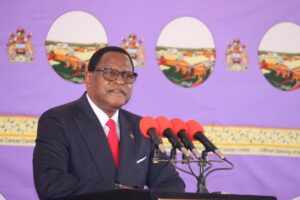
President Chakwera
“Despite the sector’s concerns, among which is the lack of consultation with sector players, the President has proceeded to assent to the Bills,” says the statement. “The Constitution of Malawi obligates the government to consult affected populations on the legislations and policies it develops on their behalf and to ensure citizen participation in governance.
“It also obligates the government to do so transparently and with accountability. These are some of the rights we were fighting for.
“Indeed, it is the President’s prerogative to decide on the final course of action, and we have no choice but to accept it. State House had raised concerns that withholding assent during an election (campaign) period would not be conducive to the expectations of some quarters and would cast a negative view on the legislative process.
“It is disappointing that our livelihoods, work, and future are politicised in this manner, but it is what it is. It is also disappointing that the decision was made without the sector’s concerns being addressed or consideration being given to our recommendations.”

Additionally, Gondwe highlights that “the lack of an official response to [their] official submissions undermines the principles of dialogue and engagement that are key pillars of democracy”.
“The efforts we undertook are our national duty as citizens — to raise the alarm where procedures have been flouted; to seek engagement on matters that affect our wellbeing and future; and to hold duty bearers accountable for the decisions they make on our behalf.
“As The Africans, we will track the implementation of these Bills and will continue to play our rightful part in ensuring that the interests and rights of practitioners in the creative, arts and heritage sector are safeguarded.
“Those who are not artists or rights holders, do not have firsthand-lived experience of what it means to be an artist in Malawi, or have not meaningfully engaged with policy and legislation matters may not understand our position. But the fact remains — it is OUR creativity, OUR rights, and OUR future, and the responsibility of every visionary artist to participate in sector governance.

“Sector players will soon come to understand the implications of these Bills on their livelihoods, and as The Africans, we will remain ready to support them in whatever way we can.
“We will continue to create, speak out, and be the voice of reason! And we will do so boldly, with integrity and without favour.”
On behalf of the industry as The Africans, Gondwe applauds all who have genuinely stood with creative practitioners by supporting the fight for their collective and creative rights, saying: “Your endorsements, messages, articles, petition signatures, time, input, and extended voice on our sectoral concerns are good seed sown in fertile ground.
“Malawian artists can no longer afford to be complacent; Malawian artists must wise up and craft their own future!”
In the petition, the creative artists maintained that the Copyright (Amendment) Bill, 2025 and the Companies, Registrations & Intellectual Property Centre Bill, 2025, “strip the Copyright Society of Malawi (COSOMA) of its statutory mandate and transfer copyright enforcement to a new entity that is not aligned with the sector”.
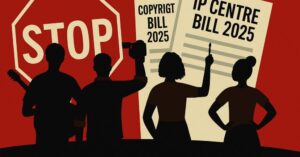
They emphasised that by “unilaterally drafting and passed by Parliament without any consultation violates the Constitution of the Republic of Malawi, which guarantees citizen participation in policy and law-making processes”.
“Creators and sector leaders were not consulted, no public engagement was conducted, and the sector was excluded from decisions that directly affect its rights, income and future.
“If these Bills are enacted without the input of creative industry stakeholders, Malawi risks silencing the voices of its creators and dismantling the few existing structures that protect their work,” said the petition.
On the now legalised centralised IP Centre — that effectively rebrands Department of the Registrar General — the stakeholders observed that it lacked the sector-specific expertise needed to manage copyright effectively for the creative industries.


Advertisement
They indicated that despite its mandate under the National Intellectual Property Policy (2019), the Registrar’s Office had not actively engaged the creative sector, nor had it implemented the IP awareness strategies that the policy demands — “a failure that also contravenes the Access to Information Act (2016)”.
“This unilateral transfer of COSOMA’s mandate risks confusing creators about where and how to register their works, weakening enforcement of their rights, delaying royalty payments, and introducing new bureaucratic barriers — especially for rural and emerging artists.
“Such a move threatens to destabilise Malawi’s creative economy — a vital sector for youth employment, innovation, national identity and cultural diplomacy.
“Worse still, it sets a dangerous precedent of law and policy-making without participation, undermining constitutional principles and public trust in national governance,” maintained the petition that was ignored.
